Chasing the Midnight Sun: A Guide to Iceland's Arctic Summer

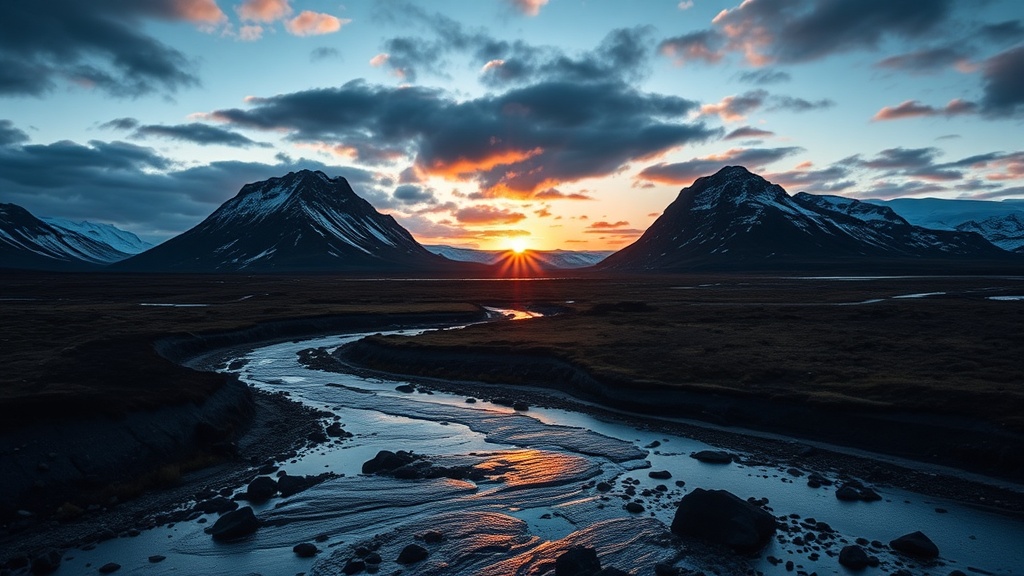
There is a specific kind of disorientation that hits when you are standing on a basalt cliff in the Westfjords at 2:00 AM, and the sky is the color of a bruised peach instead of pitch black. In my previous life as a logistics coordinator, we called this a "system error"—a failure of the expected sequence. In Iceland, during the summer solstice, it is simply the reality of the Midnight Sun. The sun doesn't so much set as it does hover near the horizon, performing a long, agonizingly beautiful skirt around the edge of the world.
For the uninitiated, the Arctic summer is a logistical puzzle. You are dealing with a landscape that is simultaneously hyper-active (glaciers melting, volcanic activity, bird nesting seasons) and paradoxically quiet. But if you approach Iceland with a "bucket list" mindset, you will likely fall into the same traps as the thousands of tourists who arrive every year: overpaying for mediocre experiences and leaving a heavy footprint on a fragile ecosystem. I don't do fluff, and I certainly don't do "Instagrammable" illusions. I want to show you how to navigate this high-latitude window with precision, respect, and a budget that doesn't require a second mortgage.
The Logistics of Light: Timing and Circadian Rhythm
The biggest mistake travelers make in Iceland is failing to account for the psychological impact of constant daylight. When the sun never truly goes down, your internal clock begins to drift. I have seen travelers burn out by day four because they tried to "maximize" their time by hiking at midnight, only to crash into a deep, unproductive fatigue by the end of the week.
The Strategy: Do not fight your biology. If you are planning a multi-day trek, treat the light as a tool, not a mandate. Use the "extra" hours for low-intensity tasks—cooking, gear maintenance, or long-distance driving—and prioritize sleep during the darkest hours of the night (usually 11:00 PM to 3:00 AM). If you are staying in remote areas, you might find yourself tempted by high-end "eco-lodges" that promise a connection to nature. Be careful; many of these are just expensive waypoints with a green veneer. I highly recommend reading the off-grid eco-lodge trap before booking, as many remote accommodations lack the actual infrastructure to support the "sustainable" claims they market.
Managing the Gear: The "Layering" Audit
Icelandic weather is not a single event; it is a continuous negotiation. You can experience four seasons in a twenty-minute window. In my experience, the most expensive mistake is buying "cheap" gear that fails when the wind hits 40 knots. However, you don't need to spend a fortune if you know how to audit what you own.
When preparing your kit, don't just look at the price tag; look at the durability and the warranty. I spent significant time in the gear lab auditing lifetime gear warranties to understand which brands actually stand behind their products versus those that use "lifetime" as a marketing buzzword. For Iceland, you need a three-tier system: a moisture-wicking base layer, an insulating mid-layer (fleece or down), and a high-quality hardshell. If your shell isn't truly waterproof, the Icelandic mist will turn your base layer into a cold, wet shroud within minutes.
Navigating the Ring Road vs. The Highlands
Most tourists stick to the Ring Road (Route 1). It is the path of least resistance, but it is also where the most significant environmental pressure occurs. The Ring Road is a highly developed corridor, but it is also prone to extreme congestion during the summer months. If you want to see the "real" Iceland, you have to look toward the Highlands or the Westfjords, but this requires a higher level of logistical competence.
- The Ring Road: Best for first-timers and those with limited time. It offers easy access to the major waterfalls (Skógafoss, Gullfoss) and the South Coast. It is predictable, but the crowds are heavy.
- The Westfjords: This is where the ruggedness lives. The roads are winding, often unpaved, and the weather is even more temperamental. It is much harder to access, but the solitude is unparalleled.
- The Highlands: This is interior territory. You cannot access this in a standard rental car; you need a 4x4. This is high-stakes trekking that requires strict adherence to "Leave No Trace" principles. If you have experience with high-altitude or remote trekking, you might find my guide on zero-waste trekking in the Patagonian Andes helpful for calibrating your mindset for such environments.
The Sustainability Audit: Avoiding the Greenwash
Iceland markets itself heavily as a green destination. While it is true that the country runs almost entirely on renewable geothermal and hydroelectric energy, the "green" label is often used to justify high prices for certain "eco-tours." As someone who audits destinations like supply chains, I urge you to look closer at the wildlife interactions.
One of the most common sights in Iceland is the "wildlife photo-op." You will see tour operators promising close encounters with puffins or seals. This is where the industry often crosses the line from education to exploitation. I have written extensively about spotting the Instagram exploitation trap in wildlife sanctuaries; the same logic applies here. If a tour operator is encouraging you to get within a few feet of a nesting puffin, they are compromising the bird's ability to breed. A truly sustainable tour will prioritize distance and use high-quality optics to bring the animal to you, rather than bringing you to the animal.
Budgeting for the Arctic: A Pragmatic Approach
Iceland is notoriously expensive. The "tourist tax" is real, and it is applied to everything from coffee to car rentals. To travel here on a real budget, you have to stop thinking like a tourist and start thinking like a local resident or a long-term expeditioner.
- Grocery Logistics: Do not eat out for every meal. The cost of a single mediocre burger in Reykjavik can equal a full day's grocery budget in other parts of Europe. Shop at Bónus or Krónan (the budget supermarkets) and prep your own meals. This also reduces the waste generated by single-use takeout containers.
- Water is Free: Do not buy bottled water. Iceland has some of the purest tap water in the world. Bring a high-quality reusable bottle and fill it up everywhere. This is a fundamental part of sustainable living for travelers, and it will save you hundreds of dollars over a two-week trip.
- Transportation: If you are traveling in a group, a campervan is often the most cost-effective way to combine transport and accommodation. However, ensure you are booking with a company that has a transparent carbon-offset program or uses hybrid/electric fleets where possible.
The Ethical Footprint: Respecting the Moss
The most important thing to understand about Iceland is that its beauty is incredibly fragile. The volcanic moss that covers much of the landscape takes decades, sometimes centuries, to grow. One misplaced footstep can destroy a patch of moss that has been growing since the Viking Age. This isn't just a "suggestion"; it is a logistical reality of preserving the destination for the next person.
Stay on marked paths. Even if the view looks better ten feet to the left, stay on the path. If you are camping, use designated sites. The "wild camping" culture is heavily regulated in Iceland because the ecosystem simply cannot handle the impact of unmanaged human presence. If you want to learn more about managing your impact in remote, sensitive environments, I suggest looking into the logistics of trekking in Bhutan, where the emphasis on cultural and environmental preservation is a matter of national policy.
Final Audit: Is Iceland Worth It?
If you are looking for a manicured, easy, and predictable vacation, Iceland in the summer is not for you. You will deal with wind that feels like it's trying to peel the skin off your face, roads that require constant vigilance, and prices that will make you wince.
But if you approach it with a logistical mindset—one that respects the light, the gear, and the fragility of the land—it is one of the most transformative experiences on the planet. You aren't just "seeing" a landscape; you are witnessing the earth in a state of constant, violent, and beautiful flux. Just remember: pack light, eat local, and for heaven's sake, leave the moss alone.