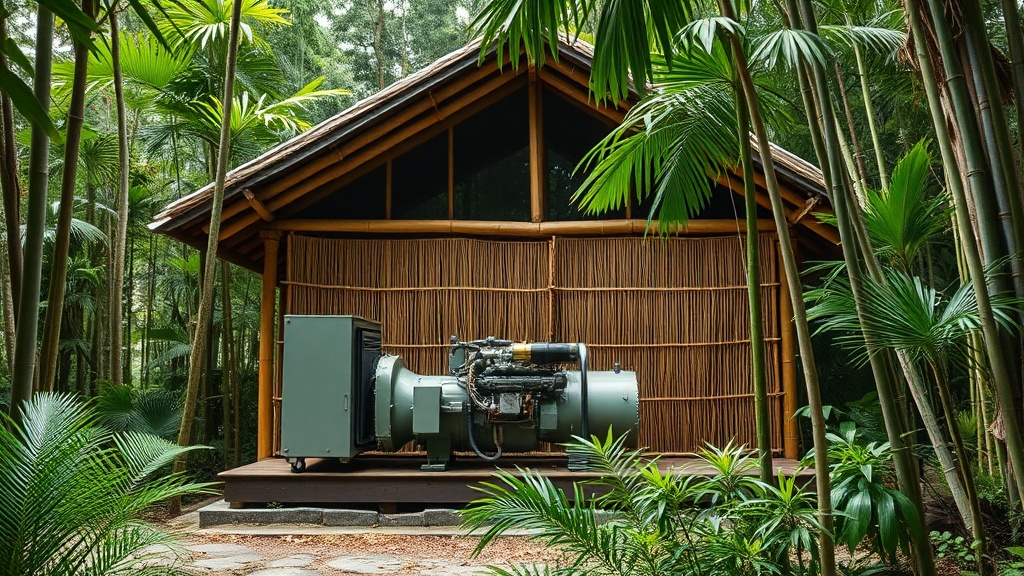
The Off-Grid Eco-Lodge Trap: A Logistics Audit of Remote Accommodations

Look, let's be real: we've all scrolled past the social media ads for those $800-a-night "off-grid eco-lodges." You know the ones. They feature an outdoor bamboo shower, a composting toilet that somehow doesn't smell, and a promise that your stay in these remote destinations is completely carbon-neutral.
But as a former logistics coordinator who used to audit supply chains for a living, I can't help but run the numbers. And the math on these remote luxury outposts is often incredibly messy. (Major eye-roll at the marketing teams pushing "primitive luxury" while secretly running industrial equipment in the jungle).
Here is the gritty truth about the "off-grid" tourism trap, and how to audit your next travel destination before you hand over your credit card.
The Vibe
The brochure sells you total isolation. You're disconnected from the main power grid, eating vegetables grown fifty feet from your door, and minimizing your impact. It feels like you're hacking the system, proving that high-end travel to exotic destinations doesn't have to wreck the planet.
The Footprint
Here is where the logistics get complicated. True "off-grid" living requires a massive amount of infrastructure to be hauled into remote, sensitive ecosystems.
If that lodge is deep in a jungle or on a remote coastline, how did the building materials get there? How do they transport the food that isn't grown on-site? How do they manage waste when there is no municipal sewer system? The harsh reality is that many of these boutique "eco-resorts" rely on diesel generators running 24/7 just out of earshot, and diesel trucks delivering daily supplies over unpaved roads.
A high-density hotel in a city center connected to a municipal power grid and a public transit system is often far more energy-efficient per guest than an isolated luxury yurt that requires private transit to access. The math doesn't lie.
The Reality
Does this mean you should never travel to a remote destination? No. I don't believe in guilt trips. But we need to stop equating "expensive and remote" with "sustainable."
If you want the math to check out, here is your 3-point audit for any off-grid accommodation:
- The Energy Source Check: Ask them point-blank what powers the property. If they say "solar," ask what their backup system is. If the answer is a diesel generator that runs all night to keep the air conditioning on, it's a localized emissions problem, not a sustainable solution.
- The Waste Logistics: What happens to the gray water? Where does the trash go? A true eco-lodge will have a transparent, verifiable system for dealing with waste that doesn't involve dumping it into the local watershed.
- The Local Economy Metric: Who owns the lodge? Are the profits staying in the local community, or are they being funneled to an overseas holding company? A locally-owned guesthouse with a leaky faucet and a grid connection is almost always better for the destination region than a foreign-owned resort.
Progress over perfection, fellow humans. Next time you're booking a stay, run the numbers, skip the greenwashing, and remember that sometimes the most sustainable bed is the one that doesn't require a diesel truck to reach.