Tracing the Salt Trails: A Slow-Traveler’s Guide to the Andean Altiplano

The most common misconception about the Andean Altiplano is that it is a wasteland. Most travelers view the high-altitude plateau spanning parts of Bolivia, Chile, Peru, and Argentina as a desolate, monochromatic void that is best viewed through a reinforced SUV window. This perspective is fundamentally flawed. The Altiplano is not a void; it is a highly specialized, high-functioning ecosystem where resource management is a matter of survival, not a lifestyle choice. To see it through a window is to miss the intricate logistics of life at 4,000 meters.
Slow travel in this region requires a shift from "sightseeing" to "system observation." Instead of rushing from one landmark to another, a sustainable approach focuses on the movement of salt, water, and livestock. This guide provides the technical framework for navigating this high-altitude landscape without the carbon footprint of a private tour operator or the superficiality of a luxury lodge stay.
The Logistics of Salt: Understanding the Salar de Uyuni
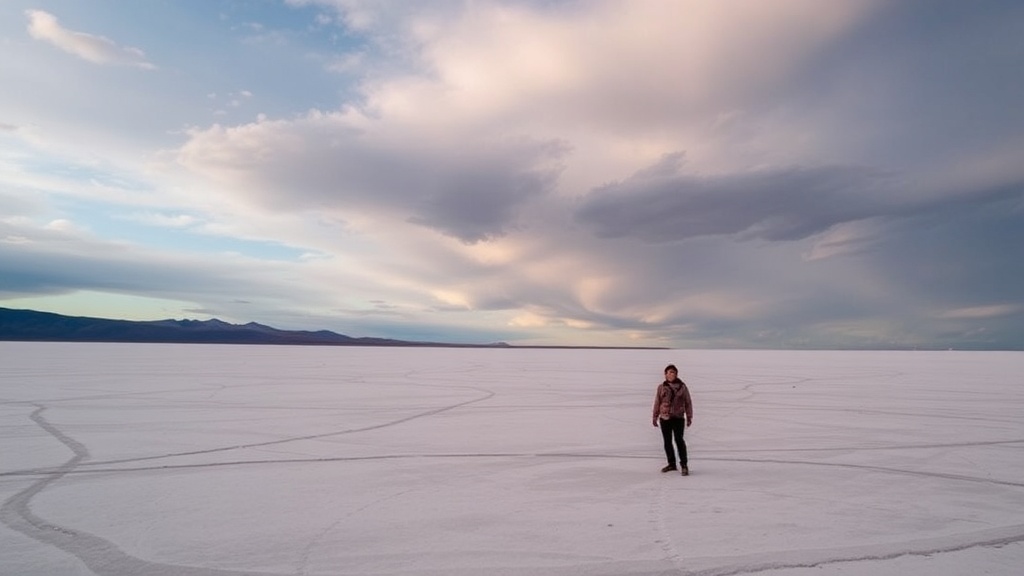
The Salar de Uyuni in Bolivia is often marketed as a "mirror effect" photo opportunity, but the reality is a massive lithium and salt extraction site. To travel here sustainably, you must understand the seasonality of the brine. During the rainy season (January to March), the water layer creates the famous mirror, but this also increases the difficulty of ground transport and can impact local water tables. For a low-impact trip, the dry season (May to September) is more predictable for ground-based logistics, though it lacks the reflective aesthetic.
Practical Execution:
- Avoid the "Private Tour" Trap: Most agencies offer 3-day tours that use high-emission 4x4 vehicles. Instead, look for group departures from Uyuni town that utilize shared transport. This reduces the per-capita carbon footprint and lowers your daily cost to approximately $150–$200 USD for the full circuit.
- Water Management: The Altiplano is an arid environment. Do not rely on single-use plastic bottles provided by tour operators. Carry a Nalgene 1L wide-mouth bottle and use Katadyn BeFree water filters if you are sourcing water from reliable, high-altitude springs or glacial runoff.
- Local Sourcing: When purchasing salt-based products or souvenirs, ensure they are sourced from the local cooperatives in Colchani. These small-scale salt harvesters rely on direct sales to sustain their families without the middleman markup of international export companies.
Navigating High-Altitude Micro-Climates
The Altiplano is not a single climate; it is a series of volatile micro-climates. You can experience a blistering sun at noon and a sub-zero frost by 4:00 PM. This volatility is a logistical challenge that many travelers underestimate, leading to wasted resources and unnecessary gear replacements. Understanding the thermal layers is critical for both your safety and your ability to move through the landscape without constant gear adjustments.
To prepare for these shifts, you must audit your gear through the lens of versatility rather than quantity. This is a technical necessity, much like navigating high-altitude micro-climates in other mountain ranges. You need a modular system that allows for rapid adaptation.
The Layering Protocol:
- Base Layer: Use 150–200 gsm Merino wool (such as Icebreaker or Smartwool). Avoid synthetic polyester if you are concerned about microplastic shedding in these sensitive water systems.
- Mid Layer: A high-loft down or synthetic insulated jacket (e.g., Patagonia Down Sweater) is non-negotiable for evening temperature drops.
- Shell: A breathable, windproof shell is more important than a heavy waterproof jacket, as the Altiplano is primarily wind-driven rather than rain-driven.
The Slow-Travel Itinerary: A Regional Breakdown
To truly experience the "Salt Trails," you should avoid the standard "Uyuni-to-Atacama" sprint. This route is often high-speed and high-waste. A more sustainable approach involves staying longer in specific hubs to support the local economy and reduce transport frequency.
Phase 1: The Bolivian Highlands (The Salt Core)
Start in Uyuni, but do not treat it as a transit point. Spend time in the smaller villages surrounding the Salar. This allows you to observe the salt harvesting process in its natural rhythm. Use La Paz as your primary logistics hub for supplies. When buying gear or food, prioritize local markets like Mercado Lanza over imported goods in tourist boutiques. This keeps your capital within the local economy and reduces the "imported footprint" of your journey.
Phase 2: The Chilean Atacama (The High Desert Transition)
Moving from Bolivia to Chile often involves crossing the Hito Cajón border. This is a high-altitude transit point that requires careful planning. Instead of staying in the high-priced luxury hotels in San Pedro de Atacama, look for hostales that use solar power and greywater recycling systems. The Atacama is one of the driest places on Earth; your water footprint here is a direct impact on the local desert ecosystem.
Pro-Tip: If you are trekking through the Atacama, practice zero-waste trekking techniques. The desert's ability to decompose organic matter is extremely slow due to the lack of moisture; everything you carry in must be carried out, including organic waste like fruit peels.
Sustainable Resource Management: A Checklist
Traveling in the Altiplano is a lesson in scarcity. As a traveler, your goal is to minimize your contribution to that scarcity. This means being hyper-aware of how you use energy, water, and waste disposal systems.
| Resource | The Standard Approach (High Impact) | The Slow-Traveler Approach (Low Impact) |
|---|---|---|
| Water | Buying multiple 500ml plastic bottles daily. | Using a Grayl GeoPress or Katadyn filter with a reusable vessel. |
| Transport | Private 4x4 vehicle for a 3-day tour. | Shared transit or longer-duration stays in one location. |
| Energy | Relying on diesel heaters and electric heating. | Utilizing natural thermal layers and solar-powered power banks. |
| Waste | Leaving organic waste in remote areas. | Packing out all waste, including food scraps and hygiene products. |
The Ethical Dilemma of Lithium Extraction
It is impossible to discuss the Altiplano without addressing the elephant in the room: Lithium. The very salt flats you are traveling to see are the primary source for the world's lithium supply, essential for the global transition to electric vehicles. This creates a tension between "green" technology and local ecological preservation.
As a responsible traveler, you should be aware that the extraction process is water-intensive and can deplete the local aquifers used by indigenous communities. Do not ignore this reality in favor of a "pure nature" narrative. Instead, use your platform to support local communities that are fighting for water rights. When choosing where to stay, look for businesses that are vocal about their water conservation practices and their relationship with the local ayllus (indigenous communities).
Final Technical Summary
The Andean Altiplano is not a place for the unprepared. It is a high-stakes environment where logistics, gear, and respect for local resource management dictate the quality of your experience. If you approach it as a consumer of "scenery," you will likely leave a trail of waste and superficiality. If you approach it as an observer of a complex, high-altitude system, you will find a landscape that is profoundly rewarding and deeply instructive.
Key Takeaways for Your Logistics Audit:
- Prioritize: Modular layering, water filtration, and shared transport.
- Avoid: Single-use plastics, private luxury tours, and imported luxury goods.
- Focus: On the seasonal rhythms of the salt and the micro-climates of the high plateau.