Beyond the Trailhead: A Logistics Audit of High-Altitude Micro-Climates

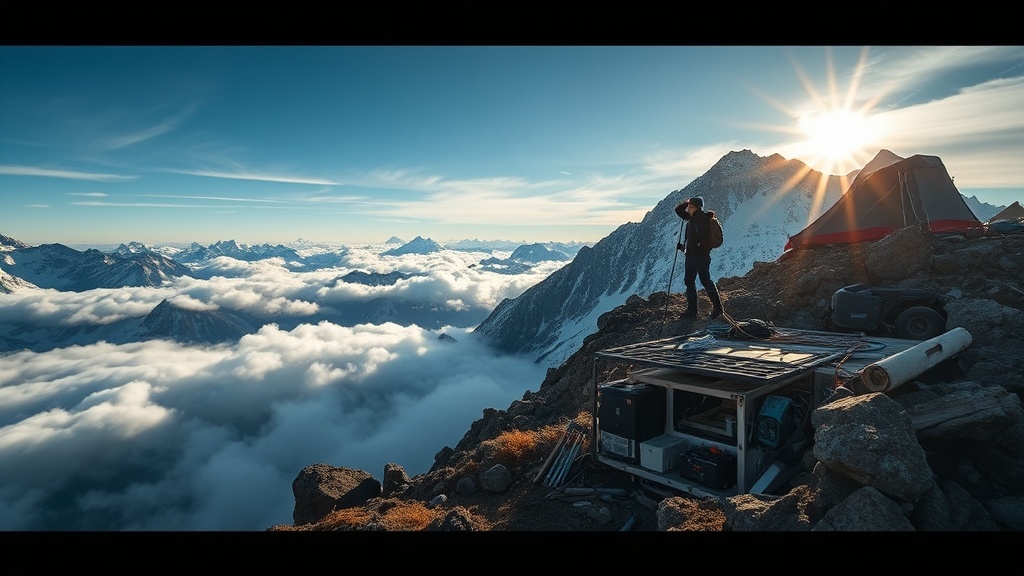
A single 500-meter ascent in the Andes or the Himalayas can trigger a temperature drop of approximately 3.5°C, a phenomenon that renders standard weather forecasts almost useless for precision planning. Most travelers rely on general regional forecasts, but high-altitude micro-climates operate on a localized scale that defies macro-level data. To navigate these environments successfully, you cannot treat a mountain range as a single entity; you must treat it as a series of distinct, high-velocity logistics puzzles.
The Variables of Verticality: Understanding the Micro-Climate Engine
Micro-climates in high-altitude zones are driven by three primary mechanical forces: adiabatic cooling, orographic lift, and thermal inversion. When moist air hits a vertical barrier like the peaks of the Cordillera Blanca, it is forced upward. As it rises, the pressure drops, the air expands, and the temperature plunders. This is why you can experience a temperate, sunny afternoon at a base camp of 3,000 meters and find yourself in a sub-zero blizzard at 4,500 meters just thirty minutes later.
To audit your gear and itinerary, you must stop looking at the "average" temperature and start looking at the rate of change. If you are planning a trek through the Sacred Valley, for instance, you need to account for the fact that the valley floor may be a humid 22°C while the surrounding ridges are experiencing frost-point transitions. This is why navigating the high altitudes of the Sacred Valley requires more than just a heavy jacket; it requires a tiered system of thermal regulation that responds to rapid atmospheric shifts.
The Orographic Effect and Wind Velocity
Wind is the most underrated logistical variable in high-altitude travel. It isn't just about the temperature; it is about the wind chill factor and the physical energy required to maintain movement. In areas like the Patagonian Andes, the wind is not a constant breeze but a series of high-velocity gusts that can physically push a hiker off-balance. When auditing your gear, do not look for "windproof" labels—look for specific denier ratings on your shell layers. A high-denier nylon shell provides the structural integrity needed to withstand sustained gusts that would shred a lightweight, single-wall tent or a low-denier windbreaker.
The Gear Audit: Moving Beyond "Weatherproof" Marketing
Marketing departments love the word "waterproof," but in high-altitude micro-climates, "breathability" is actually the more critical metric. If your outer shell prevents moisture from escaping your body during a high-exertion climb, you will experience internal condensation. This leads to "wet-out" from the inside, a failure state where your base layers become damp with sweat, drastically increasing the risk of hypothermia once you stop moving.
The Three-Layer System: A Technical Breakdown
A functional high-altitude kit must be modular. If a piece of gear cannot be swapped or layered in under 60 seconds, it is a liability.
- The Base Layer (Moisture Management): Avoid cotton at all costs. Use Merino wool (minimum 150g/m²) or synthetic fabrics like Polartec Power Dry. These materials move moisture away from the skin through capillary action. In a micro-climate where you may sweat heavily during an ascent and freeze during a descent, your base layer is your primary defense against thermal loss.
- The Mid-Layer (Thermal Retention): This is where you build your "loft." A high-fill power down jacket (800+ fill) is excellent for static warmth, but in high-humidity micro-climates, a synthetic insulation jacket like the Patagonia Nano-Air or an Arc'teryx Atom is superior because synthetic fibers still retain heat when damp.
- The Shell Layer (The Barrier): You need a hard shell with a high hydrostatic head rating. Look for Gore-Tex Pro or eVent membranes. The goal is to create a barrier against the orographic precipitation (the rain/snow forced up the mountain) while allowing vapor to escape.
Logistical Planning: The Data-Driven Itinerary
Standard travel booking often fails because it assumes a linear progression of weather. High-altitude logistics require a non-linear approach. You must build "buffer days" into your itinerary to account for the inevitable weather-induced delays. If you are trekking in the Himalayas or the Andes, a single storm front can halt all movement for 48 to 72 hours. If your logistics don't account for this, you aren't planning a trip; you're planning a catastrophe.
The "Window" Strategy
Instead of picking a fixed date to reach a summit or a high pass, identify your "weather windows." This involves studying historical meteorological data for your specific coordinate. For example, if you are operating in the Arctic or high-latitude environments, you must account for the 24-hour light cycles. While chasing the midnight sun in Iceland provides endless daylight, the rapid shifts in temperature and light intensity mean your circadian rhythm and your energy management must be strictly regulated to avoid fatigue-induced errors.
Supply Chain Management for Remote Camps
When you are operating in a micro-climate, your food and fuel supplies are subject to different degradation rates. High altitude and low pressure affect boiling points. At 4,000 meters, water boils at a much lower temperature, meaning it takes significantly longer—and more fuel—to prepare a meal. When auditing your pack weight, do not just calculate the weight of the food; calculate the fuel-to-calorie ratio. If you are using a canister stove like a MSR Reactor, ensure you have enough isobutane-propane mix to account for the decreased efficiency at altitude and lower ambient temperatures.
The Environmental Audit: Minimizing the Footprint in Fragile Zones
High-altitude ecosystems are incredibly slow to recover from human interference. The lack of oxygen and the extreme temperature swings mean that organic matter decomposes much slower than at sea level. This creates a unique challenge for waste management. A "Leave No Trace" policy in a temperate forest is different from a "Leave No Trace" policy on a high-altitude glacier.
Human Waste: In many high-altitude zones, the ground is permafrost or sheer rock. You cannot simply "bury" waste. You must carry out everything you carry in. This means investing in a lightweight, collapsible waste system or a dedicated "poop kit" for high-altitude trekking. If you are traveling in the Patagonian Andes, be aware that the wind can easily carry lightweight waste if not properly secured.
Water Purification: While many travelers rely on UV purifiers, these are often ineffective in high-altitude micro-climates where water temperatures are near freezing. UV light requires clear water to work, and cold water can slow the reaction. Mechanical filtration (like a Katadyn BeFree) or chemical treatment (like Chlorine Dioxide tablets) is more reliable in these specific environments because they are less dependent on light penetration and temperature stability.
Final Checklist for High-Altitude Deployment
Before you depart, run your kit through this final audit. If you cannot answer "yes" to every point, your logistics are incomplete.
- Thermal Redundancy: Do I have a way to stay warm if my primary mid-layer becomes soaked?
- Pressure Check: Have I accounted for the increased fuel consumption required by lower boiling points?
- Micro-Data Review: Am I relying on a regional forecast, or have I checked the specific topographical implications for my route?
- Weight-to-Utility Ratio: Is every item in my pack serving a specific, documented purpose for the temperature swings I will encounter?
High-altitude travel is not about conquering the mountain; it is about the precise management of variables. When you treat your expedition as a logistical operation rather than a casual hike, you move from being a spectator of the landscape to a capable, sustainable participant in it.