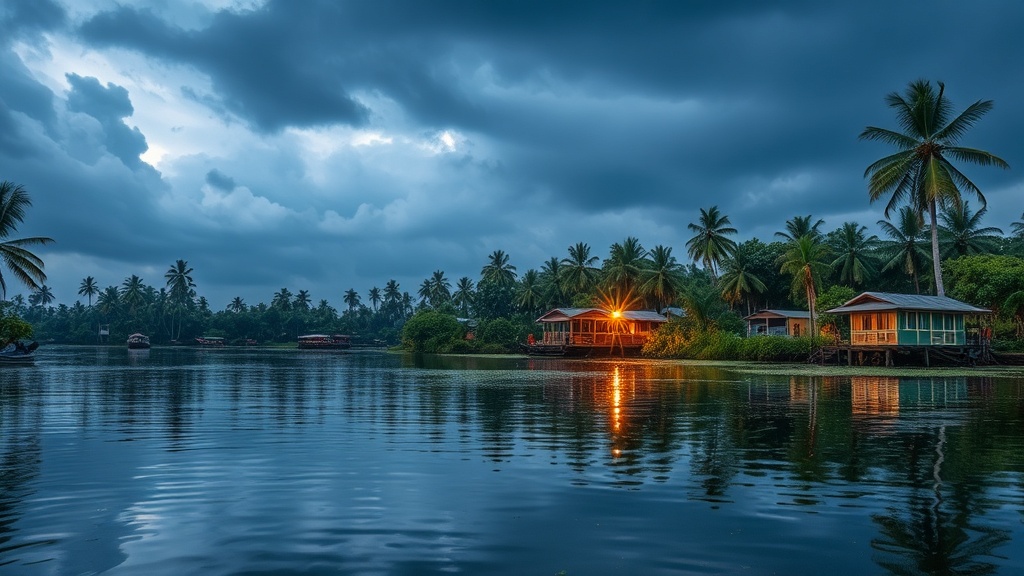
Whispers of the Monsoon: Navigating the Seasonal Rhythms of Kerala's Backwaters

During the peak of the Southwest Monsoon, the water levels in the Vembanad Lake system can fluctuate by several meters in a matter of weeks, fundamentally altering the navigable routes for traditional vallam (small wooden boats) and luxury houseboats alike. This isn't just a change in weather; it is a total reconfiguration of the local logistics and ecosystem. To the uninitiated, the monsoon looks like a reason to stay home. To the strategic traveler, it is a window into the raw, unfiltered mechanics of one of the world's most complex aquatic networks.
The Seasonal Breakdown: Decoding the Three Phases
Navigating Kerala’s backwaters requires more than a raincoat; it requires an understanding of the hydrological cycles that govern the region. The climate here is not a monolith of "rainy" or "sunny," but a sequence of distinct operational phases.
1. The Southwest Monsoon (June – August)
This is the heavy-duty phase. Driven by high-pressure systems over the Indian Ocean, this period brings intense, sustained rainfall. From a logistics standpoint, this is the "high-risk, high-reward" window. While many tourist-centric houseboats may limit operations due to safety concerns or high maintenance costs, the greenery is at its absolute zenith. The water is replenished, and the nutrient runoff fuels the local aquaculture. If you are traveling now, prioritize stays in homestays in Alappuzha or Kumarakom that are built on elevated ground, and ensure your transport provider has a proven safety record for heavy precipitation.
2. The Post-Monsoon Transition (September – October)
As the heavy rains subside, the landscape enters a period of rapid recovery. The humidity remains high, but the intensity of the downpours decreases. This is an ideal window for observing the return of migratory bird species to the Vembanad and Ashtamudi lagoons. The water levels are high, making the deeper channels highly navigable, which is perfect for larger vessels, though smaller canals may still be prone to debris from the recent rains.
3. The Northeast Monsoon and Dry Season (November – May)
This is the standard tourist season. The weather is predictable, the skies are clear, and the demand for water-based transport peaks. However, this is also when the "greenwashing" of luxury resorts is most prevalent—many claim "eco-friendly" status while consuming massive amounts of desalinated water and imported goods during the drier months. If you want to travel sustainably during this period, look for properties that utilize rainwater harvesting and local organic supply chains to mitigate the seasonal water scarcity.
Logistics of Waterborne Transport: Choosing Your Vessel
The way you move through the backwaters dictates your carbon footprint and your level of immersion. Not all vessels are created equal, and the distinction is vital for a low-impact traveler.
- Kettuvallam (Traditional Houseboats): Originally used to transport rice and spices, these are now the primary mode of luxury tourism. While iconic, many modern kettuvallams use diesel engines that can leak oil directly into the fragile lagoon ecosystems. If you book one, ask specifically about their waste management protocols and whether they use biodegradable soaps for cleaning the decks.
- Shikara Boats: These are smaller, lighter, and much more maneuverable. They are the preferred choice for navigating the narrower, shallower canals of Kuttanad. Because they are lighter, they cause less displacement and disturbance to the water's surface, making them a better choice for observing local life without causing unnecessary wake.
- Country Canoes (Vallams): For the most sustainable and authentic experience, opt for a hand-paddled canoe. This is zero-emission transport that allows you to glide through the narrowest channels where motorized boats cannot go. It also allows for a much quieter interaction with the local fauna.
For those interested in how seasonal shifts affect river-based travel more broadly, see our guide on drifting with the current and seasonal rhythms.
The Kuttanad Paradox: Agriculture and Water Levels
A critical component of the Kerala backwater experience is the Kuttanad region, a unique landscape where farming is done below sea level. This is a feat of engineering and a highly specialized agricultural system. During the monsoon, the management of water levels is a delicate balancing act between preventing floods and maintaining the salinity levels necessary for certain crops.
When visiting, do not just view the paddy fields as a backdrop for photos. Understand that the bunds (embankments) are actively managed. The way water is diverted into and out of these fields is a massive logistical undertaking. To support this local economy, seek out restaurants that serve Karimeen Pollichathu (pearl spot fish marinated in spices and steamed in banana leaves) sourced directly from local fishermen. This ensures your food miles are kept to a minimum and supports the traditional fishing communities whose livelihoods are directly tied to these seasonal cycles.
A Sustainable Packing List: Practicality Over Aesthetics
Standard "tropical" packing lists are often too vague. To navigate the backwaters effectively, your gear must be functional and durable. The humidity in Kerala is relentless, often exceeding 80%, which renders many standard fabrics useless.
- Technical Fabrics: Avoid heavy cotton. Opt for merino wool blends or lightweight, moisture-wicking synthetics. These materials dry faster and resist the odors that accumulate in high-humidity environments.
- Footwear: You will likely be transitioning between boat decks, muddy paths, and tiled floors. A pair of high-grip sandals (like Chacos or Tevas) is essential. They handle water well and provide the traction needed on slippery wooden boat decks.
- Dry Bags: Essential for protecting electronics during sudden monsoon downpours. A 10L or 20L Sea to Summit dry bag is a non-negotiable piece of kit for any boat-based travel.
- Biodegradable Toiletries: The backwaters are a closed-loop system. Any chemical runoff from your sunscreen or shampoo goes directly into the water where people fish and bathe. Use brands like Dr. Bronner’s or local Ayurvedic-based products that are verified to be biodegradable.
The Audit: How to Spot "Greenwashed" Backwater Stays
As a traveler, you must be an auditor of the services you consume. Many resorts in Alleppey or Kumarakham use "eco-friendly" as a marketing buzzword without any substantive operational changes. Use these three criteria to vet your accommodation:
1. Waste Management: Ask where the kitchen waste goes. A truly sustainable resort will have an on-site composting system for organic matter and a strict policy against single-use plastics. If they provide plastic water bottles in the room, they are not an eco-resort.
2. Energy Source: Does the property rely solely on the grid, or do they utilize solar power for water heating or lighting? In a region with high solar irradiance, a lack of solar integration is a missed opportunity for sustainability.
3. Local Sourcing: A real eco-lodge should be able to name the village where their vegetables or fish are sourced. If the menu relies heavily on imported goods or "international" ingredients, their connection to the local ecosystem is superficial at best.
By understanding the seasonal rhythms and the logistical realities of the Kerala backwaters, you move from being a passive observer to an informed, responsible traveler. You aren't just visiting a landscape; you are participating in a complex, living system.