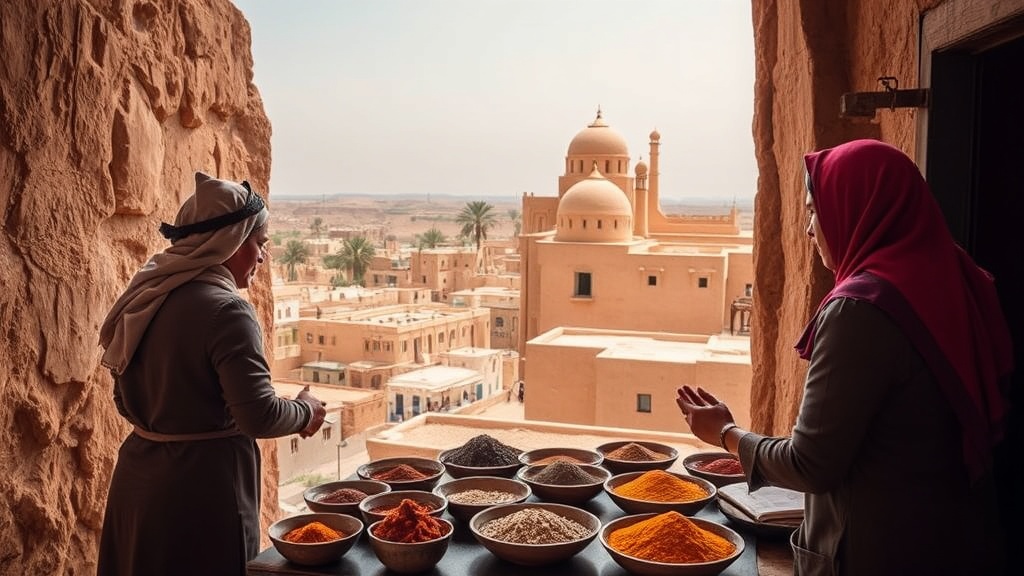
Savoring the Spice Routes: A Culinary Journey Through Oman's Frankincense Trails

The Fragrance of Dhofar: Harvesting Sacred Frankincense
Souq Traditions: Navigating the Aromas of Muscat
Omani Coffee Culture: The Ritual of Kahwa and Dates
Can you actually taste the history of a trade route through its spices, or is the "aroma of antiquity" just another marketing term used to inflate souvenir prices? In the Dhofar region of southern Oman, the answer lies in the resin of the Boswellia sacra tree. This isn't just a scent profile; it is a biological and economic backbone that has dictated the movement of people and goods across the Arabian Peninsula for millennia. To travel this route sustainably, you have to move beyond the luxury resorts of Salalah and look at the actual production cycles of frankincense and the local food systems that support them.
Navigating the spice routes requires a logistical understanding of seasonality. If you arrive in Salalah during the Khareef (the monsoon season), you will find a lush, green landscape, but the heavy mists and high humidity can make certain outdoor culinary explorations difficult. For a pragmatic traveler, the window between October and March offers the most stable weather for exploring the inland wadis and mountain villages where the true flavors of the frankincense trail reside.
1. The Resin Audit: Identifying High-Grade Frankincense
Most travelers buy "frankincense" in plastic containers from airport gift shops, often purchasing low-grade resin or even synthetic fragrances. To engage with the culture authentically, you must understand the grading system. High-quality Boswellia sacra, often referred to as "Hojari" frankincense, is harvested from the Dhofar mountains. It is characterized by a bright, citrusy scent and a translucent, pale greenish-white appearance.
- The Visual Test: Look for tears that are firm and have a slight translucency. If the resin looks dusty or excessively dark, it is likely older or lower grade, lacking the essential oils that define the premium experience.
- The Scent Profile: Real Hojari should have a sharp, clean, slightly lemon-like aroma. Avoid any products that smell overly "woody" or heavy, as these are often lower-tier resins used for industrial purposes.
- Sourcing Locally: Instead of high-end boutiques, visit the local markets in Salalah or smaller village stalls in the Dhofar Governorate. This ensures your money stays within the local harvesting communities rather than being siphoned off by international distributors.
2. The Architecture of the Omani Meal: Shuwa and Slow-Cooking
If frankincense is the scent of the region, Shuwa is its soul. This is not a dish you can "order" on a whim; it is a highly logistical culinary event that requires days of preparation. Shuwa consists of marinated meat—typically goat or lamb—which is wrapped in palm leaves and cooked in an underground pit for up to two days. This method is a masterclass in resource efficiency, utilizing geothermal heat and minimal surface-level fuel.
To experience this without falling into the trap of "tourist menus," look for local celebrations or specific traditional eateries that advertise the cooking process. The meat is seasoned with a heavy blend of cumin, coriander, cloves, and cinnamon, then buried under hot coals and earth. The result is a texture that is incredibly tender, designed to be eaten with your hands and accompanied by Omani bread (Khubz) and local rice.
When auditing your dining choices, ask about the provenance of the meat. In the Dhofar region, much of the livestock is raised on local grazing lands, making it a more sustainable, low-carbon option than imported beef. This connection to the land is a recurring theme in slow-traveler’s guides to high-altitude and desert regions, where the diet is dictated strictly by what the immediate environment can provide.
3. Navigating the Wadis: Hydration and Local Produce
The wadis (valleys) of Oman are more than just scenic spots for a dip; they are the lifelines of the desert. The traditional Aflaj irrigation systems—ancient gravity-fed channels—are still used to cultivate dates, citrus, and various herbs. When traveling through areas like Wadi Darbat, you aren't just looking at a landscape; you are looking at a highly engineered agricultural system.
For the pragmatic traveler, the best way to refuel is to seek out local date plantations. The Khalas and Fard varieties are staples here. Dates are a high-density energy source, perfect for hikers and explorers. However, avoid the pre-packaged, highly sweetened "date candies" found in tourist hubs. Instead, look for the raw, sun-dried dates sold in bulk. They are cheaper, contain no additives, and provide the actual caloric density needed for trekking.
- Hydration Strategy: While the wadis offer beautiful water, do not rely on untreated water from the pools. Carry a high-quality filtration system or purchase large, reusable containers to minimize single-use plastic waste, which is a significant issue in the more remote parts of the Dhofar region.
- Seasonal Fruit: If traveling during the late summer, look for local melons and citrus fruits which are abundant in the wadi settlements. These are far more refreshing and ecologically sound than imported energy drinks.
4. The Coffee Ritual: Qahwa and the Social Economy
In Oman, coffee is not a quick caffeine fix; it is a ritualized social lubricant. Qahwa (Omani coffee) is infused with cardamom and often a hint of saffron or cloves. It is served in small, handleless cups called finjals and is almost always accompanied by dates to balance the bitterness of the spice.
Understanding the etiquette of Qahwa is essential for respectful travel. The coffee is poured in small increments, and the cup is never filled to the brim. When you have had enough, you tilt the cup slightly from side to side to signal you are finished. This ritual is a way to manage resources—the coffee is meant to be sipped slowly, fostering conversation rather than rapid consumption.
To find the best Qahwa, skip the hotel lobbies and look for local majlis-style cafes. These are spaces where the community gathers. The spices used in the coffee—cardamom and saffron—are direct links to the spice trade history, and the quality of the spice used is a direct indicator of the cafe's respect for tradition.
5. Practical Logistics: Transport and Sustainability
Traveling the frankincense trails is not a feat achieved by public buses. To truly reach the mountain villages and the remote groves where the Boswellia sacra grows, you will need a 4x4 vehicle. However, this brings a logistical challenge: the carbon footprint of vehicle-heavy travel in a desert environment.
To mitigate this, I recommend a "hub and spoke" model. Base yourself in Salalah for a longer duration (at least 5-7 days) rather than moving every night. This reduces the total mileage driven and allows you to engage more deeply with a single ecosystem. When renting a vehicle, prioritize companies that offer well-maintained diesel engines, which are generally more fuel-efficient for long-distance desert travel than smaller petrol engines.
A Note on Waste: The desert is a fragile ecosystem. The ability of organic matter to decompose in the arid heat of the Dhofar region is extremely low. If you are trekking through the wadis or the mountains, your "leave no trace" policy must be absolute. This means carrying out every piece of non-biodegradable waste, including organic scraps that might disrupt the local micro-habitats.
"The true value of a journey is found in the friction between the traveler and the local reality. If you aren't sweating, and if you aren't questioning the source of your food, you aren't traveling; you're just consuming a curated experience."
Summary Checklist for the Spice Route
Before you depart for the Dhofar region, ensure your kit and your mindset are prepared for the specificities of the frankincense trail:
- Verification: A way to check the quality of spices (visual and scent-based).
- Equipment: A high-quality water filtration system to avoid the plastic-waste cycle.
- Timing: Aim for the post-Khareef window (October–March) for optimal trekking and culinary exploration.
- Dietary Focus: Prioritize local, seasonal foods like Shuwa, dates, and wadi-grown citrus over imported or processed goods.
By approaching the spice routes with a focus on the actual production and traditional methods, you move from being a passive consumer to an informed explorer. You aren't just tasting spices; you are understanding the complex, fragile, and highly efficient systems that have kept this region alive for centuries.