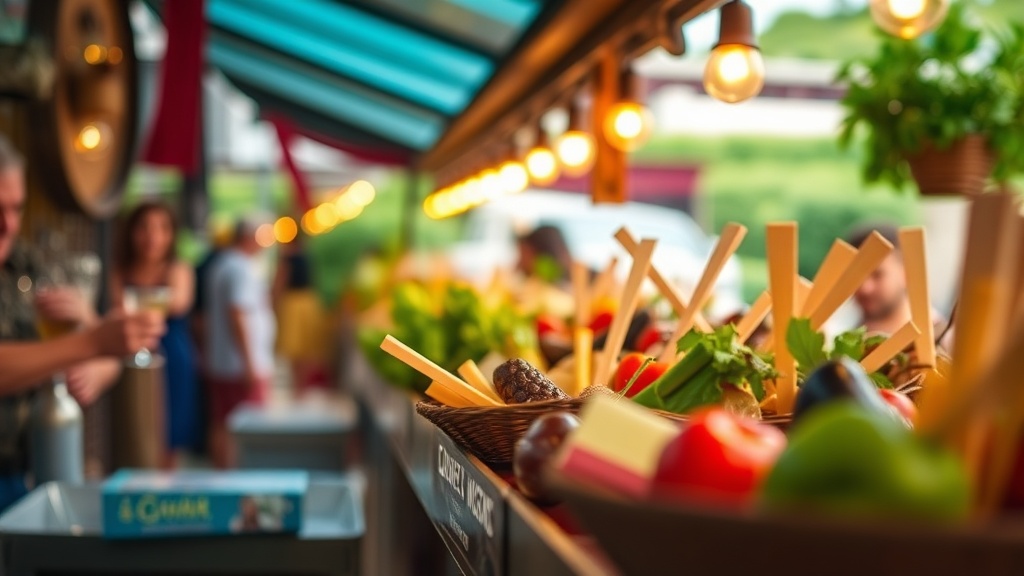
Finding Authentic Flavors with Local Food Tours

The smell of charred octopus hitting a hot stone, the sharp sting of lime and chili on a street corner in Oaxaca, and the heavy, rhythmic thud of a wooden pestle against a stone mortar. This isn't a staged performance for a tourist bus; it's the actual, gritty, delicious reality of a culture's history. This post breaks down how to identify, vet, and book food tours that actually support local economies rather than just funneling money into massive international hospitality groups. We’re looking at how to find the real deal through the layers of marketing noise.
How Do I Find an Authentic Food Tour?
Authentic food tours are found by looking for small-scale, specialized operators who prioritize local producers over centralized commercial kitchens. Most "food tours" you see on major booking platforms are actually just guided walks through high-traffic tourist areas where the food is standardized. To find the real stuff, you need to look for operators that focus on a specific niche—like a single ingredient, a specific neighborhood, or a specialized craft like fermentation or baking.
Look for a few specific indicators of quality. First, check the "About Us" section. If they mention working with specific farmers or local markets by name, that’s a good sign. Second, look at the scale. A tour that takes 20 people through a crowded street is a logistics nightmare and usually a sign of a high-volume, low-quality operation. A group of six or eight is much better for the actual experience.
I always check the documentation. If a tour claims to be "eco-friendly" or "sustainable," I treat that as a red flag until I see proof. I look for evidence of a circular economy—meaning, are they buying from the person standing right next to them, or are they sourcing from a global distributor? It’s easy to slap a green leaf on a website, but the real work is in the supply chain.
Here is a quick checklist for your vetting process:
- The Producer Test: Does the tour visit a producer (a baker, a cheesemaker, a farmer) or just a restaurant?
- The Scale Test: Is the group size under 10 people?
- The Transparency Test: Can you find the names of the vendors they visit?
- The Local Factor: Is the guide a local resident or a professional tour guide from a big agency?
If the tour doesn't pass the producer test, it's just a walking snack. Real food culture is built on the people who make the food, not just the people who serve it.
What Is the Real Cost of a Food Tour?
A quality food tour typically costs between $75 and $150 USD per person, depending on the complexity and the number of tastings included. While you might find "budget" tours for $30, these are often high-volume walks that don't actually pay a fair wage to the vendors or the guides. When you pay more, you aren't just paying for the food; you're paying for the access to people and places that aren't open to the general public.
Don't be afraid of a higher price tag if the breakdown makes sense. If a tour includes a visit to a small-batch producer, that person's time and product have a real cost. I've found that the most expensive tours often provide the most value because they include things you simply couldn't find on your own—like a private tasting in a family-run cellar or a demonstration of a traditional cooking technique.
On the flip side, I've seen "cheap" tours that end up being more expensive in the long run because you end up paying for extra drinks or additional snacks that weren't clearly listed. Always read the fine print regarding what is included. Does it include water? Does it include a tip for the guide? Is the tip built into the price, or is it expected at the end? (I always suggest adding 15-20% if it isn't included, as it's the most direct way to support the person actually doing the work.)
| Tour Type | Typical Price (USD) | What You Get | The "Real" Value |
|---|---|---|---|
| Mass-Market Walking Tour | $25 - $50 | Street food snacks, high-traffic areas | Low; mostly for the "vibe" |
| Specialized Niche Tour | $75 - $120 | Producer visits, specific ingredients | High; deep cultural insight |
| Premium/Private Experience | $150 - $300 | Chef-led, private locations, full meal | Highest; exclusive access |
How Can I Avoid Food Tourism Greenwashing?
To avoid greenwashing, you must look past the adjectives and examine the actual logistical impact of the tour. Many companies use words like "authentic," "traditional," or "sustainable" to mask the fact that they are actually supporting a standardized, globalized food system. If a tour claims to support "local farmers" but only takes you to shops that carry mass-produced, branded goods, they are lying to you.
I look for the "why." Why is this tour happening? If the goal is purely to move a crowd of people through a street to buy a specific product, it's a commercial venture, not a cultural one. A real food tour should be an educational experience. It should explain the why behind the ingredients—why this specific soil produces this specific pepper, or why this method of cooking has been used for five hundred years.
Check the source of the ingredients. If you're in a region known for its coffee, and the tour takes you to a shop that sells a major global brand, that's a red flag. A real tour would take you to a local roaster or a small-scale farm. This is the same way I approach evaluating an eco-lodge. You have to look at the actual operations, not just the marketing materials. If you're curious about how to spot these discrepancies in other areas of travel, I've written about how to spot greenwashing at an eco-lodge, and the principles are exactly the same: look for the evidence of local impact.
One thing to watch for is the "performative" aspect. Some tours include a "demonstration" that feels incredibly staged—like a person in a costume making a dish in a way that doesn't reflect how locals actually live or work. That's a sign of a tour designed for social media, not for cultural exchange. It's a hollow experience. It might look good on your feed, but it's not contributing anything to the local economy or the preservation of the craft.
The most reliable way to vet a tour is to look for third-party certifications or endorsements from local organizations. For example, if you are traveling in Europe, look for associations that prioritize traditional foodways. In the US, look for connections to local agricultural extensions or non-profits. This isn't about finding a perfect, 100% pure experience—that doesn't exist—but about finding the one that is most honest about its footprint.
If you find yourself in a situation where you're traveling by land to reach these remote food regions, remember that your transport choices matter too. Choosing a train over a short-haul flight can often get you closer to these rural production areas while keeping your footprint smaller. I've detailed that approach in my post on why you should choose train travel over short-haul flights.
Ultimately, the goal is to be a participant, not just a consumer. When you engage with a tour that actually respects the producer and the history of the food, you're doing more than just eating; you're participating in the preservation of that culture. It’s a small, delicious way to ensure these traditions actually survive the next generation of globalized tourism.
Steps
- 1
Research Community-Led Tours
- 2
Ask About Ingredient Sourcing
- 3
Look for Seasonal Menus
- 4
Support Small-Scale Vendors