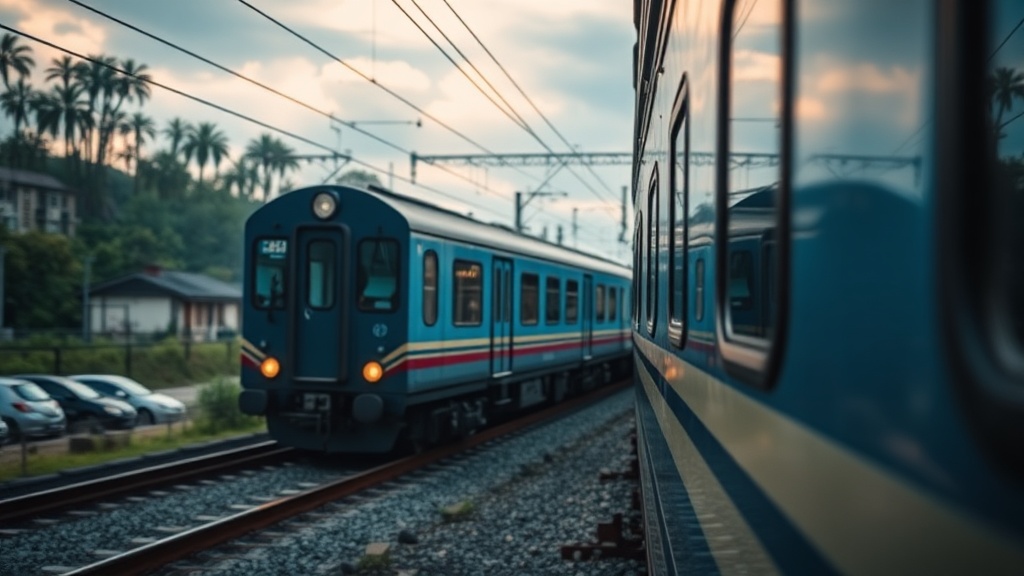
Why You Should Choose Train Travel Over Short Haul Flights

A 45-minute flight from London to Paris seems efficient on paper, but once you factor in the transit to Heathrow, the two-hour pre-flight security buffer, the baggage weight restrictions, and the trek from Charles de Gaulle into central Paris, the "time saved" evaporates. This guide breaks down the logistical, environmental, and financial advantages of choosing rail over short-haul aviation. You will learn how to audit your transit options, manage long-distance travel gear, and optimize your itinerary for actual efficiency rather than perceived speed.
The Carbon Math: Emissions vs. Marketing Claims
When airlines claim "carbon neutral" flights through offset programs, they are often engaging in high-level greenwashing. Offsetting is a secondary mitigation strategy, not a reduction of the actual footprint. A short-haul flight from Berlin to Munich emits significantly more CO2 per passenger than a high-speed train on the same route. This isn't just about the fuel burned; it is about the high-intensity energy required for takeoff and landing.
The data is clear: traveling by rail produces a fraction of the emissions of a commercial flight. For example, the Eurostar connecting London to Amsterdam or Brussels operates on electric power, which, depending on the grid, can be sourced from renewable energy. In contrast, a short-haul flight relies on kerosene-based combustion. If your goal is to reduce your personal carbon footprint, the decision to switch to rail is one of the most impactful single changes you can make to your travel logistics.
Understanding the "Hidden" Flight Costs
Airlines often use low base fares to lure travelers, but the true cost of a flight includes the logistical friction of the airport environment. You must account for:
- Airport Transfers: Most low-cost carriers fly into secondary airports (like London Stansted or Paris Beauvais) which are often an hour or more away from city centers, requiring additional bus or train fares.
- Baggage Fees: Budget airlines frequently charge for even small carry-ons, which can quickly push the price above a standard rail fare.
- Time Tax: The 3-hour "buffer" required for security and boarding is unpaid time that reduces your actual adventure time.
Logistical Advantages of Rail Travel
From a logistics standpoint, trains offer a level of predictability and comfort that aviation cannot match. When you book a train, you are moving from city center to city center. There is no remote terminal to navigate, and the "check-in" process is often as simple as showing a digital ticket to a conductor.
Productivity and Space Management
In a flight, you are confined to a seat with limited vertical and horizontal space. On a train, particularly long-distance services like the ÖBB Nightjet through Europe or the Amtrak corridors in the US, you have access to much more physical space. You can walk to a dining car, use a larger restroom, and, most importantly, you have a stable surface for a laptop or a book.
If you are a digital nomad or a traveler who needs to stay productive, the ability to use a stable table and reliable Wi-Fi (where available) is a massive logistical win. Furthermore, you can manage your gear more effectively. Unlike the rigid weight limits of a cabin bag on a flight, rail travel allows for more flexibility with your gear. This is particularly useful if you are renting gear instead of buying it, as you won't be penalized for the slightly larger or heavier packages often associated with specialized outdoor equipment.
Planning Your Itinerary: The Multi-Modal Approach
The most efficient way to travel via rail is to stop viewing it as a single leg and start viewing it as part of a connected system. To maximize your time, you should integrate your rail travel with local transit and walking.
- Use Aggregators for Research: Do not rely solely on a single carrier's website. Use tools like Rome2Rio or Google Maps to see how rail connections link up with local buses or trams. This gives you a full picture of the transit chain.
- Book High-Speed for Distance, Night Trains for Efficiency: If you are traveling between major hubs like Madrid and Barcelona, use the AVE high-speed rail to save time. If you are traveling long distances (e.g., Munich to Vienna), book a sleeper berth on a night train. This combines your transit time with your sleep time, saving you the cost of a hotel night and a full day of travel.
- Download Offline Maps: Rail schedules and station layouts can be complex. Even with high-speed internet on trains, dead zones are common. Always bring a local map offline to ensure you can navigate the station and the surrounding city without relying on a shaky data connection.
The Financial Reality: Budgeting for Rail
The common misconception is that trains are always more expensive than budget airlines. This is a failure of budgeting, not a reality of the industry. While a last-minute flight might seem cheap, the "total cost of transit" (including luggage and transfers) often exceeds a pre-booked rail ticket.
To travel sustainably on a real budget via rail, follow these tactical rules:
1. The Early Booking Rule
Rail prices, much like flights, are dynamic. Booking a ticket for the Renfe in Spain or SNCF in France three months in advance can save you up to 60% compared to buying a ticket at the station on the day of travel. Treat your train tickets with the same foresight as your flights.
2. Utilize Rail Passes
If you are traveling through multiple countries, a single ticket per leg is inefficient. Look into the Eurail Pass or Interrail. These passes allow for much greater flexibility and can significantly lower the per-mile cost of your journey. They are particularly useful for adventure travelers who want the freedom to change their destination based on weather or local recommendations.
3. Manage Your Weight and Bulk
While trains are more forgiving than planes, you should still optimize your luggage to move through stations efficiently. Heavy, bulky bags are a liability when you have to navigate stairs in older European stations or transfer between platforms. To keep your kit light and streamlined, consider packing a solid shampoo bar and other liquid-free toiletries. This reduces weight, eliminates the risk of leaks in your bag, and simplifies your packing process for multi-leg journeys.
Practical Tips for Long-Distance Rail Journeys
To ensure your transit is an asset rather than a drain on your energy, prepare your physical environment. A long train ride requires different gear than a short flight.
- Power Management: While many modern trains have power outlets, they are not universal. Always carry a high-capacity power bank. If you are using a laptop for work, ensure your cables are organized and easily accessible.
- Comfort and Hygiene: Long-distance travel can be taxing on your physical well-being. Pack a small "refresh kit" containing face wipes, hand sanitizer, and perhaps a small microfiber towel. This allows you to stay comfortable during long hauls without needing to stop at a station.
- Nutrition Strategy: While dining cars exist, they can be overpriced and the selection is often limited. To stay on budget and maintain a sustainable diet, pack high-protein, low-waste snacks. Think nuts, dried fruit, or homemade energy bars. This prevents you from relying on single-use plastic packaging from station vending machines.
Summary Checklist for Sustainable Rail Travel
Before you book your next trip, run through this checklist to ensure you are choosing the most efficient and sustainable path:
- Total Time Audit: Have I included the time for airport transfers and security in my comparison?
- Total Cost Audit: Does the flight price include my checked bag and transit to the city center?
- Connectivity Check: Have I downloaded my tickets and local maps for offline use?
- Gear Optimization: Is my luggage manageable for walking through a train station?
- Emission Comparison: Have I checked the rail alternative for this specific route?
Choosing the train is not just a "feel-good" decision; it is a pragmatic, logistical choice that often results in a better, more connected, and more efficient travel experience. Stop letting the convenience of a 60-minute flight blind you to the massive logistical and environmental costs it incurs.