7 Ways to Support Local Artisans in Northern Vietnam

Buy Directly from the Maker
Look for Natural Dye Certifications
Avoid Mass-Produced Imitations
Respect the Sacred Nature of Patterns
Ask About the Production Process
Support Women-Led Cooperatives
Choose Fair Trade Certified Shops
A tourist in Sapa reaches into a souvenir stall and pulls out a mass-produced, machine-made scarf. It is labeled as "hand-woven" by a local Hmong brand, but the stitching is uniform, the fabric is synthetic polyester, and the price is suspiciously low. This is the reality of the modern travel economy: a flood of cheap imports masquerading as authentic culture. This post outlines seven practical ways to bypass these deceptive marketing tactics and ensure your travel budget actually reaches the hands of the artisans in Northern Vietnam. By shifting your purchasing habits, you move from being a passive consumer to a direct supporter of traditional craftsmanship and local economies.
1. Buy directly from village cooperatives in Sapa and Bac Ha
The most efficient way to avoid the "middleman markup" and the influx of fake goods is to shop directly at the source. In the Sapa region, many ethnic minority groups, such as the Black Hmong and Red Dao, operate through small-scale community cooperatives. Instead of buying from the large-scale souvenir shops in Sapa town, travel slightly further into the valleys toward villages like Ta Van or Lao Chai.
When you buy from a cooperative, you are often buying from the person who actually dyed the fabric or embroidered the cloth. These groups often have a transparent structure where the proceeds go directly toward community funds or the individual artisan's household. Look for signs of community-led organizations or ask specifically if the item was made by a local village group. This direct-to-consumer model ensures that your money supports the preservation of local traditions rather than a globalized supply chain.
2. Look for natural indigo and hemp over synthetic dyes
Authentic Northern Vietnamese textiles, particularly those from the Hmong and Dao people, rely on a complex, labor-intensive process involving natural materials. One of the easiest ways to spot a fake is by the scent and texture. Real indigo-dyed fabric has a distinct, earthy smell and a slightly stiff, organic feel. Synthetic dyes, on the other hand, often have a chemical odor and a much smoother, more uniform appearance.
When shopping for textiles, look for the following markers of authenticity:
- Hemp (Linen) Base: Genuine traditional clothing is made from hand-spun hemp, which has a textured, slightly irregular weave. Synthetic "silk" or polyester blends will feel unnaturally smooth and slippery.
- Indigo Dye: Natural indigo is a living dye. It may have slight color variations that indicate it was brewed in small batches.
- Hand-Stitched Details: In authentic embroidery, you will see slight irregularities in the stitch tension. Machine-made items will be perfectly uniform and often lack the depth of color found in hand-stitched work.
3. Prioritize silver smithing in the Ha Giang loop
The Ha Giang province is a hub for intricate silver jewelry, particularly among the Dao and Hmong ethnic groups. However, the market is flooded with cheap, silver-plated brass jewelry that is often imported. To support real artisans, seek out workshops where you can actually see the metalwork being performed.
Real silver work in this region involves traditional casting and hand-engraving techniques that have been passed down through generations. When purchasing, ask the vendor about the purity of the silver. Genuine artisans will be able to explain the weight and the specific motifs used in their work, such as the traditional geometric patterns that signify specific ethnic identities. By investing in a piece of genuine silver, you are supporting a high-skill trade that is much more expensive and time-scale-intensive than the cheap imitations found in larger tourist hubs.
4. Support traditional silk production in Van Cham
While much of the silk industry in Vietnam has moved toward large-scale industrial production, there are still pockets of traditional silk weaving. In the northern regions, silk is not just a fabric but a highly technical craft involving the cultivation of silkworms and the hand-spinning of thread.
To ensure your purchase supports a real artisan, look for products that highlight the entire lifecycle of the material. Truly sustainable silk production involves local mulberry cultivation and hand-weaving on traditional wooden looms. This level of detail is a hallmark of high-quality, artisanal production. If a shop is selling "silk" scarves at a very low price point, it is almost certainly a synthetic blend. Real hand-woven silk has a unique weight and a subtle, natural sheen that cannot be replicated by machine-made satin. This is a great way to practice planning a zero-waste adventure trip by investing in high-quality, long-lasting items rather than disposable fast-fashion accessories.
5. Seek out local ceramic workshops in the Red River Delta
The area surrounding the Red River Delta is home to ancient ceramic traditions. Rather than buying generic pottery from mass-market retailers, look for workshops that specialize in specific regional styles, such as the traditional stoneware found in parts of the north.
Authentic local ceramics are often characterized by their specific clay composition and traditional glazing techniques. When visiting these areas, try to visit the actual kilns or studios. Seeing the production process—the hand-throwing of the clay on a wheel and the traditional firing methods—provides a level of transparency that a retail store cannot offer. This direct engagement ensures that the revenue stays within the local community and supports the maintenance of the traditional kilns and technical knowledge required to produce these goods.
6. Buy seasonal, locally-sourced crafts at ethnic markets
The weekly markets in provinces like Lao Cai and Ha Giang are not just places to buy food; they are essential economic hubs for ethnic minority communities. However, these markets can be a minefield of cheap imports. To support local artisans, you must be intentional about where you shop within the market.
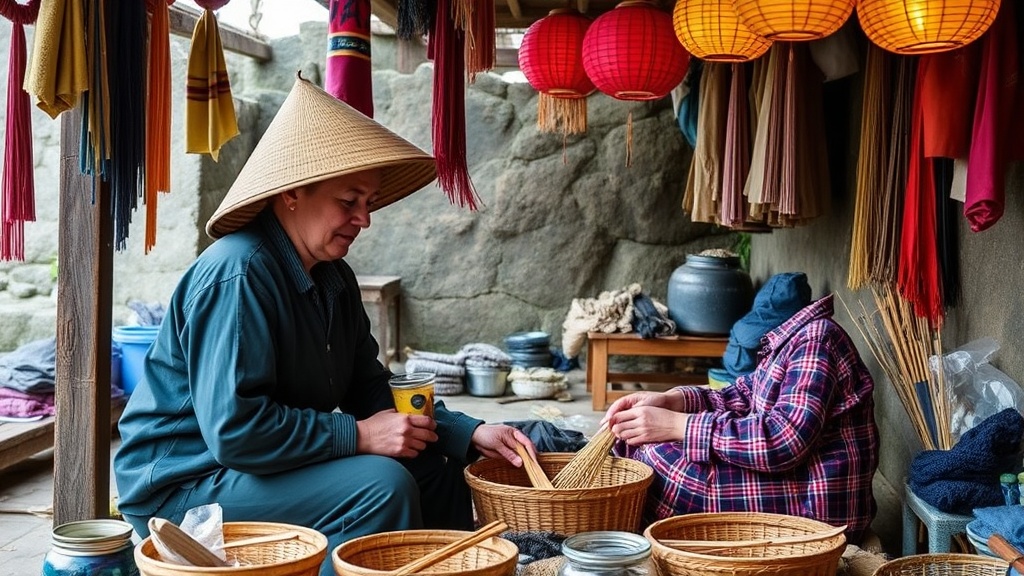
The best strategy is to look for the sections of the market where the local people are actually trading. If you see a group of women selling hand-woven baskets or traditional jewelry directly from their backs or small stalls, you are likely engaging with the primary producer. These items are often much more durable and culturally significant than the items found in the "tourist-friendly" sections of the market. Be prepared to pay a fair price; these are hand-crafted goods that require significant time and skill to produce. Paying a premium for a hand-woven basket is a direct investment in a person's livelihood and the survival of their craft.
7. Use ethical tour operators who vet their suppliers
If you are not a seasoned traveler, navigating the complexities of local markets can be difficult. In these cases, the most pragmatic approach is to book with tour operators who have a transparent supply chain. A reputable adventure travel company should be able to tell you exactly where they source their cultural experiences and how their local partners are compensated.
When researching a tour, ask the following questions:
- "Do your tours include visits to local artisan cooperatives or family-run workshops?"
- "How do you ensure that the money spent on cultural excursions stays within the local community?"
- "Can you provide examples of the local crafts or traditions we will see firsthand?"
"The goal of sustainable travel isn't just to 'leave no trace,' but to ensure that the trace you leave is a positive one that strengthens the local economy and preserves cultural heritage."
By applying these rigorous standards to your shopping and travel planning, you move beyond the surface-level "eco-friendly" labels and actually contribute to the longevity of Northern Vietnam's incredible artisanal traditions. Whether it is a hand-dyed indigo scarf or a piece of hand-engraved silver, your choice to buy authentic, locally-made goods is a direct vote for a more equitable and sustainable travel industry.