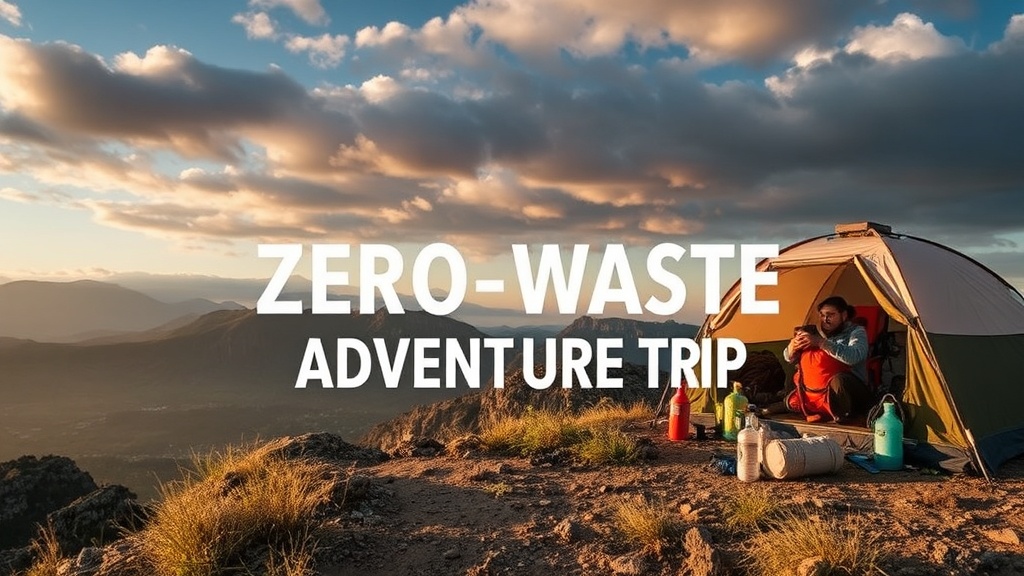
How to Plan a Zero-Waste Adventure Trip

Stop Calling It "Eco-Friendly" and Start Building Systems That Work
I've audited supply chains for fifteen years. I've watched brands slap "sustainable" labels on products that still end up in landfills. Zero-waste travel isn't about buying the right bamboo toothbrush—it's about building logistics systems that eliminate waste before you zip your pack.
This guide cuts through the greenwashing. These are the same operational frameworks I use to run multi-week expeditions across Southeast Asia and Patagonia. No affiliate links to overpriced "eco-gear." Just systems that function under real conditions with real budget constraints.
Audit Your Gear Inventory First
Before you buy a single item, inventory what you own. I use a simple spreadsheet: item name, weight, material composition, repair history, disposal pathway. If you can't repair it and can't recycle it in the regions you're visiting, it doesn't go in your pack.
The Replacement Rule
Only replace gear when it fails irreparably. The most sustainable item is the one already in your closet. When replacement is necessary, prioritize:
- Repairability: Can field repairs extend lifespan? Look for modular designs with replaceable parts.
- Material transparency: Avoid blended synthetics. Pure materials—wool, cotton, aluminum, silicone—are easier to recycle or compost.
- Weight versus durability: Ultralight gear often sacrifices longevity. For extended trips, 20% more weight buys you 3x the lifespan.
Buy secondhand when possible. I've outfitted entire expeditions from gear resale platforms. Test everything before departure. A "zero-waste" trip that requires emergency gear replacements because your stove failed is worse than packing reliable equipment from the start.
Design Your Food System Like a Supply Chain
Food packaging generates 70% of trail waste. Solve this before you leave home.
The Bulk Pre-Deployment Phase
Two weeks before departure, hit bulk stores with reusable containers. I use silicone bags and repurposed glass jars. Map your daily caloric needs precisely—wasted food is still waste. Calculate 3,000-4,000 calories per active day, depending on terrain and body mass.
Dehydrate your own meals if you have access to equipment. A $200 dehydrator pays for itself in three trips. You control ingredients, eliminate packaging, and reduce weight significantly. Store meals in reusable silicone bags labeled with contents and preparation notes.
Local Procurement Protocols
On multi-week trips, you can't carry everything. Research local markets before arrival. Look for:
- Open-air markets with loose produce (bring your own lightweight mesh bags)
- Bakeries that sell bread without packaging (carry a beeswax wrap)
- Local dairy or cheese producers willing to fill your containers
Learn the local language for key phrases: "No bag, please," "I have my own container," and "How much without packaging?" I've found that local vendors respect the effort, even when communication is clumsy.
Markets in Vietnam and Guatemala have been infinitely more accommodating of zero-waste requests than supermarkets in Germany or California. Infrastructure isn't the barrier—expectations are.
Route for Refill Infrastructure
Your route determines your waste footprint. I plot journeys around three resources: potable water stations, bulk food availability, and repair services.
Water Security Planning
Single-use plastic bottles are the failure mode of poor water planning. Map reliable water sources using OpenStreetMap and local hiking forums. Identify treatment requirements for each source.
Carry multiple purification methods. My standard kit: a squeeze filter for clear sources, chlorine dioxide tablets for viral protection in developing regions, and a stainless steel pot for boiling when fuel is cheaper than tablets. Redundancy prevents the "emergency bottled water" purchase.
Repair and Resupply Nodes
Identify towns with outdoor gear shops, tailors, and hardware stores along your route. These are your maintenance depots. A torn backpack repaired by a local tailor in Nepal costs $3 and generates zero waste. Replacing it generates 2kg of synthetic garbage and $150 in expense.
Build Your Waste Management Kit
Zero-waste doesn't mean zero-trash-generated. It means you're responsible for everything you produce until proper disposal.
The Separation System
I carry three lightweight bags:
- Compost: Food scraps suitable for burial or commercial composting (bokashi powder prevents odor)
- Recyclables: Clean, sorted materials that will actually get recycled in your destination country
- True waste: Items with no disposal pathway—medical waste, contaminated materials, certain packaging
Research recycling realities in your destination. Many countries lack infrastructure for anything beyond aluminum and PET plastic. "Recyclable" symbols mean nothing if the facility doesn't exist within 500 kilometers.
Human Waste Protocols
On established trails with facilities, use them. In backcountry areas, carry a trowel and follow Leave No Trace principles: 200 feet from water, 6-8 inches deep. In sensitive alpine or desert environments, pack it out using WAG bags or similar systems. Yes, it adds weight. The alternative is ecosystem damage that lasts decades.
Transportation: The Math Nobody Wants to Do
Transportation typically comprises 60-80% of a trip's carbon footprint. Zero-waste travel acknowledges this reality rather than hiding it behind offset purchases.
Surface Transport Prioritization
For distances under 800km, trains and buses beat flying on virtually every metric. The break-even point for carbon emissions is approximately 500km for single travelers, extending to 1,000km for pairs or groups.
When flying is unavoidable (oceans, time constraints), book direct flights. Takeoff and landing burn disproportionate fuel. One connection can increase emissions 35%.
Local Movement Systems
At destination, reject the rental car default. I've crossed entire countries using local buses, cargo boats, and bicycles rented from community cooperatives. It takes longer. It requires planning. It also exposes you to supply chains and communities invisible from tourist buses.
When renting vehicles is unavoidable, choose the smallest functional option. A 1.0-liter economy car transports two people and gear across Patagonia just fine. You don't need the SUV.
Documentation Without the Performance
Social media drives destination overcrowding and commodification. Your zero-waste trip shouldn't become marketing for places that can't handle increased traffic.
The Geotagging Protocol
Remove geotags from sensitive locations. Tag the country or region, not the specific trailhead. I wait six months before posting location-specific content to prevent real-time crowd surges.
If you're documenting for education rather than influence, focus on systems and logistics rather than scenic beauty. Show your food prep, your repair kit, your waste separation method. Make it replicable, not aspirational.
The Budget Reality Check
Zero-waste travel costs less than conventional tourism, but requires higher upfront investment and planning time. My last six-week expedition through Colombia cost $847 total, excluding flights. The trade-off was 40 hours of pre-trip logistics work.
Start with weekend trips. Test your systems. Identify failure points. A broken water filter on a two-day hike is inconvenience. On a month-long remote trek, it's an emergency that generates waste through bottled water purchases.
Track everything. Weigh your pack before and after. Document what you had to buy, what broke, what you wished you'd brought. Build a personal database. After three trips, you'll have systems that function without constant adjustment.
When Systems Fail
You will generate waste. Medical situations arise. Infrastructure fails. Permission structures block local procurement. Don't let perfect be the enemy of functional.
Carry a "failure log." Note what forced the waste generation. Was it poor planning? Inadequate research? Infrastructure gaps? Use this data to improve systems for next time. Guilt is useless. Information is actionable.
Zero-waste adventure travel isn't a moral status. It's an operational methodology. Build systems that work, test them under real conditions, and incrementally improve. The planet doesn't need your perfection. It needs millions of people making 20% improvements that actually stick.
Steps
- 1
Choose Sustainable Transportation and Accommodation
- 2
Pack Reusable Gear and Zero-Waste Essentials
- 3
Follow Leave-No-Trace Principles During Your Trip