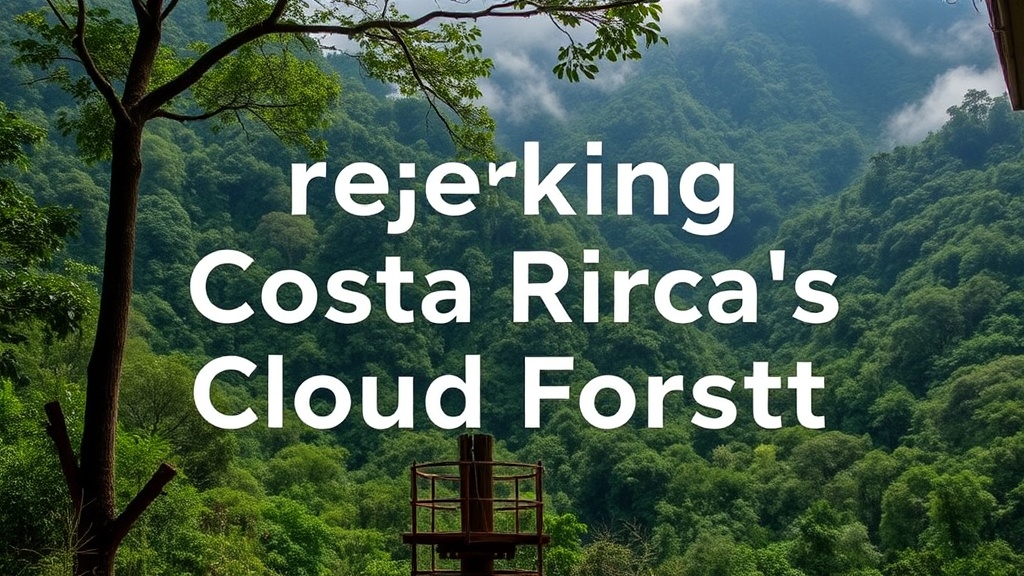
Trekking Costa Rica's Cloud Forests: A Sustainable Adventure Guide

This guide breaks down how to trek Costa Rica's cloud forests without the greenwashing guilt trips or budget-busting eco-luxury traps. You'll get specific trails, real costs, gear that actually holds up in 90% humidity, and the logistics of getting there—so you can spend less time planning and more time walking through some of the most biodiverse canopy on Earth.
What Exactly Is a Cloud Forest—and Why Trek One?
A cloud forest is a tropical or subtropical forest consistently shrouded in mist at the canopy level. In Costa Rica, this happens when moisture-laden Caribbean trade winds hit the Central Mountain Range and condense around 1,500 meters elevation. The result? You're walking through clouds. Literally.
These ecosystems hold roughly 2.5% of the planet's biodiversity on less than 1% of its forest cover. Monteverde alone hosts over 400 bird species, 120 reptiles and amphibians, and thousands of orchids. The trails here aren't amusement park boardwalks—you'll get mud on your boots, sweat through your shirt, and probably miss the resplendent quetzal on your first three attempts. That's the point.
Unlike lowland rainforest hikes, cloud forest trekking stays cooler (15-22°C) but demands waterproof everything. The catch? Most visitors underestimate the combination of altitude, humidity, and trail conditions. They show up in running shoes and cotton t-shirts, then complain about leeches and blisters in the TripAdvisor reviews.
Where Are the Best Cloud Forest Trails in Costa Rica?
Monteverde and Santa Elena get the press, but Costa Rica has six distinct cloud forest regions worth your time. Each offers different difficulty, access, and crowd levels.
Monteverde Cloud Forest Reserve
The crown jewel—and the most crowded. This 10,500-hectare reserve holds the famous senderos (trails) like the Sendero Río (2 km, easy) and Sendero Ventana leading to the Continental Divide viewpoint. Entry runs $25 USD. Trails are well-maintained but busy before 10 AM. The Monteverde Cloud Forest Reserve limits daily entries, so book online or arrive at 7 AM when the gates open.
Worth noting: The adjacent Santa Elena Cloud Forest Reserve ($18 USD entry) has thinner crowds, slightly rougher trails, and views of Arenal Volcano on clear days. Both reserves support local conservation—your entry fee funds reforestation and education programs, not shareholder dividends.
San Gerardo de Dota
This valley sits at 2,200 meters in the Talamanca Mountains—higher and cooler than Monteverde. The Los Quetzales National Park trails here offer the country's most reliable quetzal sightings during avocado season (January–July). The Savegre River Trail (8 km roundtrip, moderate) winds through old-growth oak forest past waterfalls. Entry is $12 USD.
Accommodation here clusters around the Trogon Lodge and Savegre Hotel, both with trail access and genuine sustainability credentials (not just towel-reuse cards). The road in is rough—4WD required during rainy season.
Bajos del Toro and Private Reserves
About 90 minutes from San José, this region flies under the tourist radar. Bosque de Paz ($42 USD with guided hike) limits visitors to 20 per day across its 1,000 hectares. Trails here feel wilder—less gravel, more roots. The Blue Falls of Costa Rica trail (4 km, moderate-to-difficult) leads to turquoise waterfalls most visitors never find.
Here's the thing: Private reserves often do better conservation work than government-managed parks. They're not perfect, but smaller operations mean faster adaptation and less bureaucracy.
| Region | Entry Cost | Trail Difficulty | Crowd Level | Best For |
|---|---|---|---|---|
| Monteverde Reserve | $25 USD | Easy–Moderate | High | First-timers, birding |
| Santa Elena Reserve | $18 USD | Moderate | Medium | Budget travelers, views |
| Los Quetzales NP | $12 USD | Moderate–Hard | Low | Quetzal spotting, solitude |
| Bosque de Paz | $42 USD | Moderate–Hard | Very Low | Photography, old-growth |
| Tenorio Volcano | $12 USD | Hard | Medium | Rugged hiking, hot springs |
What Gear Actually Works in Cloud Forest Conditions?
Marketing departments love slapping "eco" on polyester shirts and charging extra. Don't fall for it. Here's what holds up in 90% humidity and daily rainfall.
Footwear: The Non-Negotiable
Salomon X Ultra 4 Mid GTX boots or the Merrell Moab 3 Mid WP handle the clay-mud trails better than trail runners. The key is ankle support—root systems create tripping hazards, and twisted ankles don't heal fast in wet conditions. Budget alternative: Decathlon's MH500 mid boots ($80 USD) have survived two rainy seasons in field testing.
Bring extra socks. Wool. Darn Tough or Smartwool—synthetic blends hold moisture and smell. Pack three pairs for a three-day trek. Dry bags aren't optional; trails cross rivers, and afternoon storms don't schedule around your itinerary.
Clothing: Cotton Kills (Your Comfort)
Cloud forests demand synthetic or merino layers. A Patagonia Capilene Cool Daily shirt dries in hours, not days. Rain shells? The Frogg Toggs Ultra-Lite2 ($20 USD) outperforms $300 jackets in breathability—though durability suffers. That's fine. Buy two.
That said, don't overthink "sustainable" fashion brands. Buying one quality jacket you'll use for ten years beats buying three "eco" shirts made from recycled bottles that fall apart after six months. The real sustainability play is longevity, not material sourcing claims you can't verify.
Packs and Protection
A 25-35L daypack handles most cloud forest treks. The Osprey Talon 26 or Gregory Nano 30 balance ventilation with rain cover compatibility. Skip the integrated hydration bladders—they're impossible to clean properly in humid climates. Nalgene bottles and purification tablets (or a Sawyer Squeeze) work better.
Leeches appear during wet season. Salt in a small vial removes them; burning or pulling causes infection. Mosquitoes aren't the problem—chiggers and no-see-ums are. Sawyer Permethrin spray on clothing, picaridin (not DEET—it melts synthetic fabrics) on skin.
How Much Does a Cloud Forest Trek Cost?
Budget backpacking in Costa Rica is possible—but cloud forests sit in rural, mountainous regions where transport costs add up fast. Here's the real breakdown.
A three-day, two-night independent trek to Monteverde runs roughly:
- Transport (San José to Monteverde, roundtrip): $30–50 USD (public bus) or $150–200 USD (private shuttle)
- Accommodation: $25–80 USD/night (hostels to mid-range lodges)
- Park entries: $25–50 USD total
- Food: $15–30 USD/day
- Gear rental (if needed): $10–20 USD/day
Total: $200–500 USD depending on comfort preferences. Guided multi-day treks with companies like Costa Rica Expeditions or Serendipity Adventures start around $800 USD and include transport, meals, and certified naturalist guides.
The catch? "Eco-lodges" charging $300/night aren't necessarily more sustainable than family-run cabañas at $40. Look for CST (Certificación para la Sostenibilidad Turística) ratings—Level 4 or 5 indicates genuine environmental commitment, not just marketing. Verify on the ICT (Costa Rican Tourism Board) website; greenwashing is rampant.
When Should You Go—and What About the Rainy Season?
Dry season (December–April) brings clearer skies and easier trail conditions. It also brings crowds, higher prices, and dust instead of the mist that makes cloud forests magical. February and March see Monteverde at capacity—trails feel like theme park queues.
That said, rainy season (May–November) offers the authentic experience. Mornings often stay clear until noon. Afternoon storms roll in predictably. Trails empty out. Prices drop 30–50%. The catch? Some roads become impassable, and certain trails close for maintenance.
September and October (the "little summer" or veranillo) often bring two-week dry spells on the Pacific slope, including Monteverde. This is the sweet spot—lower crowds, functional roads, and actual clouds in the cloud forest.
What Wildlife Can You Realistically Expect to See?
Let's be honest: Wildlife in cloud forests doesn't perform on cue. The resplendent quetzal—Costa Rica's iconic bird—appears mainly during wild avocado fruiting season (January–July in most regions). Even then, sightings require patience and often a guide who knows specific feeding trees.
What you'll definitely see: hummingbirds (dozens of species), howler monkeys (you'll hear them at dawn), agoutis, and more epiphytes than you can count. Poison dart frogs inhabit the forest floor—look but don't touch. With luck: bellbirds, toucans, and the occasional sloth moving at their trademark glacial pace through the canopy.
Night walks ($25–40 USD) reveal a different forest—red-eyed tree frogs, tarantulas, sleeping birds, and bioluminescent fungi. Kinkajou Night Tours in Monteverde and Trogon Lodge's evening walks in San Gerado are reputable operators with actual naturalists, not college students reading from scripts.
"The cloud forest doesn't care about your Instagram timeline. It's been here for thousands of years, and it'll be here after your flight home. Move slowly. Look closely. The forest rewards those who stop expecting to be entertained."
Costa Rica's cloud forests aren't adventure tourism—they're old-growth ecosystems that happen to have trails. Treat them with the same respect you'd give any working environment: arrive prepared, stay on marked paths, pack out everything, and recognize that your presence is a privilege, not a right. The mist doesn't clear for anyone.