The Tourist Tax Audit: Where Your Venice Entry Fee Actually Goes

Spring shoulder season is here, flights are full again, and a lot of us are getting hit with a new line item at checkout: destination fees that promise to "fix overtourism."
As someone who spent years in supply-chain audits, I have one reflex when I hear that: show me the flow of funds.
So let's audit Venice first, then compare it with Bali and Mount Fuji, and figure out what this means for travelers who want to be responsible without getting played by PR language.
1) The Collection Logistics: How the Fee Machine Actually Works
Venice entry fee 2026 (day-trippers)
Venice's official 2026 access-fee system starts April 3, 2026, and applies on specific peak dates from April through July, between 8:30 a.m. and 4:00 p.m. Day visitors pay:
- €5 if they book early (by the fourth-last day before entry)
- €10 if they book inside the final three days
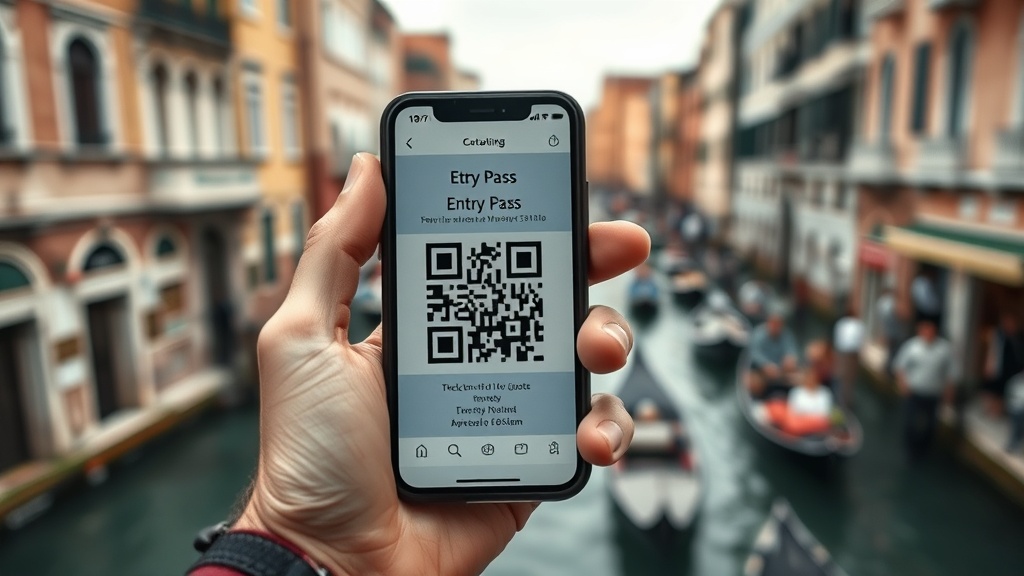
Mechanically, this is a QR-code compliance system, not a gate turnstile system. You register online, get a voucher, and show it on request.
The city has also made enforcement more operationally real than many people assume: in the 2025 test period it reported roughly 140 staff per active day (stewards, verifiers, local police), over 445,000 checks, and around 2,500 violation reports.
That is not symbolic enforcement. That is a staffed field operation.
Bali tourist levy (foreign visitors)
Bali's levy has been in effect since February 14, 2024 at IDR 150,000 per foreign visitor. Payment is digital (Love Bali platform), and officials have repeatedly shifted from "please pay" messaging to active checks.
According to Bali tourism-office notices and circular guidance, checks are done at entry points, accommodations, and attractions, and visitors found unpaid are directed to pay online on the spot.
The headline promise is that levy revenue supports culture and environment protection. Operationally, the main improvement has been enforcement consistency, not frictionless user experience.
Mount Fuji climbing fees
Mount Fuji's 2025 system (the latest completed season with clear published rules) is now full-control logistics:
- Mandatory ¥4,000 fee on routes
- 2:00 p.m.–3:00 a.m. access restrictions without hut reservations
- Reservation/registration workflows and gate checks at trailheads
- Safety-condition acceptance and on-site denial options for noncompliance
This one matters because it combines pricing with hard constraints (timing, access controls, verification), which is usually more behavior-shaping than pricing alone.
2) Following the Money: Stated Goal vs. Budget Reality
Here's the part most coverage skips.
The Venice line is often "this is not about making cash, it's about managing flows." But the city's own budget communications also state that tourism-linked revenues (including the access fee) help cover broader municipal costs, including helping hold down TARI (waste bill) pressure.
In plain English: revenue is not sitting in a neat, ring-fenced "lagoon cleanup only" vault.
From the city's own reported 2025 results, gross access-fee intake was about €5.4 million in the experimental period. Officials said net resources (after management costs) are directed to resident/economic support, including waste-bill relief. In the 2026 budget communication, the city said around €7.5 million in waste-cost coverage would come from tourism-derived income streams (tourist tax + access fee).
That is a municipal financing story, not a single-purpose conservation fund.
Is that illegitimate? No. Cities fund mixed services. But travelers should understand what they are actually paying into.
Bali is similar in rhetoric: the levy is framed as protection of culture and nature. The enforcement notices are specific; the project-level public accounting is less obvious to the average traveler unless they are actively tracking provincial releases in Indonesian policy channels.
Audit takeaway: in most destinations, "sustainable travel fee" often behaves like hybrid revenue: part behavior signal, part administrative filter, part general public-finance support.
3) The "Pay-to-Pollute" Fallacy
Small fees can backfire psychologically when people interpret payment as moral clearance.
Behavioral research calls this a licensing/spillover problem. The classic Psychological Science study by Mazar & Zhong found that "green" purchases can create a moral halo that does not reliably produce better downstream behavior. Later review work on pro-environmental spillover (Truelove et al.) shows mixed outcomes: one pro-environment action can lead to more good behavior, no change, or compensating bad behavior.
That maps onto real tourism behavior pretty well:
- "I paid the fee, so I've done my part."
- Then the same visitor over-consumes fragile spaces, ignores local rules, or treats destination damage as prepaid externality.
A €5 fee won't fix extractive behavior by itself. It has to be paired with visible enforcement, hard rules, and social norms.
Venice seems to understand that operationally (large verification teams, fines, defined windows). Mount Fuji is even more explicit (time gates + safety conditions + payment + access control).
4) Pragmatic Traveler Playbook for 2026 Fees
Here's how to handle this without drama.
Budgeting: build a destination-fee line in trip planning
For Europe spring/summer 2026, assume taxes/fees are now recurring, not exceptional.
Use a simple rule: create a "local fees and compliance" bucket equal to 2–5% of trip spend for city-heavy itineraries. If you don't use it, great. If rules change last-minute, you're not scrambling.
Compliance: treat fee proof like a transport ticket
Keep QR confirmations and receipts in one folder (offline screenshot + email copy). Venice and Bali both rely on document proof during checks.
Don't confuse payment with impact
Paying mandatory fees is baseline legal compliance, not impact maximization.
If you want your money to hit local infrastructure harder:
- Stay overnight in locally run accommodation where local tax capture is clearer.
- Use licensed local guides (especially where required, like Bali guidance updates).
- Spend with businesses that can point to specific waste/water/labor practices.
- Travel at lower-pressure hours/seasons when possible.
- Follow site rules like they matter, because they do.
Ask one blunt question on the ground
When a city or destination charges you a sustainability fee, ask: "Where can I see the latest public report showing projects funded and spending completed?"
If staff can answer quickly, that's a good sign.
If no one can tell you, that tells you something too.
Bottom Line
The Venice entry fee 2026 is real, enforceable, and operationally mature. But it is not a magic overtourism cure, and it is definitely not a pure environmental trust fund.
Same pattern in most tourist taxes: they can help with flow management and public finance, but only if paired with enforcement, transparency, and behavior design that goes beyond "pay and proceed."
As travelers, the practical move is simple: budget for mandatory fees, comply cleanly, and then make spending choices that actually support local systems.
That is how you avoid both extremes: rage-posting about every tax, or pretending a €5 payment is sustainable travel.
Sources
- Venice Access Fee portal (official 2026 calendar, pricing, FAQ): https://cda.ve.it/en/ and https://cda.ve.it/en/faq
- Venice municipality update on 2026 fee setup: https://live.comune.venezia.it/index.php/it/2025/11/contributo-di-accesso-2026-la-giunta-conferma-gli-importi-differenziati-incentivando-la
- Venice 2025 operational results (checks, staffing, violations, revenue): https://live.comune.venezia.it/index.php/it/2025/07/contributo-di-accesso-i-numeri-del-2025
- Venice 2026 budget communication (tourism revenues supporting TARI coverage): https://live.comune.venezia.it/it/2025/12/il-consiglio-comunale-approva-il-bilancio-di-previsione-e-il-dup-2026-2028
- Bali official levy enforcement notices: https://lovebali.baliprov.go.id/article/detail/1742643463398/bali-tourism-office-strengthens-levy-compliance-with-destination-inspections and https://disparda.baliprov.go.id/end-of-april-bali-government-tourism-office-checks-foreign-tourist-levy-at-tourist-destinations/2024/04/
- Bali Circular Letter No. 7/2025 (tourist code of conduct incl. levy payment): https://disparda.baliprov.go.id/wp-content/uploads/2025/04/SE-NO-7-TAHUN-2025-TENTANG-TATA-TERTIB-WISATAWAN-ASING.pdf
- Mount Fuji official climbing rules/regulations (2025 baseline for 2026 planning): https://www.fujisan-climb.jp/en/for-every-climber.html and https://www.fujisan-climb.jp/en/Reguration_Yamanashi.html
- Behavioral evidence on licensing/spillover: Mazar & Zhong (2010) via PubMed https://pubmed.ncbi.nlm.nih.gov/20424089/ ; Truelove et al. (2014) review PDF https://elke-u-weber.com/media/2014_global_environmental_change_truelove.pdf