The 'Sustainable' Luggage Lie: Why Your 'Biodegradable' Suitcase Is Actually Worse for the Planet

Look, let's be real. If I see one more Instagram ad for luggage made from "ocean-bound plastic" with a smiling influencer standing next to a turquoise suitcase, I'm going to lose it. The sustainable luggage game has become a minefield of half-truths, biodegradable buzzwords, and marketing that sounds good but crumbles faster than the actual product.
So I did what I always do: I ran the audit. I looked at the materials, the warranties, the end-of-life scenarios, and—most importantly—what actually happens when these bags hit the real world of baggage handlers and cobblestone streets.
The math doesn't add up for most of them.
The Vibe Check: What "Sustainable" Luggage Actually Means
Here's the dirty secret of the luggage industry: the greenest bag is the one you bought in 2014 and still use. Full stop. Everything else is a trade-off, and most companies are selling you the illusion of virtue while engineering their products for the landfill.
Let's break down the three "sustainable" categories currently flooding your feed:
Category 1: The "Recycled Ocean Plastic" Shell Game
Brands like Monos love to tout their recycled materials and "climate neutral" certifications. They'll sell you a polycarbonate suitcase with a lifetime warranty and vegan leather accents that looks like it belongs in a design museum.
The Reality: I spent hours in Reddit threads and warranty complaint forums. What I found was a pattern: cracks around wheel housings within 7 trips. Shells buckling outward. Interior felt pockets "breaking down on their own." And when owners tried to claim that "lifetime warranty"? Weeks of delays, claims denied for "regular wear and tear," and a $20-40 return fee just to find out you're out of luck.
(Major eye-roll: The "lifetime" in lifetime warranty increasingly means "the reasonable lifetime of the product"—which, if you're reading between the lines, they get to define after it breaks.)
The Math: A suitcase that dies in 3 years and gets replaced under warranty still has a carbon footprint. You're just spreading it across two units instead of one. That's not sustainability—that's planned obsolescence with better PR.
BS-Meter Rating: 7/10 (Pretty logos, mediocre durability, weasel-word warranties)
Category 2: The "Biodegradable" Trap
Horizn Studios and others are pushing "BioX" flax-based composites and bio-resins. The marketing copy practically writes itself: "nearly the whole shell is fully biodegradable!" It sounds like the future.
The Reality: Here's what they don't put in the glossy brochure: bioplastics and bio-resins require industrial composting facilities to actually break down. You know how many cities have industrial composters that accept luggage-grade materials? I'll give you a hint: it's a lot closer to zero than to "everywhere."
That "biodegradable" suitcase in your closet? If you toss it in a landfill (which is where 99% of "biodegradable" products actually end up), it'll behave exactly like regular plastic—sitting there for centuries, possibly releasing methane as it slowly degrades anaerobically.
I found this gem from a bioplastics researcher: "No federal standards define or regulate bioplastic, biodegradable, or compostable products." Translation: they can print whatever they want on the tag.
The Math: A "biodegradable" product that never biodegrades is just a more expensive version of the problem. The carbon cost of growing flax, processing it into resin, and molding it into a suitcase shell that lasts maybe 5 years? You're better off buying a used bag from Craigslist.
BS-Meter Rating: 8/10 (The audacity of calling something "biodegradable" when it needs infrastructure that doesn't exist)
Category 3: The Aluminum Workhorse
Rimowa's aluminum line doesn't market itself as "sustainable." It doesn't need to. The company offers a lifetime guarantee (post-2022) that covers functional aspects, and their repair network actually exists.
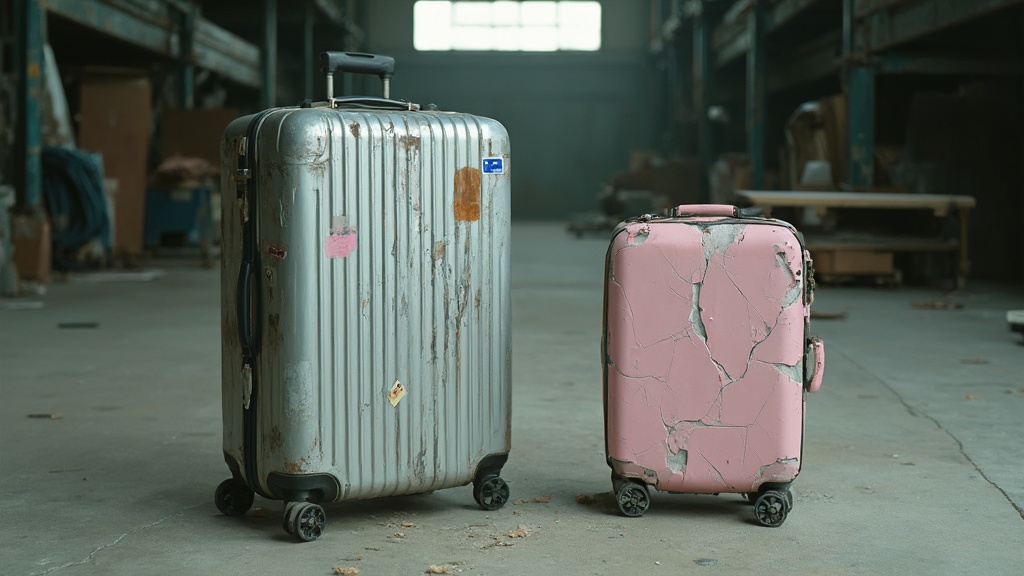
The Reality: Aluminum luggage dents. It scratches. It develops what Rimowa calls an "earned patina"—which is marketing speak for "this thing looks like it's been through a war zone." But here's the thing: it still works. Aluminum cases are modular, repairable, and the material is infinitely recyclable at end-of-life.
I talked to a guy on r/Rimowa who's been repairing his aluminum case for 20 years. Not replacing—repairing. New wheels. New handles. The shell just keeps going. That's the math that matters.
The Math: One aluminum suitcase used for 20 years vs. six polycarbonate "sustainable" bags replaced every 3-4 years? The aluminum wins on carbon footprint, waste generation, and total cost of ownership. Even accounting for the energy-intensive production of virgin aluminum, the longevity math crushes the competition.
BS-Meter Rating: 2/10 (They don't claim to be eco-friendly, they just actually are)
The Gear Lab Verdict: What to Actually Buy
After running this audit, here's my hierarchy for fellow humans who want luggage that doesn't trash the planet:
Option 1: Buy Used, Buy Once
That dented aluminum Zero Halliburton from the 90s on eBay? It'll outlast anything Monos is selling this year. The carbon cost of manufacturing happened decades ago. You're just extending the life cycle.
Option 2: If You Must Buy New, Buy Repairable
Rimowa, FPM Milano, and even some higher-end ballistic nylon bags (think: Briggs & Riley) prioritize repair over replacement. Check the warranty fine print. If it says "reasonable lifetime of the product," keep looking.
Option 3: The "Buy It For Life" Soft Shell
Patagonia's Black Hole line has taken some heat lately for warranty slowdowns (6-10 week repair times currently), but the bags themselves are built from recycled polyester with a track record of durability. Just go in knowing their "Ironclad Guarantee" has limits.
The Footprint Check: What to Ignore
Ignore: "Vegan leather" (it's just polyurethane), "climate neutral certified" (often purchased offsets, not actual reductions), and any claim involving "compostable" or "biodegradable" without a specific certification number and local facility requirements.
Watch For: Brands that let you buy replacement parts directly. If you can swap your own wheels without mailing the whole bag to a service center, that's real sustainability.
The Trade-Off
The honest truth? That aluminum Rimowa costs $1,200+. The Monos is $300. For a lot of dirty-boot travelers, that's not a choice—it's a barrier. I'm not here to shame anyone for buying what they can afford.
But let's be clear-eyed about what we're buying. The $300 "sustainable" suitcase that dies in 3 years and gets landfilled? That's not a bargain. That's the travel equivalent of fast fashion. The $1,200 bag that lasts 20 years and gets repaired? That's an investment—in your wallet and in keeping crap out of the waste stream.
Progress over perfection means choosing the most durable option within your budget, not the one with the prettiest green marketing.
Now if you'll excuse me, I need to go clean The Tank. It's seen three of these "sustainable" suitcases come and go, and it's still going strong.
Full disclosure: This post contains no affiliate links. No one sent me free luggage. The opinions are based on publicly available warranty data, user reports, and materials science research. If you think I got something wrong, hit me up—I'll issue a correction if the math doesn't check out.