The Remote Worker's Spring Digital Detox: A Pragmatic Field Audit

Look, let's be real—the moment you mention a "spring digital detox", someone tries to sell you a $400-a-night stay in a yurt with no Wi-Fi. It’s the same performative wellness marketing (I call it "productivity greenwashing") that plagues the travel industry.
As someone who spends her days auditing supply chains and debunking eco-resort claims, I can tell you that true focus doesn't require a crystal healing session or a private chef. For remote workers, reclaiming your productivity is a logistics problem. It requires a hard look at your digital environment.
If you are suffering from screen fatigue, endless tabs, and the creeping dread of Slack notifications, here is a pragmatic, BS-free field audit for your workspace this spring.
1. Stop Buying "Eco-Friendly" Digital Fixes
The wellness industry wants you to believe that the cure for digital burnout is more technology—a premium app blocker, a fancy new ergonomic timer, or a subscription to a meditation app. (Spoiler: the math doesn't add up.)
You cannot buy your way out of digital overload. Progress over perfection means stripping away the excess, not adding more 'solutions' to a cluttered system. Start by deleting the apps that promise to optimize your time but just end up consuming it.
2. Vibe Check: The Notification Supply Chain
In the field, I audit where resources come from and where the waste goes. Your attention is your most valuable resource. Where is it leaking?
- Turn off all non-essential push notifications. Period. If it's truly an emergency, James (my ops and tech partner) knows he has to call my actual phone number. Everything else is just noise polluting your mental ecosystem.
- Batch your processing. Treat your inbox like a remote trailhead: visit it once or twice a day, deal with the hazards, and get out. Stop leaving it open like a leaky faucet.
3. The 3-Step Analog Field Audit

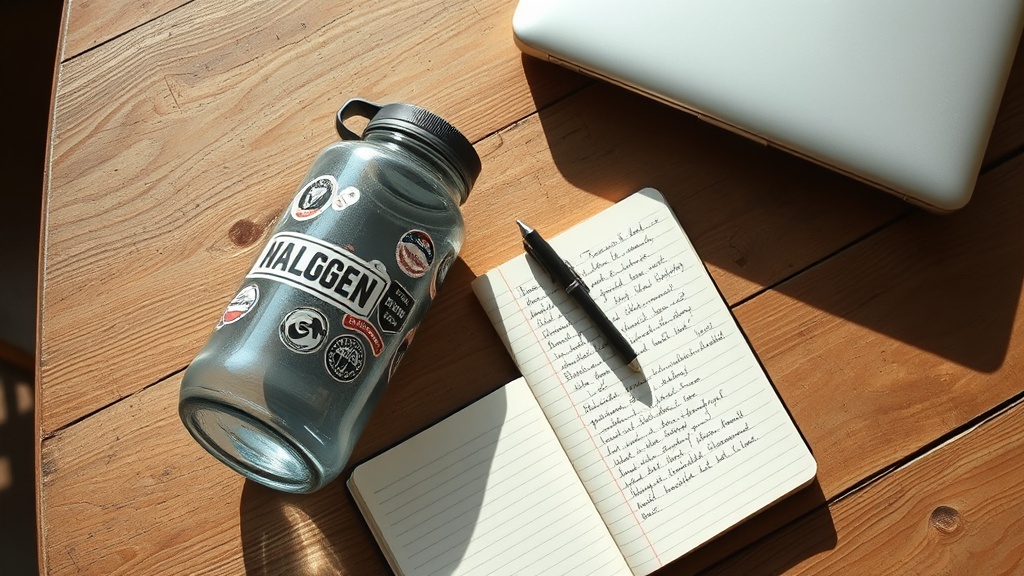
I rely heavily on "The Tank" (my battered 32oz Nalgene) when I'm on a trail audit to keep me grounded. You need an equivalent analog anchor for your focus.
- The 20-20-20 Rule (Data-Backed): For every 20 minutes of screen time, look at something 20 feet away for 20 seconds. It's a fundamental baseline for reducing eye strain. The math checks out.
- Analog Triage: Keep a physical notebook next to your keyboard. When a stray thought or task pops up, write it down on actual paper instead of opening a new browser tab.
- The "Post-Hike" Shutdown: At the end of your workday, physically close your laptop. Unplug the monitor. Create a hard boundary that signals the end of the operation.
4. Reclaiming Your Ecosystem
Taking a spring digital detox isn't about achieving a state of monastic perfection. It's a harm-reduction strategy.
Get outside. Go for a walk in a second-tier city park, or just sit on your porch without your phone. The goal isn't to become an off-grid hermit; it's to ensure that when you are connected, you're actually operating efficiently, not just spinning your wheels in the digital mud.
Stay gritty, and protect your focus. The trails will still be there when you log off.
You might also enjoy
- The BS-Free Spring Digital Detox: An Off-Grid Logistics Guide
- Earth Day 2026: The Pragmatic Guide to Community Clean-Ups and Climate Action
- Hearty Lentil and Vegetable Stew: A Fiber-Rich, Gut-Healthy Dinner