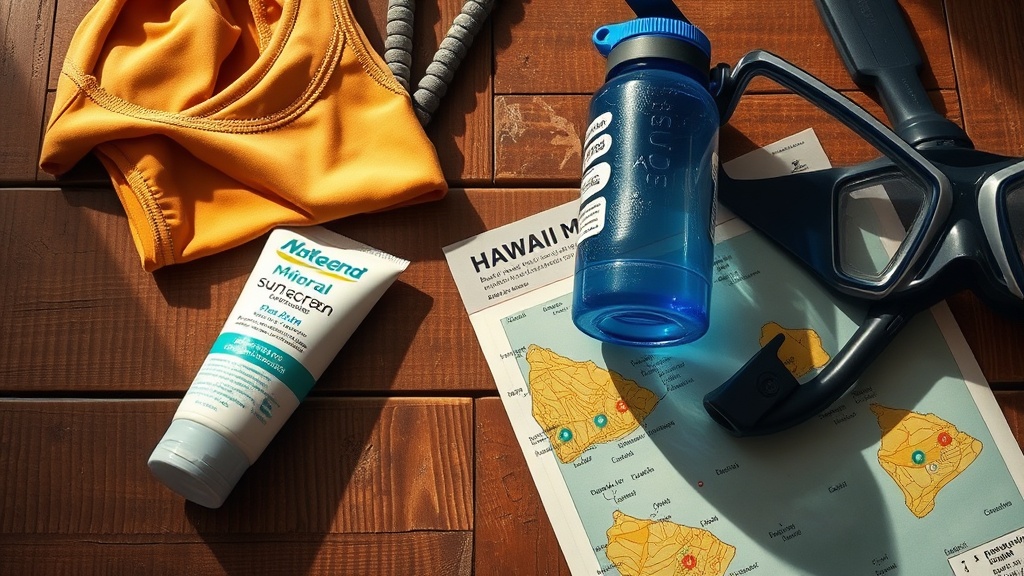
The Reef-Safe Sunscreen Audit: What to Pack for Hawaii in 2026 (and What to Leave Home)

The Reef-Safe Sunscreen Audit: What to Pack for Hawaii in 2026 (and What to Leave Home)
Excerpt: The term "reef-safe" is mostly marketing noise. Here's the field-tested sunscreen packing protocol I use to stay legal in Hawaii and reduce reef harm without frying my skin.
Look, let's be real: most "reef-safe" sunscreen advice is vibes, not logistics.
You get a pastel tube with a palm tree on it, a giant "OCEAN FRIENDLY" sticker, and active ingredients nobody checks. Then everyone acts surprised when the bottle doesn't match local rules.
I'm not interested in cosmetic marketing language. I'm interested in a system that works.
If you're heading to Hawaii or any coral-heavy destination in 2026, this is the quick audit I want you to run before your trip.
First: what the Hawaii law actually targets
Hawaii's SB2571/Act 104 framework prohibits sale, offer of sale, or distribution of sunscreens containing oxybenzone or octinoxate (without prescription), effective January 1, 2021.
That legal detail matters because travelers often confuse "can't buy it there" with "must be legal because it says reef-friendly on the label." Those are not the same thing.
Second: what U.S. science agencies are saying right now
NOAA's coral guidance says specific UV-filter chemicals can harm aquatic life and identifies ingredients frequently flagged in reef discussions, including oxybenzone, octinoxate, and octocrylene. NOAA also notes mineral options are generally a better choice for lower aquatic impact.
The National Park Service gives the most practical translation I've seen: products marketed as reef-friendly can still include harmful ingredients, so check the active ingredients panel and prioritize mineral sunscreens using zinc oxide and/or titanium dioxide.
Translation for dirty-boot travelers: the front label is marketing; the active ingredient box is reality.
Third: how to avoid getting burned (literally) while you avoid greenwash
This is the pack protocol I use:
- Pick broad-spectrum SPF 30+ minimum.
- Choose mineral active ingredients first (zinc oxide and/or titanium dioxide).
- Skip products with oxybenzone or octinoxate for Hawaii trips.
- If you'll be swimming, use a formula labeled water resistant (40 or 80 minutes) and reapply on schedule.
- Bring UPF clothing so sunscreen isn't your only defense.
FDA labeling rules back the basics here: no sunscreen is "waterproof," and "water resistant" labels must specify 40 or 80 minutes.
My field checklist (60 seconds in a store aisle)
Step 1: Ignore claims on the front.Step 2: Flip to Drug Facts.Step 3: Read Active ingredients only.Step 4: If you're reef-traveling, reject oxybenzone/octinoxate.Step 5: Confirm broad spectrum + SPF + water-resistance window.
If a brand hides active ingredients in tiny print while screaming "eco" in giant text, my BS-meter jumps to 8/10.
Common traveler mistakes I keep seeing
- Buying one tiny "face" sunscreen and using it for full-body beach days.
- Treating one morning application as an all-day shield.
- Assuming expensive equals compliant.
- Trusting "reef-safe" wording without checking active ingredients.
The math doesn't add up. You need enough product volume, disciplined reapplication, and fabric backup (hat, rash guard, sun shirt).
Packing math that actually works for a week
For a 7-day swim/snorkel trip, I budget roughly:
- 1 body mineral sunscreen tube for daily use
- 1 backup travel-size sunscreen in daypack
- 1 SPF lip product
- 1 long-sleeve UPF layer
- 1 brimmed hat
Not glamorous. Extremely effective.
Bottom line
You don't need perfect sunscreen theology. You need operational clarity.
- Respect local rules.
- Read active ingredients, not lifestyle branding.
- Use mineral-first choices plus clothing.
- Reapply like you mean it.
Adventure more, footprint less. No guilt trip required, just better prep.
Sources
- Hawaiʻi State Senate Majority press release on SB2571 signing and Jan. 1, 2021 effective language: https://www.hawaiisenatemajority.com/press-release/2018/07/03/bill-signing-ceremony-for-sb2571-relating-to-water-pollution
- NOAA National Ocean Service, "Skincare Chemicals and Coral Reefs" (updated June 20, 2024): https://oceanservice.noaa.gov/news/sunscreen-corals.html
- U.S. National Park Service, "Reef-Friendly Sun Protection" (updated Aug. 11, 2022): https://www.nps.gov/articles/concessions-sun-protection.htm
- FDA sunscreen Q&A (labeling: broad spectrum, water-resistant 40/80 minutes, no waterproof claims): https://www.fda.gov/drugs/understanding-over-counter-medicines/questions-and-answers-fda-announces-new-requirements-over-counter-otc-sunscreen-products-marketed-us