The Real Math on Amtrak Sleeper Cars: Is Slow Travel Better?

Look, let's be real: the "slow travel" aesthetic you see online is mostly marketing fluff.
You've seen the posts—the perfectly lit laptop on an Amtrak sleeper car table, the caption about finding your soul while saving the planet. As someone who treats travel logistics like a supply chain audit, I can tell you the reality involves a lot more stale coffee, questionable gray-water systems, and rigorous math.
With summer travel planning kicking into high gear this April, I've had half a dozen people ask me if booking a cross-country Amtrak sleeper car is "the most sustainable choice." They want the guilt-free pass. But travel involves trade-offs. I don't believe in guilt trips, but I do believe the math has to check out.
The Raw Data: BTU per Passenger Mile
The U.S. Department of Energy puts air travel energy use at roughly 2,341 BTUs per passenger mile. Amtrak? It hovers around 1,535 BTUs per passenger mile. On the bustling Northeast Corridor (DC to New York), Amtrak estimates a 70% reduction in CO2e emissions compared to flying.
The math checks out there. If you're going from city center to city center on an electrified line, taking the train is a no-brainer.
But a cross-country sleeper car pulled by a diesel locomotive is an entirely different logistical beast.
The Sleeper Car Logistics Audit
When you book a sleeper car, you aren't just taking up a seat—you are taking up a rolling hotel room.
An airplane packs people in tightly. Tiny seats mean a plane's carbon footprint is divided among hundreds of passengers. An Amtrak sleeper car gives you space, a bed, and private facilities, meaning your individual carbon footprint for that specific rail car is significantly higher than if you were in a standard coach seat.
Then there is the "time tax." A flight from Portland to Chicago takes four hours. The Empire Builder takes over 40 hours. If you are a remote worker whose employer doesn't care if you're answering emails from a dining car, great. But for the average traveler with a limited PTO balance, pretending that multi-day slow travel is always practical is a luxury we can't all afford.
The Verdict: When the Math Works
So, is the sleeper car actually better for the planet?
Yes, it's generally better than flying or driving solo. But it's not a zero-impact magic bullet. It is a heavy diesel engine dragging a mobile hotel across the Rockies.
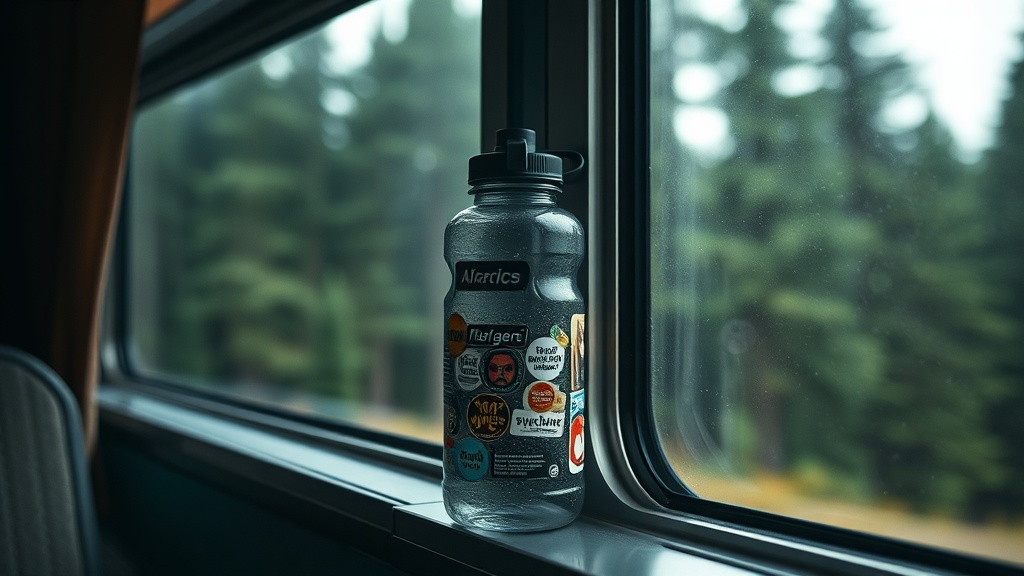
If you have the time, the budget, and the patience for Amtrak's legendary delays, absolutely do it. I'll be right there with you, staring out the window with "The Tank" (my battered 32oz Nalgene) by my side.
But if you have to take the four-hour budget flight to maximize your single week off, take the flight. Buy a direct ticket, pack light so your gear doesn't break, and skip the performative carbon-offset donations at checkout (rebrand those as "harm-reduction donations" and give directly to a local conservation fund instead).
Adventure more, footprint less. No guilt trips included.