The Pragmatist’s Guide to Amtrak Sleeper Cars: Does the Carbon Math Actually Work?

Look, let's be real... the "romantic slow travel" narrative surrounding cross-country train trips usually glosses over a lot of logistics. When you see an influencer staring wistfully out of an Amtrak window in a cashmere sweater, they rarely mention the three-hour delay in Minot, North Dakota, or the cost of the ticket compared to a cheap commercial flight.
But as summer approaches and peak-season flight prices begin to climb, the question of whether a sleeper car is actually a viable, sustainable alternative to flying is dominating the travel forums. Is the carbon math actually worth the price tag, or is it just more expensive marketing fluff for a demographic that hates airport security?
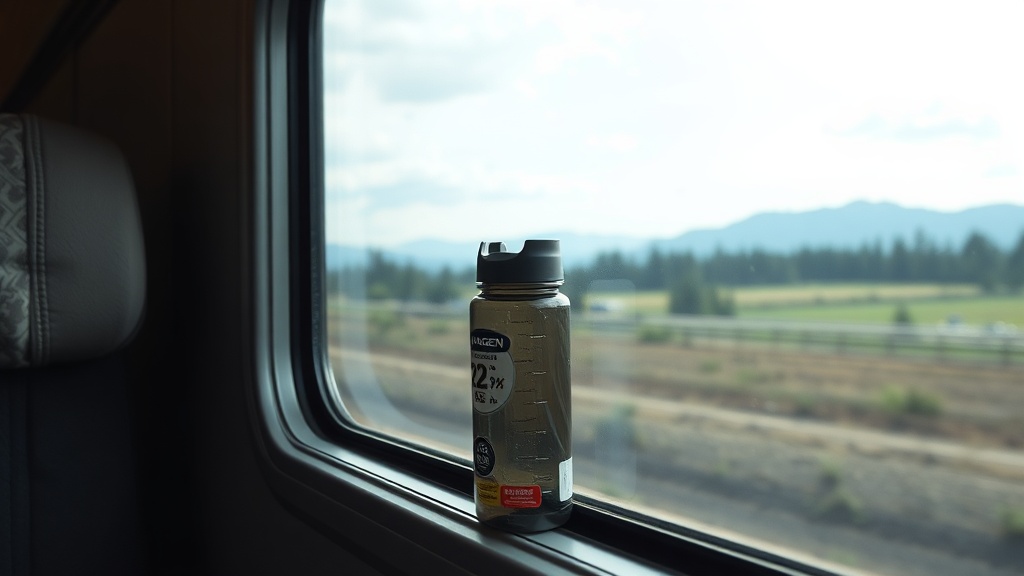
Let's run a Greenwash Audit on the Amtrak sleeper experience. I took the Empire Builder from Portland to Chicago with "The Tank" (my trusty 32oz Nalgene) by my side, tracked every dollar, and crunched the emissions data so you don't have to.
The Real Carbon Math: Does It Add Up?
If you listen to the marketing, train travel is the ultimate green alternative. But let's look at the actual data. According to the EPA Carbon Footprint Calculator, a commercial flight from Portland to Chicago (PDX to ORD) generates roughly 450 lbs of CO2 per passenger.
Amtrak's sustainability reports love to tout that their trains are 46% more energy-efficient than driving and 34% more efficient than domestic air travel. The reality? A sleeper car takes up significantly more physical space per passenger than a coach seat, meaning the per-passenger emissions for a Roomette are higher than an Amtrak coach ticket. However, compared to the 450 lbs of CO2 from flying, a sleeper car passenger on the Empire Builder generates approximately 200 lbs of CO2.
The Verdict: The math checks out. Even with the space premium of a sleeper car, you are cutting your emissions by more than half. (And that's before you factor in the high-altitude climate impact of jet contrails, which makes flying even worse than the raw CO2 numbers suggest).
The Logistics: Working and Sleeping on the Rails
The internet will tell you that a train is a rolling remote office. That is a half-truth at best. The Wi-Fi on cross-country routes is notoriously spotty, relying on cell towers that vanish as you hit the Montana wilderness. If your job requires constant Zoom calls, you are going to have a bad time.
[callout title="Pro-Tip for Remote Workers"]
If you need to get work done, treat it like an asynchronous day. Download your spreadsheets, write your drafts locally, and only sync when you hit major stations like Spokane or St. Paul. Speaking of tech logistics, reducing your remote work carbon footprint starts with working efficiently offline anyway.
[/callout]
As for the sleeping logistics? The Roomette is compact but incredibly functional. You get a real door, a fold-down bed, and access to a shared shower down the hall. Unlike ultra-light gear that snaps on the first use, these train cars are built like 1980s tanks—heavy, durable, and pragmatic. Just don't expect a luxury spa experience; bring your own non-plastic toiletries.
The Cost Breakdown: Paying the "Slow Travel" Tax
Here is where the math gets complicated. A budget flight from PDX to ORD might cost you $150 if you book early. A Roomette on the same route can easily run $600 to $900.
That $750 premium feels steep until you factor in the hidden costs of flying:
- Airport parking or rideshares ($50-$80)
- Checking a bag ($35)
- Airport food that tastes like cardboard ($30)
- Two nights of hotel accommodation you didn't have to pay for because you slept on the train ($300)
When you subtract the hotel nights and airport fees, the true premium of the sleeper car is closer to $250. You are paying for the experience, the scenery, and the massive reduction in your carbon footprint.
The Final Vibe Check
So, who is this actually for?
If you are on a razor-thin budget and have exactly three days of PTO, take the flight and consider a harm-reduction donation instead. I don't believe in performative shaming—travel involves trade-offs, and you have to work within your reality.
But if you have the time, value progress over perfection, and want to genuinely cut your carbon footprint while seeing the country at ground level, the Amtrak sleeper car is worth the investment. It’s gritty, it’s pragmatic, and it’s one of the few sustainable travel options where the reality actually lives up to the hype—delayed departures and all.