The Overnight Train Math: When a €30 Couchette Beats a €19 Ryanair Flight (and When It Doesn't)

The Overnight Train Math: When a €30 Couchette Beats a €19 Ryanair Flight (and When It Doesn't)
Excerpt: A logistics breakdown of Europe's overnight trains in 2026—real prices, real carbon numbers, and the routes where sleeping on rails actually pencils out vs. where it's just expensive nostalgia.
Category: Planning Guides
Tags: overnight train europe, nightjet, budget train travel, sustainable travel, carbon emissions flights vs trains, europe sleeper train 2026
Meta Title: Europe Overnight Train vs Budget Flight: The Real Math for 2026
Meta Description: A no-BS cost and carbon comparison of Europe's overnight trains vs budget flights in 2026. Which routes actually make sense—and which ones are just expensive nostalgia.
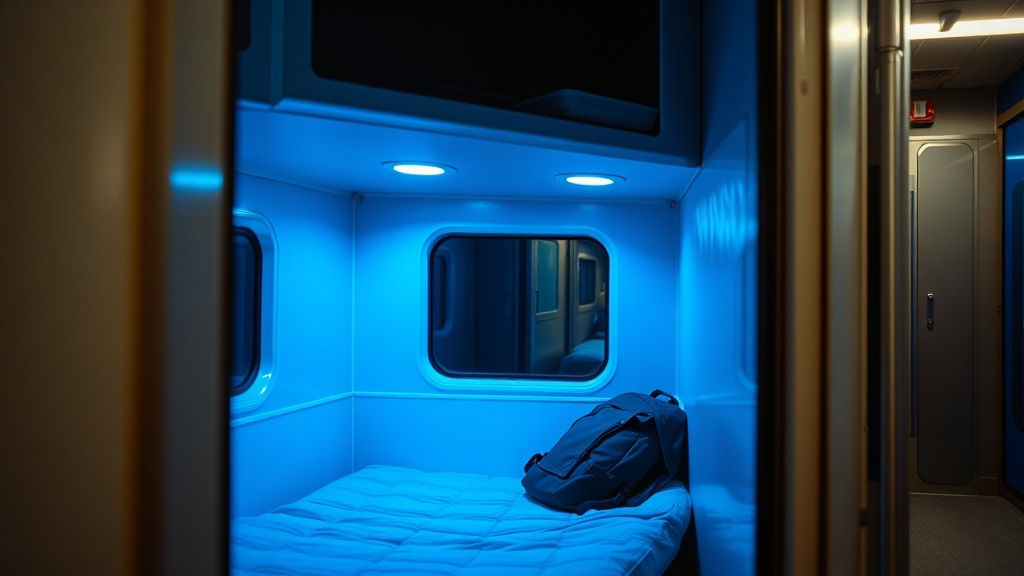
I've seen two kinds of travel advice about European night trains.
The first is the Instagram version: someone in linen pajamas gazing out a sleeper compartment window, captioned "slow travel ✨." The second is the budget travel version: "just fly Ryanair, it's €19."
Both are lying by omission. So let me do what I do best—run the actual numbers.
The claim I keep hearing
"Night trains are the sustainable alternative to flying across Europe."
Fine. But sustainable and affordable? Sustainable and practical? That's a different question, and nobody seems to want to do the boring spreadsheet work. I do.
The carbon math (this part is straightforward)
The European Environment Agency puts rail travel at roughly 6g CO2 per passenger-kilometer. Short-haul flights land around 255g CO2 per passenger-kilometer when you factor in radiative forcing (the high-altitude multiplier that aviation PR departments love to ignore).
So on a Vienna-to-Amsterdam run (roughly 1,100 km by rail), you're looking at:
- Train: ~6.6 kg CO2
- Flight: ~150 kg CO2 (with radiative forcing correction)
That's a 95% reduction. Not marginal. Not "every little bit helps." Massive.
The carbon case is closed. Trains win by a landslide. But carbon isn't the only variable in a travel decision, and pretending it is won't get more people on trains.
The price math (this is where it gets ugly)
I pulled real 2026 booking data from three routes. Here's what I found, booking roughly 3 weeks out:
Route 1: Vienna → Amsterdam (ÖBB Nightjet)
- 6-berth couchette: €29.90
- 4-berth couchette: €49.90
- Private sleeper (single): €119.90
- Ryanair/Wizz equivalent: €25-45 + baggage
Verdict: The 6-berth couchette is genuinely competitive. You save a hotel night, you arrive at 8am in Amsterdam Centraal, and you skip the €20 train-to-city-center transfer that budget airlines never mention. When you add airport shuttle + checked bag, the couchette is often cheaper than flying. This route pencils out.
Route 2: Paris → Barcelona (Renfe-SNCF night service)
- Seat: €39
- Couchette: €59-89
- Budget flight: €20-35
Verdict: The seat option works if you can actually sleep sitting up (I can't). The couchette is roughly 2-3x the flight price. You save a hotel night, but Paris Austerlitz isn't exactly convenient. This route is a maybe—it works if you value the hotel-night savings, doesn't if you're pure-budget.
Route 3: Brussels → Zürich → Milan (new September 2026 route)
- Pricing: Not final, but ÖBB's track record suggests €39.90 couchette starting
- Budget flight: €30-50
Verdict: Worth watching. The Brussels-Milan corridor is underserved by direct budget flights, so the train might actually win on convenience and price. I'll update this post when real bookings open.
The hidden costs nobody talks about
Here's where my supply-chain brain kicks in. Every transport option has costs that don't show up on the booking page:
Flights hide these:
- Airport transfer: €10-25 each way
- Checked bag: €15-35
- Airport food (because you will eat there): €8-15
- Time cost: arrive 2 hours early + 1-hour transfer = 3 hours of dead time, minimum
- Hotel night you still need because you land at 10pm
Night trains hide these:
- Earplugs and eye mask (one-time purchase, €5, non-negotiable)
- The 6-berth couchette social contract (you will hear snoring, you may smell feet)
- Delays happen—ÖBB Nightjet runs about 80-85% on-time, which means 1 in 5-6 trips involves some delay
- Limited food options on board (pack your own or overpay for a mediocre sandwich)
When I total everything up for the Vienna-Amsterdam run:
| Night Train (6-berth) | Budget Flight | |
|---|---|---|
| Ticket | €29.90 | €29.00 |
| Baggage | Included | €20.00 |
| Transfer | €0 (city center) | €18.00 |
| Hotel saved | -€50 (conservative) | €0 |
| Food | €5 (packed) | €12 |
| Net cost | -€15.10 | €79.00 |
The night train pays you when you account for the hotel night. That's the number that should be in every article about this topic, and it almost never is.
My actual booking protocol
After six night train trips in the last two years, here's my system:
Book 60-90 days out. Nightjet Sparschiene (saver) fares sell out. The €29.90 couchettes go first. Don't wait.
Bottom bunk, always. Top bunks on 6-berth couchettes are for people who enjoy climbing a ladder at 2am in a moving train. I'm not one of them. Bottom bunk also gives you under-bunk storage for your bag.
Bring your own sleep kit. Sheets and a thin blanket are provided on couchettes, but I bring a silk liner (weighs nothing, packs small, prevents that weird mystery-blanket feeling).
Pack food. Station bakeries close before departure time on most routes. I bring a wrap, fruit, and a full Nalgene. The Tank rides on trains too.
Download offline entertainment. Cell service is patchy through the Alps. Not a crisis, just plan for it.
Set two alarms. The conductor will announce your stop, but I've watched people sleep through it. Phone alarm + watch alarm. Non-negotiable.
The routes that don't pencil out (honesty hour)
Not every night train is a good deal. Some are objectively worse than flying:
- Stockholm → Hamburg: Long, expensive (~€89 for a couchette), and SAS/Norwegian frequently run €30-40 sales. Unless you're deeply committed to the carbon math, this route is a hard sell financially.
- Any route under 4 hours by day train: You don't need a night train from Munich to Zürich. Take the 4-hour day train and stop making it complicated.
- Routes with mandatory connections: If you have to change trains at 3am, you've lost the entire benefit of sleeping through transit.
Where this is heading
The 2026 night train landscape is genuinely better than 2024. The new Brussels-Cologne-Zürich-Milan route (September 2026) adds a corridor that's been missing for decades. ÖBB keeps expanding Nightjet's network. European Sleeper is running Amsterdam-Barcelona via Brussels.
But here's my honest take: night trains won't replace budget flights until pricing becomes consistently competitive, not just occasionally competitive. The carbon math is overwhelming, but people book based on price, and a €90 couchette competing against a €25 Ryanair seat will lose every time—regardless of how many Instagram posts show linen pajamas.
What I want to see: dynamic pricing that fills empty couchettes at €20 instead of running them empty at €50. The logistics math supports it. ÖBB and European Sleeper are getting closer. We're not there yet.
The bottom line
If you're traveling a route where the couchette is under €40, book it. Factor in the hotel night you skip, the airport transfer you avoid, and the 95% carbon reduction. It's not just competitive—it's the obvious choice.
If you're on a route where the couchette is €80+, do the full cost comparison including hidden fees and hotel savings. Sometimes the train still wins. Sometimes it doesn't. I won't pretend the math always works just because I want it to.
The Tank and I have another Vienna-Amsterdam run booked for April. Bottom bunk, Sparschiene fare, silk liner packed. €29.90 well spent.
Got a night train route you want me to audit? Drop it in the comments. I'll run the numbers.