The Hotel "Eco" Scam: Why Reusing Your Towel Isn'''t Saving the Planet

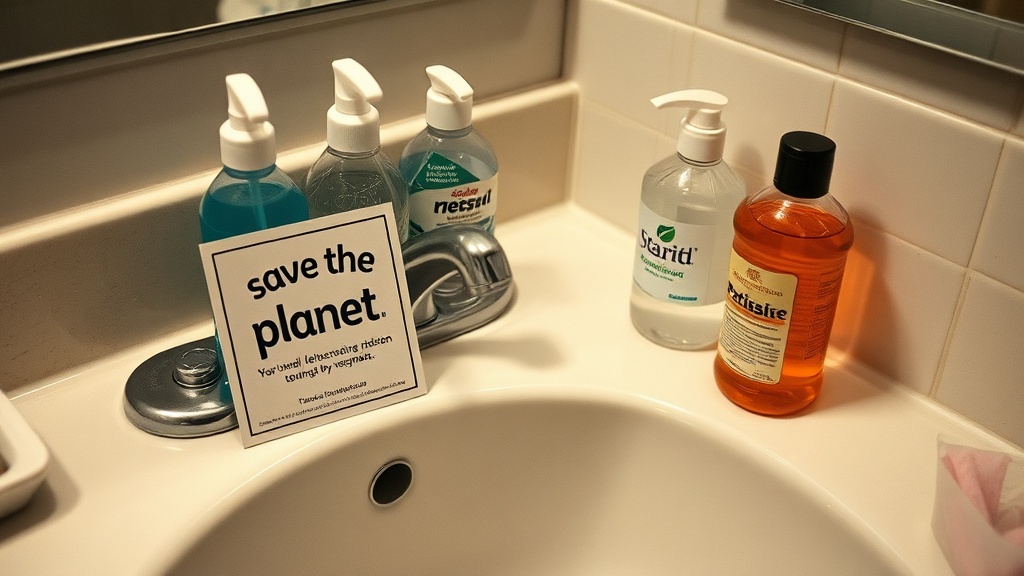
Look, let'''s be real: the little "save the planet" card on your bed is not a climate strategy. It'''s an operations strategy.
And yes, reusing towels can reduce water and energy use. The problem is how this gets marketed to guests like it'''s a full sustainability program, while the same property is handing out single-use toiletry bottles and ''"compostable''" cups that will head straight to landfill.
Spring break and summer bookings are ramping right now, so this is the moment to run your own audit before you pay extra for a green label.
The Vibe
The pitch usually sounds like this: reuse linens, skip housekeeping, save the Earth.
What'''s often missing: any real data on total building energy, waste diversion, procurement, or labor practices.
In other words, the storytelling is emotional, but the reporting is optional. (Classic.)
The Footprint (Where The Math Actually Is)
Here'''s what'''s true and useful:
- Hotel laundry is a real resource load. EPA'''s hotel water guidance identifies laundry as a meaningful share of hotel water demand, with guest rooms and laundry among the major drivers.
- Towel/linen reuse programs are widespread. AHLA/Responsible Stay reported that over 95% of U.S. hotels have linen and towel reuse programs in place.
- Cost savings are a major driver. A Stanford write-up on reuse programs showed how quickly savings scale in occupied-room operations (because less laundry means less water, energy, chemicals, and labor).
So yes, reuse cards can reduce impact.
But if reuse is the only thing they can show you, the math doesn'''t add up to ''"eco-friendly hotel.''" It adds up to ''"we optimized laundry.''"
The Biodegradable Plastic Trap
Full disclosure: this one makes me wince every time.
If your room has a ''"plant-based compostable''" cup, ask one question: where is it processed?
- ASTM D6400 explicitly applies to plastics designed for municipal/industrial composting conditions.
- EPA guidance says most compostable plastics are intended for industrial facilities and generally should not go in home compost.
Translation for dirty-boot travelers: if the city or hauler doesn'''t actually run industrial compost collection for that stream, your ''"compostable''" cup is mostly a branding exercise.
The logistics are messy, not magical.
What Real Sustainability Looks Like In Hotels
Forget the bamboo toothbrush in paper wrap (still usually trash by checkout).
If a property is serious, you should see evidence in at least three buckets:
- Infrastructure: Gray-water reuse, efficient fixtures, measurable reductions in water/energy use per occupied room.
- Transparent Reporting: Annual or quarterly reporting with actual metrics, not adjectives. Bonus points for disclosing Scope 1/2 and material Scope 3 categories.
- People + Local Economy: Staff wage standards, local procurement targets, and supplier standards that can be verified.
A useful baseline: the GSTC hotel criteria include environmental impacts and community/social outcomes. That'''s the right frame. Buildings matter, but so do workers and local supply chains.
Also important: a LEED plaque can be positive, but it'''s not a blank check for everything else. Building certification alone does not prove ethical labor practices, local purchasing, or low-waste daily operations.
The Reality: My 5-Point Front Desk BS-Meter
Use this when booking or at check-in. If they can'''t answer at least 3 of 5, I don'''t pay a green premium.
1) "Can you share your last 12 months of water and energy intensity per occupied room?"
You want trend data, not one heroic month.
2) "Do you have on-site or contracted industrial composting, and what percentage of waste is actually diverted from landfill?"
If they say ''"we use compostable cups''" but can'''t name the waste partner, that'''s a red flag.
3) "Are your amenities refillable and standardized across rooms, or still single-use minis?"
Refillable systems are one of the fastest no-nonsense wins.
4) "Do you publish supplier standards for linens, cleaning chemicals, and food purchasing?"
If procurement is invisible, sustainability claims are incomplete.
5) "What wage standard do you use for staff and contractors?"
No shame, just clarity. A hotel can'''t claim ''"responsible travel''" while externalizing costs onto underpaid local labor.
Trade-Offs You Should Know Before You Book
Progress over perfection means accepting some friction:
- Truly lower-impact properties may have fewer convenience perks (less frequent linen changes, tighter climate control ranges, simpler amenities).
- Verified programs can cost a bit more up front.
- Smaller local properties may have imperfect infrastructure but stronger local economic impact.
That last one is often worth it. I'''ll take a locally owned guesthouse with transparent practices over a polished chain campaign with zero data, every time.
Quick Booking Script You Can Copy
"Hi, I'''m comparing a few stays and I'''m looking for your measurable sustainability data: water/energy per occupied room, landfill diversion rate, amenity format (refillable vs single-use), and whether you follow a recognized framework like GSTC. If you have a one-pager, send it over."
If they reply with numbers, great.
If they reply with "we care deeply about the planet" and no metrics (you know the tone), keep shopping.
Bottom Line
Reusing your towel is fine. Do it.
Just don'''t confuse it with systemic sustainability.
The real audit is infrastructure, reporting, waste logistics, and labor standards. That'''s where the math checks out, or it doesn'''t.
For fellow humans booking spring and summer travel: ask hard questions, reward real data, and skip the guilt-trip marketing.
Sources I used for this field report
- U.S. EPA WaterSense, Saving Water in Hotels (hotel water-use context and conservation opportunities): https://19january2017snapshot.epa.gov/www3/watersense/docs/saving-water-in-hotels_fact%20sheet_508_Mar2016.pdf
- AHLA / Responsible Stay, Green Lodging Trends 2022 U.S. Market Report (linen/towel reuse adoption): https://www.responsiblestay.org/wp-content/uploads/2023/05/AHLA_Responsible-Stay_Green-Lodging.pdf
- Stanford Magazine, Reusing Hotel Towels: Nitty-gritty (economics of towel reuse): https://stanfordmag.org/contents/reusing-hotel-towels-nitty-gritty
- ASTM D6400 standard scope (industrial/municipal composting context): https://store.astm.org/d6400-21.html
- U.S. EPA, FAQ about Plastic Recycling and Composting (industrial vs home composting reality): https://www.epa.gov/trash-free-waters/frequently-asked-questions-about-plastic-recycling-and-composting
- Global Sustainable Tourism Council, Industry Criteria for Hotels: https://www.gstc.org/gstc-criteria/gstc-industry-criteria-for-hotels/