The Grocery Store Protocol: Why I Eat 60% of My Travel Meals from Supermarkets (And the Waste Math Behind It)

The Grocery Store Protocol: Why I Eat 60% of My Travel Meals from Supermarkets (And the Waste Math Behind It)
Excerpt: Hotel buffets waste up to 40% of their food. Tourist-trap restaurants mark up mediocre plates 3x. Here's the unsexy system I use to eat well, waste less, and save $30-50/day on every trip.
Category: Food & Culture
Tags: sustainable eating travel, food waste tourism, grocery store travel hack, budget travel food, hotel buffet waste, travel meal planning, low waste travel
Meta Title: The Grocery Store Protocol: Eat Better, Waste Less While Traveling
Meta Description: Hotel buffets waste 40% of their food and tourist restaurants mark up mediocre plates 3x. Here's my system for eating well from supermarkets on every trip.
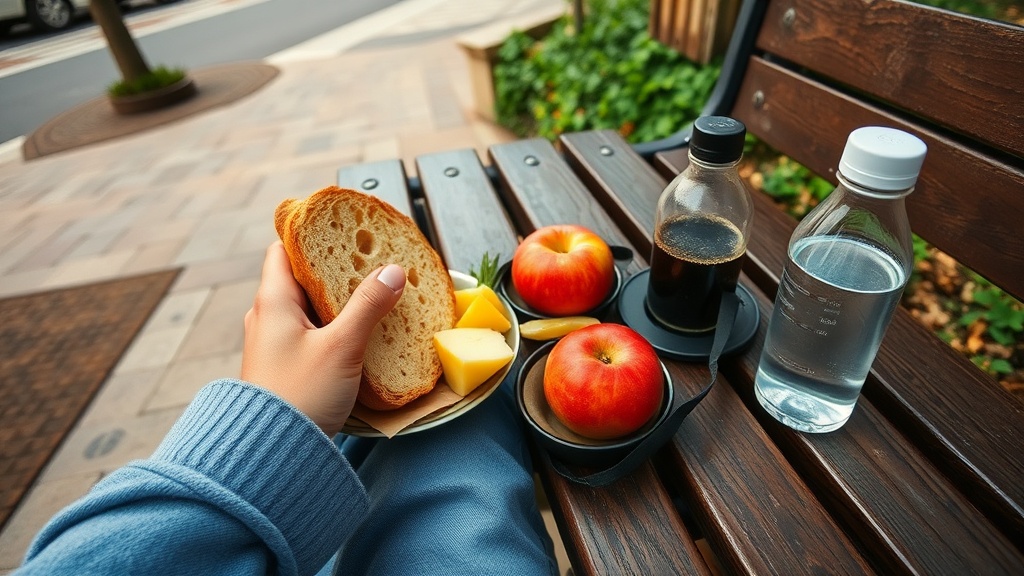
I need to talk about the most underrated sustainability hack in travel, and it has nothing to do with bamboo cutlery or reusable straws.
It's a grocery store.
Specifically, it's the practice of sourcing the majority of your travel meals from local supermarkets, bakeries, and market stalls instead of eating every meal at a restaurant. I've been doing this for years, and the numbers keep confirming what my gut (and my wallet) already knew.
The hotel buffet problem nobody talks about
Here's a stat that should make you put down that third croissant: hotels generate roughly 40% of all food waste in the consumer-facing hospitality sector. That's according to ReFed data, and it's not surprising once you think about it. Buffets have to prepare for an unpredictable number of guests every morning. The spread has to look abundant—that's the whole selling point. And at the end of service, most of it goes in the bin.
A 2020 study in Sustainability journal broke down hotel food waste by source: 45% from over-preparation, 34% from plate waste (the stuff you took but didn't eat), and 21% from spoilage. That means nearly 80% of the waste happens because of the buffet model itself—cook too much, display too much, toss the rest.
When you pay €15-25 for a hotel breakfast buffet, you're subsidizing a system designed to waste food at scale. You're also probably eating worse than you would at the bakery two blocks away.
The tourist restaurant markup
Let's talk about those restaurants clustered around every major attraction in Europe.
I did an informal audit in Lisbon last year. The same pastel de nata that costs €1.30 at Manteigaria (a local chain) was selling for €3.50-4.00 at restaurants within 200 meters of Praça do Comércio. The bacalhau à brás that a neighborhood tasca serves for €9 was €18-24 in the tourist zone. Same ingredients. Often worse execution, because when your customers are one-time visitors, you don't need repeat business to survive.
This isn't unique to Lisbon. I've seen it in Barcelona, Rome, Kyoto, Cusco. The tourist-adjacent restaurant economy runs on information asymmetry: you don't know what the locals pay, so you don't know you're getting ripped off.
My actual protocol
Here's what a typical travel day looks like for me, food-wise:
Breakfast (grocery store or bakery): €2-5
Fresh bread, local cheese, fruit, yogurt. In France, I hit a boulangerie. In Japan, a konbini (7-Eleven there is legitimately good). In Mexico, a corner store for tamales and atole. This is almost always better quality than a hotel buffet, and I buy exactly what I'll eat. Zero waste.
Lunch (market or prepared food counter): €5-10
Most European supermarkets have surprisingly good prepared food sections. In Spain, Mercadona's deli counter is a revelation. In Germany, the bakery chains do solid sandwiches for €3-4. In Southeast Asia, street food and market stalls are the obvious move—fresh, cheap, and often made to order so there's minimal waste on either end.
Dinner (restaurant, but chosen carefully): €12-25
This is where I actually sit down and eat out. One proper restaurant meal per day, chosen deliberately—not the first place with an English menu and a guy waving you in from the sidewalk. I use Google Maps reviews filtered to "newest" and look for places where the photos show locals eating. Not foolproof, but it filters out the worst tourist traps.
Daily food budget: €19-40 vs. the all-restaurant alternative of €50-90+
That's $30-50/day in savings. On a two-week trip, we're talking $420-700 back in your pocket. Enough for an extra week of travel, or a genuinely memorable splurge dinner at a place that deserves your money.
The waste math
This is the part I actually care about. Let's do the comparison.
The all-restaurant traveler (3 meals/day eating out):
- Hotel buffet breakfast: contributes to that 40% systemic waste rate
- Tourist lunch spot: average plate waste of 15-25% (portions designed to look generous)
- Dinner restaurant: another 15-25% plate waste plus kitchen prep waste
- Estimated food waste generated per day: 0.5-0.8 kg
The grocery store protocol (my approach):
- Breakfast from grocery/bakery: I buy exactly what I eat. Waste: near zero
- Lunch from market/prepared food: bought in portions I'll finish. Waste: minimal
- Dinner at a restaurant: one meal's worth of standard restaurant waste
- Estimated food waste generated per day: 0.1-0.3 kg
That's roughly a 60-70% reduction in food waste per day. Over a two-week trip, that's the difference between generating 7-11 kg of food waste versus 1.4-4.2 kg.
Is it going to save the planet? No. But food waste is responsible for 8-10% of global greenhouse gas emissions, and tourism is a meaningful slice of that. If you travel 3-4 weeks a year, your travel eating habits actually matter more than most people think.
The "but I want the experience" objection
I hear this one a lot. "I travel to experience the local food culture, not to eat grocery store cheese in my Airbnb."
Two responses.
First: supermarkets are local food culture. You learn more about how people actually eat by walking through a Migros in Switzerland, a Don Quijote in Japan, or a Jumbo in Colombia than by sitting in a restaurant designed for tourists. The product selection, the price points, the prepared food—it's all a window into daily life that restaurants deliberately obscure.
Second: I'm not saying never eat at restaurants. I'm saying eat at one good restaurant per day instead of three mediocre ones. Concentrate your dining budget. That €50 you saved on breakfast and lunch? Spend it on the tasting menu at the place that sources from the farm 20 km away. You'll have a better food experience and waste less food and spend less money overall.
The practical kit
What I carry to make this work:
- A small knife (checked luggage, obviously). For cutting bread, cheese, fruit. I use an Opinel No. 8—folds flat, weighs nothing, costs €12
- A container (I use a stainless steel tiffin). For leftovers, market purchases, snacks on transit days
- A cloth napkin/wrap (doubles as a plate, cutting surface, and napkin)
- The Tank (my 32oz Nalgene, obviously). For water, always
Total additional packing weight: about 350 grams. That's less than a single restaurant dessert.
Where this protocol works best (and where it doesn't)
Works great:
- Europe (supermarket culture is strong, bakeries everywhere)
- Japan (konbini prepared food is genuinely excellent)
- Southeast Asia (street food and markets are the default)
- Latin America (mercados and corner stores are abundant)
Works less well:
- Remote trekking areas (limited options, carry your food in)
- All-inclusive resorts (you already paid for the buffet, might as well eat it)
- Business travel (client dinners aren't optional)
Requires adaptation:
- Middle East and North Africa (smaller grocery stores, but bakeries and street food fill the gap)
- Sub-Saharan Africa (varies hugely by country; markets work, Western-style supermarkets are less common outside capitals)
The bottom line
Every sustainability guide wants to sell you a product. A bamboo utensil set. A collapsible cup. A carbon offset.
I'm telling you to walk into a grocery store.
It's not glamorous. It won't get likes on Instagram. But it'll cut your food waste by more than half, save you serious money, and—here's the part nobody mentions—actually show you how people in that country eat every day.
The best travel food hack isn't a hack at all. It's just... shopping. Like a human. In a place where humans shop.
And honestly? That €1.30 pastel de nata from the local bakery tastes better than the €4 tourist version anyway. Every single time.