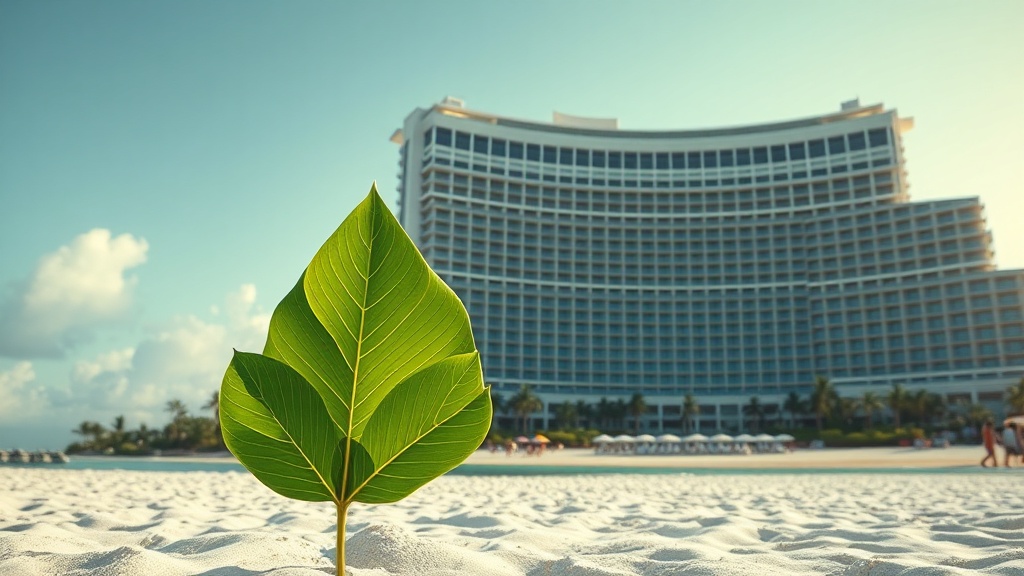
The Greenwashed Spring Break: What Eco-Hotels Hide in the Fine Print

Spring break is almost here, which means travel agencies are flooding your inbox with "eco-conscious getaway" deals, booking platforms are still running sustainability badge programs despite EU regulators calling out their methodologies as misleading, and somewhere a marketing team is deciding how to describe a 14-story concrete resort as "nestled in harmony with nature."
I spent six years auditing supply chains for an environmental NGO. I know what a real sustainability audit looks like. I also know what theater looks like. What you're seeing right now, as you scroll through "eco-certified" resorts in Bali and Costa Rica at $400 a night, is mostly theater.
This isn't a guilt trip. I'm not here to tell you not to travel. I'm here to give you the same skeptical eye I'd use reading a supplier's Environmental Management System documentation — because when a hotel says "eco-friendly," they're making a claim, and claims need evidence.
The Certification Theater
Let me walk you through the certification landscape, because it's genuinely wild.
Green Globe — probably the most common "eco" badge you'll see on hotel websites — does require annual third-party audits by approved auditors, so it's not pure self-assessment. The legitimate critique is what those audits actually measure: the criteria reward improvement from any starting baseline, not achievement of a fixed standard. A resort that was extremely wasteful and made modest progress can earn the same badge as one that was already operating efficiently. The criteria also span enough operational categories that strong scores in one area can compensate for weak performance in another. A hotel that reduced its energy consumption by 5% from a very high baseline can call that progress — because under this system, it is.
LEED certification is more rigorous and does involve third-party verification — but it's primarily a construction standard. A LEED-certified building means the building itself was built to certain environmental specs. It says almost nothing about how that building is operated, how the staff is treated, or where the food comes from. A brand-new LEED platinum resort consumed enormous resources just to be built. The construction carbon footprint alone can take decades to offset through efficient operations.
EU Ecolabel is one of the stronger hospitality certifications — it's EU-regulated, third-party verified, and covers waste management, water consumption, energy, and chemicals. But it's almost exclusively relevant to European properties. I mention it because it's a useful benchmark for what a real certification looks like.
Carbon offsets deserve their own paragraph. The logic sounds reasonable: you fly somewhere, you generate emissions, you pay a company to plant trees or fund renewable energy projects somewhere else to balance it out. Here's what the research actually shows: a significant percentage of verified offset projects don't deliver the emissions reductions they claim. A 2023 investigation by The Guardian and academic researchers found that over 90% of Verra's REDD+ rainforest credits — the offset type specifically focused on preventing deforestation, and one of the most commonly sold categories — were likely phantom credits not representing real carbon reductions. Verra disputed the findings, but the methodology problems the researchers identified are structural, not cherry-picked. I've gone deeper into how offset promises fail in practice in my wildlife tourism audit — the same logic applies to resort "neutrality" claims. "Carbon neutral" claims based on offsets are often marketing math, not atmospheric math.
The Hidden Carbon Math

This is the part that made me change how I plan trips.
A round-trip flight from New York to Bali — a popular "eco-tourism" destination — generates somewhere between 2 and 4 metric tons of CO₂ equivalent per passenger, depending on which calculator you use and what radiative forcing multiplier is applied for non-CO₂ warming effects at altitude. Most consumer tools land on the low end because they undercount those altitude effects; researchers who include them tend to land higher. Pick your number — the point holds regardless: it is more carbon than the average person in many lower-income countries emits in an entire year. (If you're wondering how this compares to rail, I've broken down the actual emissions gap between flights and trains separately—it's steeper than most people realize.)
The most efficient eco-lodge in Bali is not going to offset that flight. Not even close. The hotel might save 40% of energy compared to a conventional property — great! — but if that savings represents 2 tons of CO₂ annually across all guests, and you flew there from New York and back, you've already spent 3+ tons before you even checked in.
I'm not saying don't go to Bali. I'm saying: the framing that your hotel choice is the primary environmental variable in international travel is mathematically backwards. The flight is the primary variable. The hotel is a secondary consideration.
The Bali water crisis adds another layer. Bali's groundwater is severely depleted — aquifer overextraction has caused seawater intrusion in coastal areas, affecting local communities' access to clean water. Luxury eco-lodges that serve tourists use significantly more water per guest than local households, even with conservation programs. When a resort markets its "water recycling initiative," ask: recycling relative to what baseline? And who was using that water before tourism infrastructure arrived?
Iceland provides a cleaner case study in infrastructure strain. The country gets legitimately most of its electricity from geothermal and hydropower — genuinely renewable. But tourism infrastructure (roads, waste management systems, expanded airports) built to accommodate 2 million+ annual visitors in a country of roughly 380,000 people requires ongoing maintenance, construction, and resource extraction that the original emissions math never fully accounts for.
What Hotels Actually Do vs. What They Claim
After years of reading ESG documentation, here's what I look for versus what shows up in brochures.
Genuine practices have numbers attached. "We reduced water consumption by 23% per occupied room between 2022 and 2024 through greywater recycling and low-flow fixtures, verified by [third party]." That's a claim with specificity. "We are committed to water conservation" is marketing.
Genuine practices also include: sourcing food from farms within a defined radius (with named suppliers, not just "local"), paying wages at or above local living wage benchmarks (with data), hiring locally at management level (not just housekeeping), composting food waste with documented diversion rates, and using renewable energy with actual generation or verified purchase documentation.
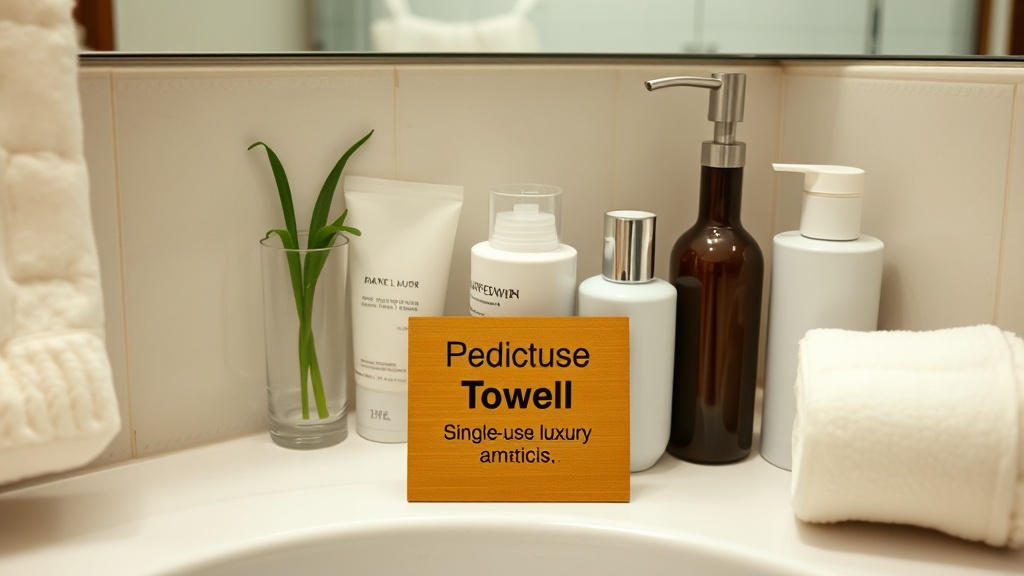
Theater looks like this: Luxury pricing plus vague language. "Eco-inspired design." Bamboo furniture and indoor plants in the lobby. Little signs in the bathroom asking you to reuse towels (this saves the hotel laundry costs; the environmental benefit, while real, is minor) — I've cataloged the full list of hotel greenwashing tactics that fall into this category. Brand new buildings marketed as sustainable — ignoring the embodied carbon in all that concrete and steel.
The tell I trust most: if a hotel has genuinely invested in sustainability infrastructure, they know their numbers. Ask specifically and they'll answer specifically. Vague answers to specific questions mean the program is a brand exercise, not an operational one.
The Three-Question Vetting Checklist
Before you book anything calling itself "eco," ask these three questions — either by emailing the property directly or checking if the information is published on their website. Note which properties answer concretely versus generically.
1. "Where does your electricity come from?"
You want: onsite renewable generation (solar panels with capacity data, small hydro), documented renewable energy certificates (RECs) from a named regional grid provider, or a verified green power purchase agreement.
Red flag: "We are working toward renewable energy goals" or "we offset our energy consumption" without specifics.
2. "Who profits from your community support program?"
Many eco-resorts advertise "community partnerships." What that often means in practice is a contribution to a foundation (possibly partially controlled by the resort ownership), one-time donations, or "cultural experiences" staged for tourists that funnel money away from local artisans.
What you actually want: local ownership stake in the property, local management-level employment data (not just "we hire locally" — what percentage, at what levels), and named partnerships with community organizations that operate independently of the resort.
3. "What's your actual waste stream?"
You want: landfill diversion rate, composting and recycling tonnage, partnerships with named local waste facilities, and a food waste reduction program with measurable outcomes.
Red flag: "We have recycling bins" or "we've eliminated single-use plastics" as the entire waste management story.
Properties that can answer all three concretely are operating sustainably. Properties that can't are selling you an aesthetic.
The Uncomfortable Truth: When NOT to Go
Some destinations are genuinely fragile right now, and "eco-certified accommodation" doesn't change that.
Venice has instituted day-tripper fees and is considering further restrictions — not because they don't want tourism, but because the infrastructure cannot absorb current visitor volume without accelerating the degradation of a World Heritage Site. I've analyzed how Venice's €5 fee is actually attempting to solve the math of overtourism.
Bali's Ubud and southern coastal areas are experiencing overtourism effects on groundwater, traffic infrastructure, and local housing costs that price residents out of their own neighborhoods. The most responsible thing you can do as a tourist who loves a place is sometimes to wait until it has capacity to handle you.
The math I run before booking now: flight emissions + accommodation emissions + tourist infrastructure stress vs. regional economic benefit + my actual ability to experience the place meaningfully. If the first number is high and the destination is stressed, the honest answer might be a regional destination or a postponed trip.
The most sustainable vacation I've taken in recent memory was driving three hours to a state park, sleeping in a cabin operated by the state parks system, eating at local restaurants, and buying groceries at a local co-op. Low emissions, money in a local economy, minimal tourism pressure on a place designed to accommodate me. Boring pitch. Real numbers.
What Actually Matters When You Do Travel
If you're going to travel — and you should, life is short and the world is worth seeing — here's the actual priority order for minimizing impact:
1. Flight class and frequency. Business class has roughly 3x the per-passenger emissions of economy (more physical space = more allocated emissions). One long trip beats multiple short trips. Direct flights beat connections (takeoff and landing are highest-consumption phases).
2. Destination selection. Can you get there by train? Is the destination currently under overtourism pressure? Does regional tourism infrastructure exist to handle visitors, or are you part of a wave that's still building it? One practical step: consider second-tier cities and alternative destinations that deliver comparable experiences without the infrastructure strain of household-name locations.
3. Accommodation. Now look at the hotel. Is it locally owned? Can it answer your three questions concretely? Is it priced at a level that makes sense for a property that's actually paying fair wages and running real sustainability programs?
4. In-destination choices. Local food, local guides, local transportation. These matter, but they're downstream of the bigger decisions.
What doesn't matter much: whether the shampoo bottle is refillable, whether the towels are made of bamboo, and whether the lobby has a composting bin labeled "eco."
The greenwash machine is running hard this spring break season. Certification badges, offset promises, and "eco-luxury" price points are designed to make you feel like the premium pricing is doing ecological work. Sometimes it is. Often it isn't.
Ask the questions. Read the answers skeptically. And if a property can't tell you where its electricity comes from, tell them their marketing team is doing more sustainability work than their operations department.
Travel well.
— Callie