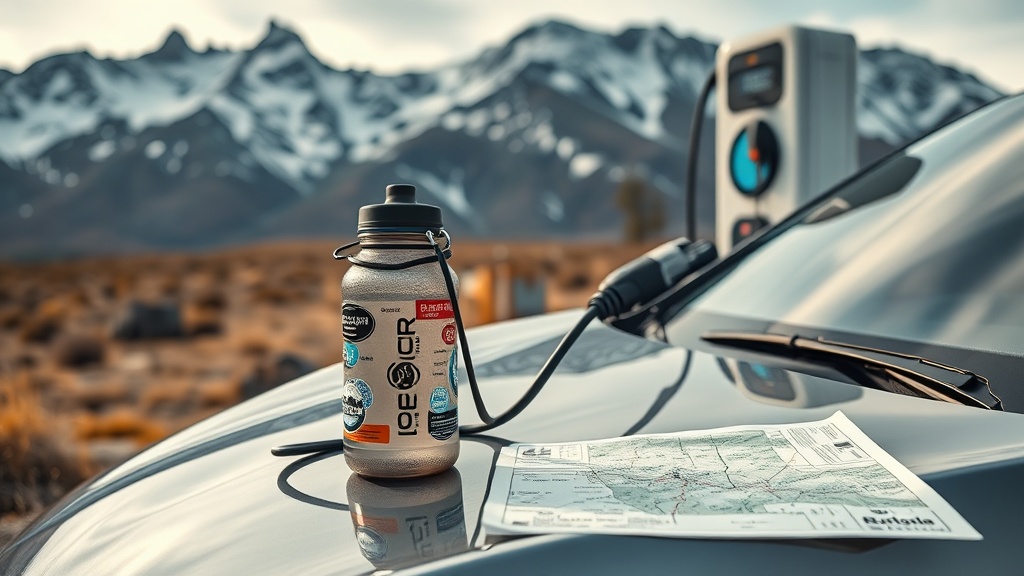
The EV Rental Reality Check: A 2026 Logistics Audit

Look, let's be real: as we gear up for the summer 2026 road trip season, every travel outlet is pushing the same narrative. "Rent an EV! It's the ultimate eco-friendly upgrade!" It sounds great on a PR pitch, but if you look at the raw logistics of actually executing a backcountry or National Park road trip with an electric vehicle, the math doesn't always add up.
I treat travel like a field operation, and the core of any successful operation is infrastructure. While the emissions savings of an EV are undeniably real, the charging network outside of major coastal corridors is still painfully fragmented. Before you pay the premium for that eco-chic electric SUV, here is my BS-free, pragmatic audit of when renting an EV actually works, and when it's just going to tank your itinerary.
The Infrastructure Gap: The National Park Bottleneck
If you're road-tripping between Portland and Seattle, the infrastructure is robust. You'll barely notice a disruption. But if you're heading out to Tier-1 National Parks like Zion, Yellowstone, or Glacier, the reality is starkly different.
Once you leave the interstate, fast-charging stations become incredibly scarce. You will find yourself relying on single-plug Level 2 chargers at rural grocery stores or RV parks. A 15-minute gas stop suddenly turns into a four-hour logistical nightmare. The "range anxiety" isn't just a psychological hurdle; it's a verifiable time-cost that eats into the limited PTO you have to actually explore the backcountry.
The "Destination Charging" Scam
Hotels and basecamps have caught onto the trend. You will see "EV Charging Available" listed prominently as a premium eco-amenity.
The reality? The hotel has two slow-chargers for a 150-room property. It becomes a nightly blood sport. If you arrive past 6:00 PM after a long day on the trail, those plugs are already taken. You cannot stake your entire next day's itinerary on the hope that someone unplugs their Tesla at 2:00 AM so you can get enough juice to reach the trailhead by dawn. It is an infrastructure bottleneck masquerading as a sustainability perk.
The Time Cost vs. Carbon Math
We know internal combustion engines are bad for the planet. We know carbon offsets are largely performative harm-reduction donations. So what is the pragmatic middle ground?
If you are burning hours idling at a rural charging station instead of hiking, you aren't optimizing your trip. For deep-country exploration this summer, a high-efficiency standard hybrid is often the superior logistical choice. A hybrid guarantees you the range and flexibility to operate off-grid without the stress, while still significantly reducing your fuel consumption compared to a standard SUV.
The Pragmatic Verdict
Travel involves trade-offs. I am not anti-EV. I am anti-BS.
Rent the EV if:
- Your route stays strictly within major urban corridors or the coasts.
- Your basecamp has a guaranteed, reserved charging hookup specifically for your unit.
- You have a highly flexible itinerary where a three-hour charging detour won't ruin your day.
Skip the EV (and get a Hybrid) if:
- You are accessing remote trailheads, dispersed camping, or National Parks.
- You are on a tight timeline with limited PTO.
- You are relying on public "destination charging" at busy hotels.
The best way to reduce your footprint in a National Park isn't to drive an EV—it's to leave your personal vehicle at the gateway town and use the NPS mandatory shuttle systems. Progress over perfection, fellow humans. Pick the vehicle that lets you focus on the adventure, not the infrastructure.