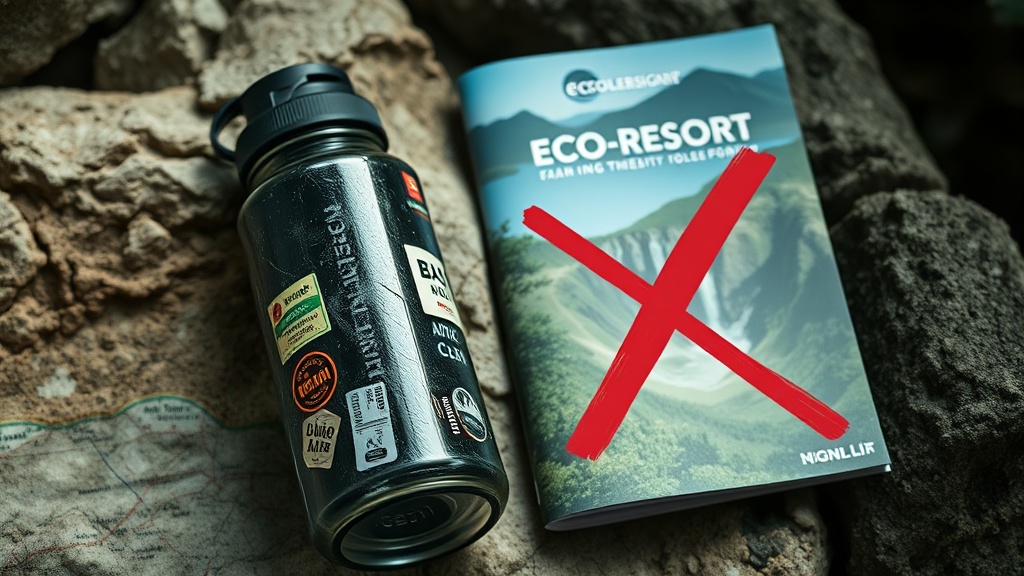
The Earth Day Greenwashing Trap: 4 Travel Buzzwords to Ignore in 2026

Look, let’s be real: as April 22 rolls around, the travel industry’s marketing machine kicks into high gear. Suddenly, every luxury resort with a bamboo straw is declaring itself an "eco-warrior" paradise. It’s Earth Day, which means my BS-detector is officially flashing red.
As a former NGO logistics coordinator, I’ve spent years auditing supply chains. I treat travel the exact same way—heavy on the data, light on the fluff. When the math doesn't add up, I’m the first to call it out. The truth is, genuine sustainable travel involves trade-offs, not just aesthetically pleasing Instagram backdrops.
Here are four of the most egregious greenwashing buzzwords to ignore when you're booking your 2026 summer travel, and the actual logistics you should be looking for instead.
1. "Eco-Chic"
The Marketing Fluff: This usually translates to "we built our luxury resort out of imported reclaimed wood, and the hand-soap comes in a sleek glass bottle." It's a vibe, not a metric.
The Pragmatic Audit: Aesthetics have absolutely zero correlation with environmental impact. A beautifully designed "eco-chic" lodge in the middle of a delicate ecosystem might still rely on diesel generators and fly in 80% of its food.
What Actually Matters: Look at the supply chain. Are they hiring locally? Do they source their food within a 100-mile radius? A slightly dated, locally-owned motel with a robust greywater system is infinitely better for the environment than a brand-new "eco-chic" glamping site that disrupted local wildlife corridors.
2. "100% Carbon-Neutral"
The Marketing Fluff: "Fly halfway across the world and stay in our massive resort completely guilt-free because we bought some trees somewhere!"
The Pragmatic Audit: The math doesn't add up. Most "carbon-neutral" claims rely heavily on cheap carbon offsets, which are notoriously difficult to verify and often amount to a "pay-to-pollute" scheme. It’s an accounting trick that lets companies maintain high-emission operations while buying a clear conscience. I prefer to call these "harm-reduction donations" because they certainly don't erase the impact of your flight.
What Actually Matters: Look for absolute emission reductions. What percentage of their energy comes from on-site renewables? Are they actively minimizing waste, or just buying credits to cover it up?
3. The "Save the Planet" Towel Sign
The Marketing Fluff: You know the one. That little plastic placard in the bathroom asking you to hang up your towel to "save the earth" by reducing water usage.
The Pragmatic Audit: Don't get me wrong, you absolutely should reuse your towel. But let's not pretend a multi-national hotel chain is doing this primarily for the environment. It's a cost-saving measure masquerading as an eco-policy. If this is the only visible environmental initiative a hotel has, it's a massive red flag.
What Actually Matters: True water conservation happens at the infrastructural level. Ask about their plumbing fixtures, their landscaping choices (are they watering a massive lawn in a desert?), and how they process wastewater.
4. "Pristine"
The Marketing Fluff: "Come visit our pristine, untouched wilderness before it's gone!"
The Pragmatic Audit: I strongly dislike the word "pristine." First, it often erases the Indigenous communities who have lived in and managed those landscapes for millennia. Second, marketing a place as "untouched" directly encourages the exact kind of over-tourism that will ruin it. It treats nature as a commodity to be consumed before an arbitrary expiration date.
What Actually Matters: Support destinations that actively manage their visitor numbers. Look for parks that implement shuttle-only systems (a massive win for both emissions and traffic) or require permits to prevent overcrowding.
The Bottom Line for Earth Day 2026
If a travel company is leaning heavily on these buzzwords without providing transparent, verifiable data, they are banking on you feeling too guilty to ask hard questions.
According to a recent report by Sustainable Travel International, greenwashing is dangerous because it deludes consumers and harms the environment. And as we move deeper into 2026, the distinction between “verified” and “unverified” claims is becoming the only reliable metric.
So this Earth Day, don't fall for the glossy brochures. Ask for the receipts, check for third-party certifications like the GSTC logo, and remember: progress over perfection. The goal isn't a zero-impact trip—it's an honest one.
Now, if you'll excuse me, I have to go scrub last week's mud off The Tank before my next trail audit.