The Amtrak Sleeper Car vs. Flying: The Actual Carbon and Cost Math for Summer 2026

Look, let's be real—every Earth Month, my inbox gets flooded with PR pitches about "sustainable flight fuel" and "eco-chic luggage." But if you actually want to cut down your travel footprint without wanting to pull your hair out, we need to talk about the train. Specifically, the Amtrak sleeper car.
I know, I know. Amtrak gets a bad rap for delays. But as someone who treats travel like a supply chain audit, I have a soft spot for Amtrak sleeper cars. There's no performative shaming here, just cold, hard logistics. So, does the math actually check out when you compare a sleeper car to flying domestic for your summer 2026 trip? Let's run the numbers.
The Carbon Math
We all know planes are carbon heavy. A standard cross-country flight (let's say, Portland to Chicago) dumps roughly 0.45 metric tons of CO2 per passenger.
Amtrak, on the other hand, operates on a completely different scale. The Empire Builder line runs on diesel-electric, but because you're moving hundreds of people at once, the per-passenger emissions are dramatically lower—often around 30-40% of the emissions of a comparable flight. The math checks out here. It is undeniably better for the planet.
(And please, do not get me started on airline carbon offsets. As I've said before, carbon offsets should be rebranded as "harm-reduction donations." They don't erase the fuel burned. The train actually burns less fuel per capita. Full stop.)
The Financial Logistics
This is where the math usually stops adding up for people. A coach seat on Amtrak is cheap, but spending 40 hours in a coach seat is an endurance event, not a vacation. If you want a Roomette (which includes beds and meals), you are looking at $600 to $1,000+ depending on the route and how early you book.
A flight from PDX to ORD might cost $350 round trip. At first glance, flying wins.
But let's do a real logistical breakdown. When you book an Amtrak Roomette, your ticket includes:
- Your accommodation for two nights. (Subtract two nights of hotel costs from your trip budget).
- All your dining car meals. (Subtract $100-$150 of airport food and eating out).
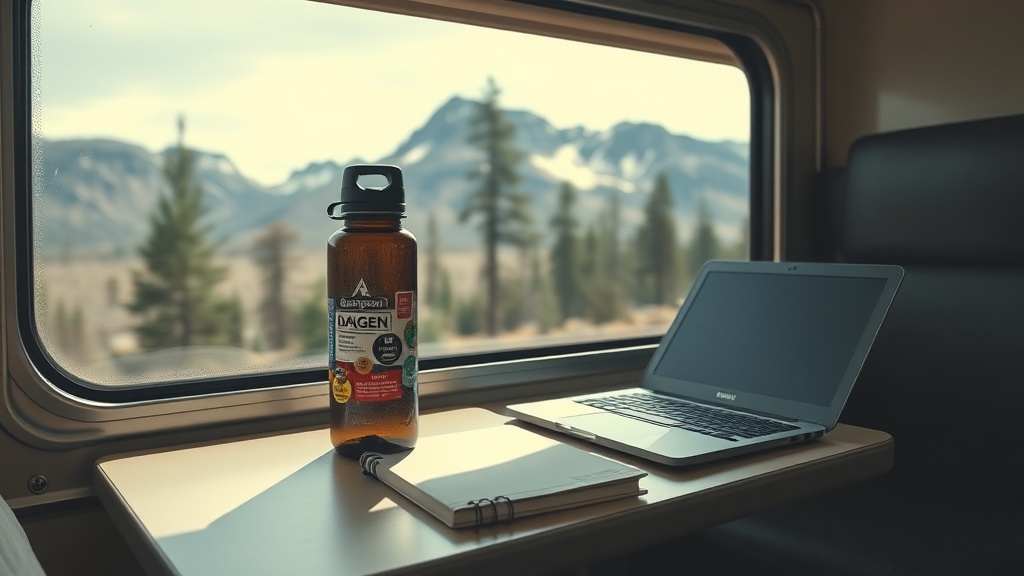
- No luggage fees. (You can bring two 50lb bags for free. The Tank—my battered 32oz Nalgene—fits nicely in the cabin, too).
- No airport transit costs. (Trains drop you in the city center. Subtract the $50 Uber from the airport).
Once you factor in the hidden costs of flying—the luggage fees, the overpriced terminal sandwich, the transit to the city center, and the extra hotel nights—the Amtrak Roomette isn't actually that much more expensive. It just front-loads the costs.
The Vibe Check
Here is the honest truth: train travel involves trade-offs. You are trading time for sanity and carbon reduction. If you only have five days of PTO, taking two days to travel each way is a terrible logistical decision. Don't do it. There's no guilt trip here.
But if you have the time, or if you can work remotely from the observation car (the Wi-Fi is still spotty, be warned), it is a superior experience. You get to see the actual landscape of the country, the meals are surprisingly decent, and you arrive without jet lag or TSA-induced stress.
If you are planning a trip to a second-tier city or trying to navigate the National Park chaos this summer, look into the rail lines first.
The bottom line? If you have the PTO, the Amtrak sleeper car is one of the few sustainable travel choices that isn't just marketing fluff. The math works, the carbon savings are real, and you don't have to deal with "eco-friendly" single-use plastic cups at 30,000 feet.