The 5-Item Low-Waste Laundry Kit I Use for 2-Week Trips (No Hotel Dryer Needed)

The 5-Item Low-Waste Laundry Kit I Use for 2-Week Trips (No Hotel Dryer Needed)
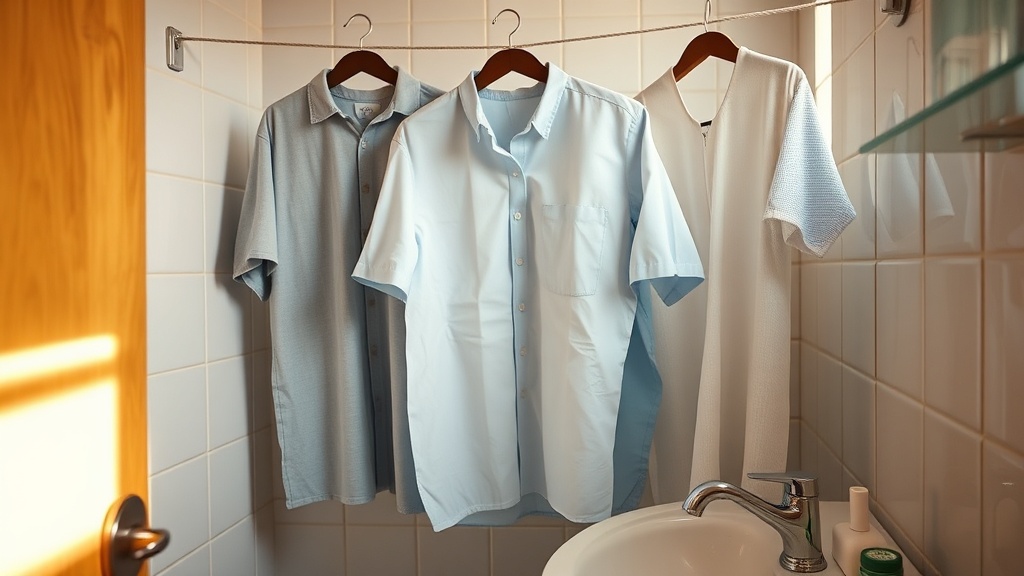
Most travelers overpack because they don't trust their laundry plan.
So they check a bag, pay extra, wear the same sweaty shirt too long, and then run a full dryer cycle in a hotel that still puts a "save the planet" placard by the towels. The math doesn't add up.
I spent six years auditing supply chains. I treat trip laundry the same way: less theater, more throughput.
This is the five-item system I use for 10- to 14-day trips with a carry-on. It is not aesthetic. It works.
The 5-item kit
Laundry soap bar in a vented tin (or tiny bottle of concentrated liquid)
Bars avoid liquid limits drama and leakage risk. If you use liquid, keep it in a clearly labeled mini bottle.
Universal sink stopper
Hotel and hostel drains are chaos. This gives you predictable soak volume.
Braided travel clothesline with no clothespins required
Fast setup between bunk frames, shower rods, or balcony rails.
Small microfiber-catching laundry bag (for synthetic pieces only)
Not perfect, but it reduces shed into wastewater and protects high-shed fabrics from aggressive machine cycles.
Flat dry towel (or clean cotton tee) for roll-press drying
Roll wet clothing in it and press. You remove water fast and cut dry time by hours.
Why this system beats "just use the hotel dryer"
1) Synthetic clothes shed fibers in washing
This is no longer theoretical.
A 2019 Scientific Reports study found wash-cycle releases in the hundreds of thousands to over a million fibers per kilogram, depending on garment construction and fabric details.
A 2021 open-access PLOS ONE study found huge variability too, including samples ranging from about 8,800 to over 6.8 million fibers per kilogram washed.
Translation: fabric choice and wash behavior matter more than people think.
2) First washes are especially dirty
The European Environment Agency reports that a large share of textile microplastic release happens in the first few washes, and that synthetic textiles are a meaningful source of marine microplastics.
That matters for travel because a lot of us buy "quick-dry" gear right before a trip and then wash it hard on the road.
3) Dryer energy is real, even when we pretend it isn't
U.S. DOE guidance is blunt: cooler wash settings reduce energy, and air-drying is a recommended path for many fabrics. ENERGY STAR dryers help, but they still consume power.
If you're running short sink washes and line-drying overnight, you cut a chunk of avoidable energy and usually extend garment life too.
My field protocol (20 minutes active time)
I run this every 2-3 days on long trips.
Sort by fabric behavior, not color.
Synthetics together. Merino/linen/cotton together. Heavy items on their own cycle.
Pre-rinse the worst zones.
Collar, pits, sock footbeds. 60 seconds saves you from over-scrubbing later.
Short soak, low agitation.
10-15 minutes in cool or lukewarm water with a tiny soap dose. Swish, don't beat the fabric up.
Rinse twice, fast.
Residual soap extends dry time and can irritate skin.
Roll-press in towel.
This is the force multiplier. It cuts drip time dramatically.
Hang for airflow, not symmetry.
Space items apart. Point a fan at the line if available.
What I avoid now (learned the hard way)
- High-heat hotel dryers for synthetics. You pay to age your gear faster.
- Powder detergent in sink washes. Slow dissolve, residue risk, more scrubbing.
- One giant "laundry day" load. Better to run small high-turnover washes every few days.
- Buying cheap polyester fleece right before departure. High shed risk plus slow drying.
The real packing payoff
A reliable laundry system changes your packing math:
- 4 tops instead of 8
- 3 underwear rotations instead of 10
- 2 socks in use, 2 drying
- 1 carry-on that stays under control on trains, buses, and stairs
That is less money burned on baggage fees, less friction in transit, and less waste from panic-packing "just in case" clothing.
BS-meter: "Eco" laundry cards in hotels
BS-meter: 7/10.
If a property tells you to reuse towels but gives no info on wash temperature, wastewater handling, or dryer dependence, that's guest-facing theater.
Real sustainability signals are operational:
- line-dry infrastructure or low-energy laundry options
- clear detergent and water policies
- staff who can answer practical questions without reading a script
Bottom line
You don't need a perfect zero-impact laundry routine. You need a system that survives real travel days.
This five-item kit does that. It's cheap, portable, and it lowers waste without turning your trip into a moral performance.
If you're a dirty-boot traveler on a real budget, this is one of the highest-ROI upgrades you can make.
Sources
- Scientific Reports (2019), The contribution of washing processes of synthetic clothes to microplastic pollution: https://www.nature.com/articles/s41598-019-43023-x
- PLOS ONE / PMC (2021), Domestic laundry and microfiber pollution: https://pmc.ncbi.nlm.nih.gov/articles/PMC8270180/
- European Environment Agency (briefing), Microplastics from textiles: https://www.eea.europa.eu/en/analysis/publications/microplastics-from-textiles-towards-a-circular-economy-for-textiles-in-europe
- U.S. Department of Energy, Laundry (Energy Saver guidance): https://www.energy.gov/energysaver/laundry
- ENERGY STAR, Clothes Dryers overview: https://www.energystar.gov/products/clothes_dryers