Solo Stove vs. Breeo vs. Your Grandaddy's Rock Ring: An Honest Gear Audit

Look, let's be real—the moment the weather cracks 60 degrees, your social feeds are going to be flooded with targeted ads for "smokeless" stainless steel fire pits. You know the ones. Solo Stove, Breeo, the sleek cylindrical monoliths that promise a perfect, tear-free campfire experience for the low, low price of $300 to $600.
But before you click "Add to Cart" this spring, we need to do a little reality check. Are these heavy-duty metal pits actually an eco-friendly choice, or is this just another piece of performative gear masquerading as an essential?
It's time for a Greenwash Audit. Let's look at the actual math behind the high-end smokeless fire pit versus the oldest technology we have: a simple circle of rocks.
The "Smokeless" Claim Evaluated
The primary selling point of a Solo Stove or a Breeo is the "secondary burn." The double-wall design pulls air in through the bottom, heats it, and feeds it out the top, effectively burning off the smoke before it hits your face.
And look, I'll give credit where it's due: the engineering works. If you live in a dense suburban neighborhood where your smoke immediately becomes your neighbor's problem, or if you're dealing with strict municipal burn codes, reducing particulate matter output is genuinely useful.
But let's not pretend it's magic. "Smokeless" doesn't mean emission-free. You are still burning wood and releasing carbon. The reduction in visible smoke is a local air-quality benefit, but it doesn't zero out the footprint of the fire itself.
The Carbon Logistics of Stainless Steel
Here is where the math starts getting tricky. A mid-sized Solo Stove (the Bonfire) weighs about 23 pounds, and a comparable Breeo X Series clocks in at nearly 48 pounds of heavy-gauge steel.
Manufacturing and shipping that much stainless steel is wildly carbon-intensive. We're talking about mining, refining, smelting at extreme temperatures, and global freight logistics just to get that shiny cylinder to your doorstep.
If your goal is to have a low-impact backyard gathering, buying a massive chunk of newly manufactured industrial steel isn't exactly moving the needle in the right direction.
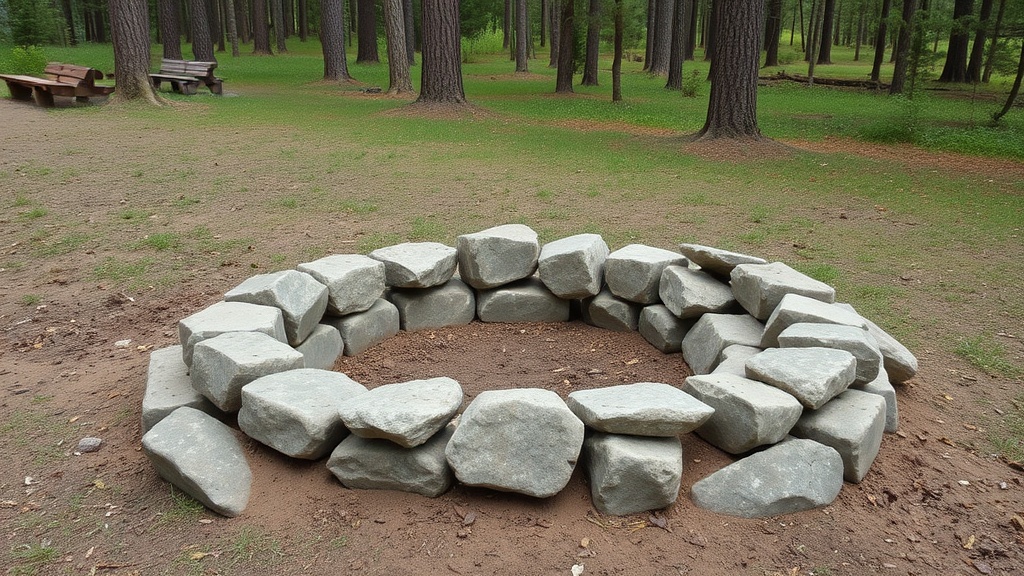
Contrast that with "Your Grandaddy's Rock Ring"—a collection of locally sourced, naturally occurring stones that you literally just arranged in a circle. The carbon footprint? Zero. The shipping cost? Sweating a little while you carried them across the yard.
Durability and "The Math"
Travel and outdoor gear involves trade-offs. If a product has a high upfront carbon cost but lasts a lifetime, the math can eventually balance out.
Breeo leans heavily into its "Built in the USA" ruggedness. Corten steel models develop a patina and are designed to live outside forever. Solo Stoves are 304 stainless steel—lighter, sleeker, but prone to rusting if you don't use their weather cover or haul them into the garage after every use.
If you buy one of these and use it for 20 years, it's a justifiable investment. But if it rusts out in five years because you forgot to cover it during a rainy spring, or if it ends up sitting in a landfill alongside last year's trendy patio furniture? The math doesn't add up.
A rock ring, on the other hand, comes with a lifetime warranty provided by planet Earth. If a rock breaks, you find another rock.
The Final Vibe Check
So, should you buy one?
Buy a Smokeless Pit (Breeo or Solo Stove) If:
- You live in a tight suburban space where smoke management is non-negotiable.
- You want a dedicated, contained fire feature on a finished patio (with a heat deflector base).
- You are committed to maintaining the gear so it lasts a decade or more.
Stick to the Rock Ring If:
- You have the space and don't mind a little smoke.
- You want the lowest possible environmental footprint.
- You realize that the entire point of a campfire is to sit outside and smell like a campfire.
Stop buying eco-gear just because the marketing looks slick. Sometimes the most sustainable, pragmatic choice is literally doing nothing but stacking some rocks.