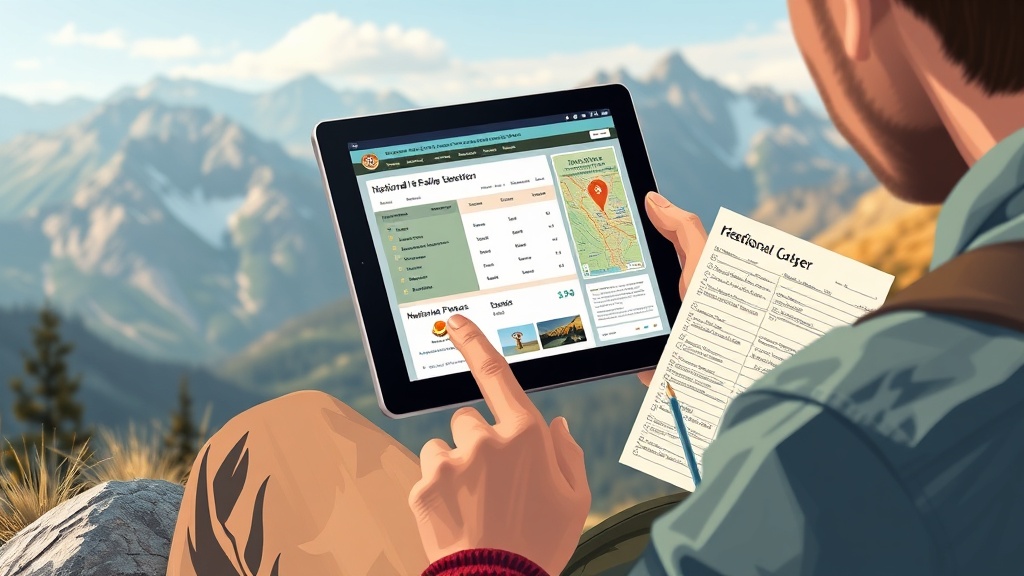
National Park Reservations 2026: 3 Checks That Matter

National Park Reservations 2026: 3 Checks That Matter
I promised myself I’d stop treating reservation systems like rumors on social media and start treating them like logistics. The truth is, a single wrong assumption about park bookings can ruin a three-week trip in one click.
By March 2026, “no reservations” is no longer a meaningful category by itself. It means something different in Rocky Mountain than in Yosemite, and again different at Arches. If you don’t anchor your plans to the current park-level rules, you are guessing, and guessing on travel is expensive.
Why “I already checked” is not the same as “I’m fully ready”?
I am not interested in pretending the system is simple. In practice, park reservations are a stack of moving parts: timed-entry passes, campground booking windows, vehicle reservation dependencies, and fee changes that can stack quietly.
In my own planning, I keep one rule: if the park website says “you may need this” and a forum says “no, that’s old,” I trust the official page, then cross-check with your exact dates and trip mode (car, shuttle, or trail-only, or pass-through). That is how I avoid dead weekends.
To see what’s changing in real time, start here:
- What’s gone, what’s still required
- Rollbacks and what still blocks entry
- How border and mobility fees changed in 2026
What changed in 2026 that still affects every trip?
Are timed-entry permits now the baseline for top parks?
Not exactly, but for the big-ticket parks they remain the dominant constraint. Rocky Mountain has the clearest message this season: timed-entry for popular windows is active in 2026 and managed through Recreation.gov timed-entry.
Yosemite is also continuing to use reservations for major parking and some seasonal entry contexts via its official reservations page. Meanwhile, Mount Rainier announced it will not require timed-entry reservations in 2026, which is a useful counterexample if your route assumes everything is locked down the same way.
That mix is the trap: people hear one headline, then apply it everywhere. Instead, you need a park-by-park rule set.
How do you know if your intended access date is already overbooked?
For high-demand parks, open the park’s official page and click the current-season availability note. Don’t wait until one week out. Many timed-entry pages are updated continuously.
For RMNP and Arches, the official pages explicitly frame timed-entry and reservation mechanics, so I treat those as mandatory in my calendar workflow. Examples:
- Rocky Mountain timed-entry information
- Rocky Mountain park update announcement
- Arches timed-entry page
What role do general park passes play now?
This is where travelers get misled by generic “all-inclusive” thinking. A pass helps with entrance fees, but it does not replace required timed-entry slots or camp reservations. I still use annual pass pricing strategically, especially when a family trip stacks parks. But I check pass coverage first, then reservation requirements second.
The NPS pass guidance page is explicit: reservations and permit systems are separate systems layered on top of fee mechanisms. If a system says pass + booking, you need both.
What should I verify before I hit confirm?
Here is my final three-step check that protects me from last-minute cancellations:
1) Confirm access rule + booking type per park
If the answer is “timed-entry required,” I book that before touching hotels. If it is “permit required for specific routes” (camping, river guides, canyons), I book those next. If none are required, I only book essential backup options.
2) Match your dates to timezone-sensitive windows
For seasonal windows and special-day restrictions, use your travel date in the park’s local context. A date that looks open on a broad calendar can still fail if the vehicle category is closed for your week.
3) Budget for non-obvious fees, not just pass costs
You can save where you least expect if you include park-specific fees and transfer costs early. For example, the 2026 access policy update from NPS explicitly links visitor access, staffing limits, and safety capacity planning for high-visitation sites.
Why this matters most for mixed-mode itineraries
I used to assume train-heavy or low-vehicle itineraries were automatically flexible. In practice, they’re not if your sequence depends on a few park windows that close at dawn and reopen in weird blocks.
If you’re hopping Rocky Mountain, Yosemite, and a less constrained third park in the same week, your schedule should be built around the most restrictive booking requirement, not the easiest one. That way, you avoid booking a perfect campsite that becomes unusable when one permit vanishes.
For a planning analogy, compare this with how I handled transport costs in The Overnight Train Math post: the cheapest leg often determines if the whole route works. For parks, the strictest booking rule is your equivalent choke point.
What mistakes keep happening, and how I fixed them?
Mistake: trusting old screenshots of park pages
This causes duplicate searches and false certainty. I keep a date-stamped link list and replace stale pages every two months during planning season.
Mistake: booking hotels first, permits later
I call that planning by wishful thinking. If the permit is unavailable, your hotel isn’t helping.
Mistake: assuming a pass means you can skip daily planning
It saves money; it does not remove logistics. I track each park as pass eligibility + reservation requirement + timing rule.
Mistake: treating every warning note as a rumor
I don’t overreact to every rumor, but I treat official NPS updates as hard truth. Especially this year, policy language has shifted in small ways that have big operational consequences.
Quick FAQ (before you open your booking)
Do I still need any reservation for Mount Rainier in 2026?
Per the Mount Rainier announcement, timed-entry reservations were not required in 2026, but standard entry and campsite rules still apply.
Can I use one booking method for all parks in a trip?
No. Most parks have different systems. You need park-specific entries, permits, and sometimes campground timing rules.
Is a national park pass a substitute for booking access slots?
No. A national park pass helps with entry fee access. It does not guarantee a slot in a timed-entry system.
What is the most important action 72 hours before departure?
Reconfirm each park’s current availability and verify your planned access mode (vehicle, shuttle, or trail-only entry) matches the booked slot.
Takeaway: lock the hardest rule first, then build the trip around it
If you remember nothing from this, remember one sentence: your trip is only as secure as your strictest park requirement.
I now create a tiny “trip constraint sheet” with each destination, booking type, and fail-safe date. It takes me 20 minutes, but it saves me 20 hours of rebooking churn. For 2026, that is the real winning edge.
Next, use this if you book one or two major parks only:
- Pick the park with the toughest reservation requirement.
- Book its slot first.
- Add your transport and nearby stays around that locked slot.
- Use less restrictive parks as filler, not anchors.
If you want to compare this with a broader planning frame, read my breakdown on the 2026 rollbacks and the tourist fee planning guide.