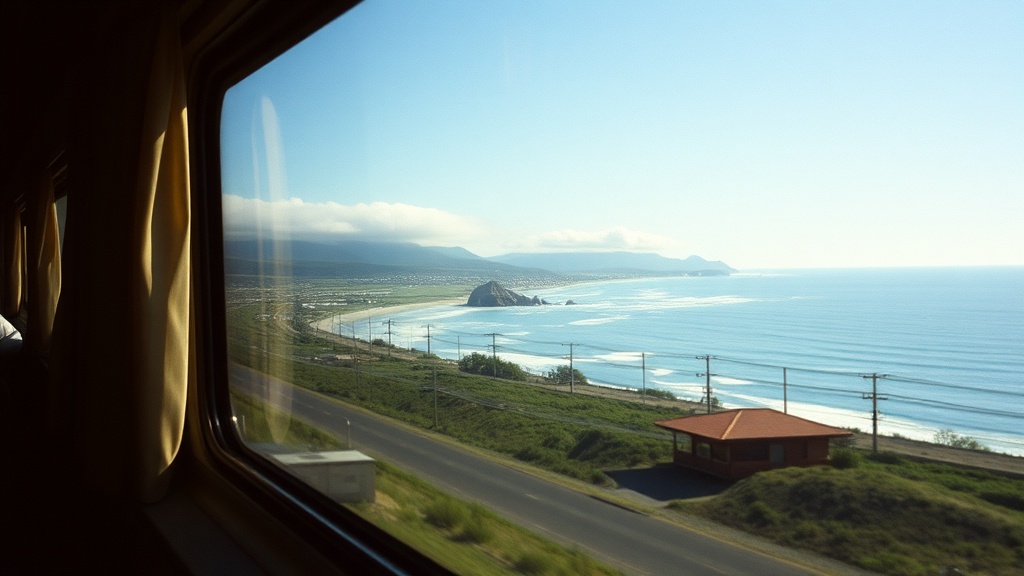
Logistics Audit: The Real Carbon Math of Amtrak Sleeper Cars vs. Regional Flights

Look, let's be real: the travel industry wants you to believe that checking a "carbon offset" box on your cheap regional flight absolves you of all environmental sins. It doesn't.
Today we are looking at the actual logistics of getting from Point A to Point B, specifically focusing on the Portland to San Francisco corridor. We're putting the regional flight up against my personal favorite: the Amtrak sleeper car.
The Flight: Fast, Cheap, and Dirty
A direct regional flight from PDX to SFO takes about two hours in the air. Add two hours for TSA, boarding, and the inevitable runway delays, and you are looking at a four-hour operation.
The Carbon Data:
A short-haul flight like this emits roughly 200 pounds of CO2 per passenger. That's assuming a full flight on a modern aircraft.
(And no, buying a $3 carbon offset at checkout does not magically vacuum 200 pounds of CO2 out of the atmosphere. Carbon offsets should be rebranded as "harm-reduction donations" if we're being honest.)
The Experience:
You are crammed into a tube, fighting for an armrest, and praying your carry-on fits in the overhead bin.
The Amtrak Sleeper Car: Slow, Expensive, but Transparent
Taking the Coast Starlight from Portland to the Bay Area is a 17-hour operation. It is not an express route.
The Carbon Data:
Rail travel in the US is complex. Diesel locomotives are not perfectly green. However, the emissions per passenger mile on an Amtrak long-distance route are still approximately 30-40% lower than flying. The math checks out.
The Experience:
You get a bed, meals included in the dining car, and zero TSA lines. More importantly, you get a transparent energy footprint. You are sharing the resource cost of a moving hotel with hundreds of other people.
The True Cost Breakdown
Let's look at the financial and temporal trade-offs:
- Regional Flight: $150 - $300 round trip. Total travel time: ~5 hours.
- Amtrak Roomette: $400 - $600 one way. Total travel time: ~17 hours.
The Verdict
The math doesn't add up for taking the train if you are purely optimizing for speed or immediate cash savings. Travel involves trade-offs.
But if you treat the journey as part of the destination—effectively combining your transport and your hotel for a night—the sleeper car wins. It forces you to slow down, reduces your carbon footprint significantly, and avoids the performative sustainability of airline "offsets."
Vibe check? The train is objectively better. Pack a solid book, fill up The Tank before you board, and enjoy the dining car.