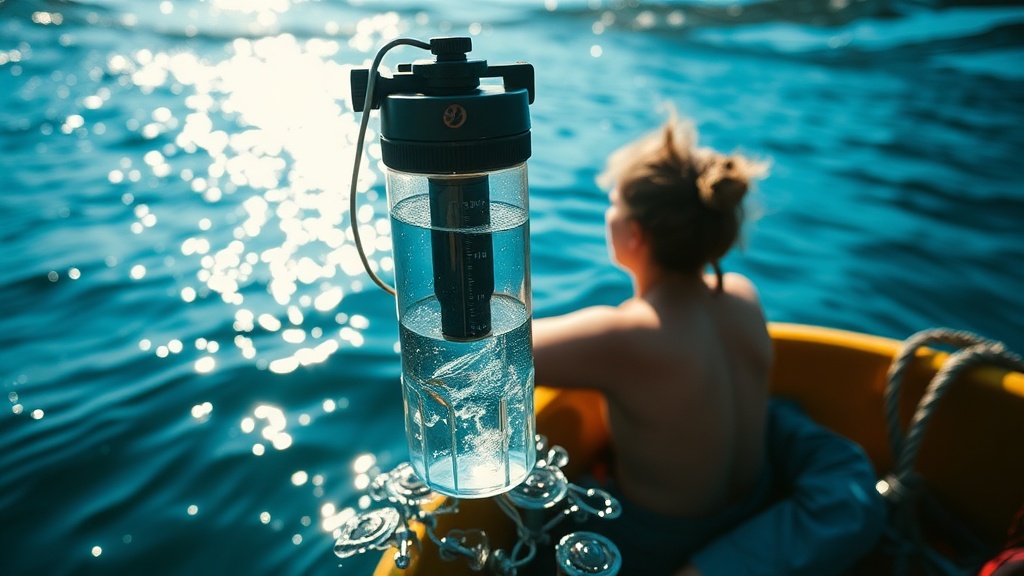
Leave No Trace on the High Seas with a Reusable Water Filter

You’re standing on a coastal trail in the Pacific Northwest, or perhaps a remote stretch of the Amalfi Coast, and you realize you've run out of bottled water. Your immediate instinct is to hunt for a convenience store to buy another single-use plastic bottle, but that's a dead end. This post breaks down how to use high-quality water filtration systems to stay hydrated without the plastic waste or the high cost of buying water in tourist traps. We're looking at the mechanics of portable filtration, the cost-benefit analysis of different systems, and how to ensure you aren't accidentally consuming more than you intended.
The problem isn't just the plastic. It's the logistics. Carrying three liters of heavy water through a mountain pass or a coastal hike is a weight penalty you don't need. Relying on local water stations is a gamble on quality and availability. A solid filtration system changes the math of your trip.
What Are the Best Ways to Filter Water While Traveling?
The best way to filter water depends entirely on your specific environment—specifically, whether you need to remove bacteria, protozoa, or heavy metals. Most travelers only need to worry about biological contaminants like Giardia or Cryptosporidium, which are common in backcountry water sources.
There are three main categories of portable filtration you'll encounter. If you're just hiking through well-maintained trails, a simple squeeze filter might do. If you're heading into more unpredictable territory, you might need a pump or a UV light system.
- Squeeze Filters: These are lightweight and perfect for fast-moving hikers. Think of the Sawyer Squeeze. You fill a pouch with water and squeeze it through the filter. It's fast, but it requires a bit of hand strength.
- Pump Filters: These are the heavy-duty workhorses. Brands like Katadyn make pumps that are incredibly reliable for long-term use. You're essentially pumping water through a ceramic or hollow-fiber element. They're heavier, but they feel more "pro" for a reason.
- UV Purifiers: Devices like the SteriPen use ultraviolet light to neutralize bacteria and viruses. They don't "filter" particles out—the water stays cloudy—but they kill the microscopic stuff. They're great for lightweight travelers, provided the water isn't too turbid (cloudy).
I've spent a lot of time auditing gear for its actual utility versus its marketing claims. A lot of "eco-friendly" water bottles are just expensive plastic containers. A real filter is a tool, not a lifestyle accessory. If you want to see the science behind how these things actually work, check out the Wikipedia page on water filtration.
One thing to keep in mind: a filter is not a purifier. A filter removes physical particles and many microbes, but it might not kill every single virus. If you're in a high-risk area, you might need a two-step process (filter, then UV or boiling).
How Much Does a Portable Water Filter Cost?
A high-quality portable water filter typically costs between $30 and $150, depending on the complexity and the brand. While the upfront cost seems high compared to a $2 plastic bottle, the long-term savings and environmental impact are significant.
Let's look at the math. If you're a traveler who spends $5 a day on bottled water, a $50 filter pays for itself in just ten days. That's a high return on investment (ROI) for any traveler on a budget. Plus, you aren't carrying a backpack full of empty plastic bottles back to your hotel.
| Filter Type | Approx. Price | Best For | Weight |
|---|---|---|---|
| Squeeze Filter (Sawyer) | $35 - $45 | Lightweight hiking/backpacking | Very Low |
| UV Purifier (SteriPen) | $70 - $100 | Backpacking/Light travel | Low |
| Pump Filter (Katadyn) | $100 - $160 | Rugged, long-term expeditions | Moderate |
| Gravity Filter (Katadyn BeFree) | $40 - $50 | Group camping/Low effort | Low |
It's easy to get distracted by the shiny, expensive versions. Don't be. A simple squeeze filter is often more than enough for 90% of adventure travelers. Unless you're planning an expedition to a remote glacier, you don't need a $200 setup. Just check the CDC guidelines on water safety if you're entering an area with questionable water quality.
I've seen people buy the most expensive gear only to realize they don't have the strength or the patience to use it. If you hate pumping, don't buy a pump. If you want speed, go with a squeeze system. It's that simple.
Can You Use a Water Filter for Everything?
No, you cannot use a water filter for everything; specifically, filters are designed for biological contaminants and do not remove chemical pollutants or heavy metals.
This is where people get into trouble. You might be hiking near a mining site or an industrial area. A standard Sawyer or Katadyn filter won't touch the lead, arsenic, or chemical runoff in that water. If the water looks or smells "off"—meaning it has a chemical or metallic scent—a filter won't make it safe. It just makes it look clearer.
If you're traveling in areas with high industrial presence, you'll need a filter that specifically handles heavy metals or, better yet, stick to known safe sources. This is a common mistake in my experience. People assume "filtered" means "perfect." It doesn't.
If you're already thinking about your gear list, you might want to look at my previous post on how to pack with purpose. It's a similar philosophy: don't buy things just because they're popular; buy them because they work for your specific constraints.
Here's the reality: a filter is a tool for a specific job. If you're using it to try and make a chemically tainted stream drinkable, you're asking for a bad time. Always research the water quality of your destination before you leave. A little bit of prep work goes a long way in preventing a medical bill.
It's also worth noting that many filters have a lifespan. You can't use a Sawyer Squeeze forever. The pores eventually clog, or the internal structure degrades. If you're a long-term traveler, you need to plan for replacement parts or a new unit. Don't wait until you're stuck in the middle of nowhere with a clogged filter to realize you're out of luck.
The goal isn't to own the most expensive gear. The goal is to have the gear that gets you through the day without leaving a trail of plastic waste behind you. Whether you're trekking through the Andes or just exploring a local state park, the right tool makes the difference between a successful trip and a miserable one.
If you find yourself frequently needing to clean gear on the go, you might find my guide on washing travel clothes in sinks useful. It's all part of the same logistical mindset: being self-sufficient and minimizing your footprint.