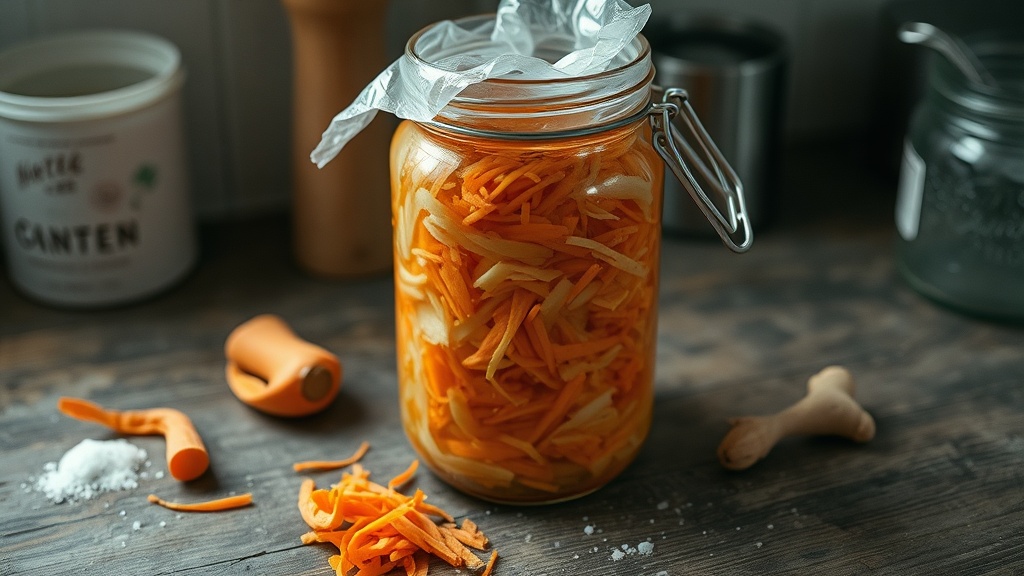
Homemade Fermented Carrot Ginger Kraut: A Zero-Waste Spring Recipe

Store-bought fermented foods can be surprisingly expensive, but making your own at home is incredibly simple and satisfying. If you are looking to support your gut health this spring, fermenting your own vegetables is a rewarding and practical approach. It is also a wonderful way to reduce food waste by transforming scraps you might otherwise toss into the compost into a flavorful, probiotic-rich condiment.
In honor of Earth Day, let's keep things straightforward and sustainable. You don't need specialized fermentation crocks or expensive starter cultures. All it takes are the carrot peels from your dinner prep, the knobby ends of a fresh ginger root, some salt, and a little bit of patience.
The Basics of Fermentation
At its core, lacto-fermentation is simply creating a salty environment where beneficial bacteria (Lactobacillus) thrive while bad bacteria cannot survive. This natural process preserves the vegetables while developing that signature tangy flavor we love in good kraut.
What You Need:
- A glass jar: Any clean, recycled glass jar works perfectly.
- A weight: To keep the vegetables submerged. If you don't have a glass fermentation weight, a smaller zip-top bag filled with brine (salt water) is an easy alternative.
- The Ingredients:
- 3 cups of carrot scraps (peels, ends, and shredded bits)
- 2 tablespoons of grated fresh ginger (skin on is fine, just wash it well)
- 1 tablespoon of non-iodized salt (sea salt or kosher salt)
- Filtered water (chlorinated tap water can interfere with the fermentation process)
Step-by-Step Instructions
- Prep the Ingredients: Place your carrot scraps and grated ginger into a large mixing bowl.
- Salt and Massage: Sprinkle the salt over the vegetables. Using your hands, firmly massage the salt into the scraps. Squeeze them until they begin to release their natural liquids. Let the mixture sit for about 15 minutes to draw out more water from the cell walls.
- Pack the Jar: Transfer the mixture into your clean glass jar, pressing it down firmly to eliminate air pockets. The natural liquid released from the carrots should rise above the vegetables.
- Submerge: If there isn't enough liquid to cover the carrots entirely, mix a simple brine (1 teaspoon of salt dissolved in 1 cup of filtered water) and pour it over the top. The golden rule of fermentation is keeping the vegetables fully submerged to prevent mold!
- Weigh it Down: Add your weight to ensure the solids stay under the liquid line.
- Ferment: Loosely cap the jar so any built-up gases can escape, and leave it on your counter, out of direct sunlight, for 5 to 7 days.
Checking on Your Kraut
Check your jar daily. You will likely notice tiny bubbles rising to the surface, which is a fantastic sign that the fermentation is active. If any small amounts of scum form on the surface, simply scoop them off. The mixture should develop a pleasantly sour, tangy aroma.
After about a week, give it a taste. Once it reaches a bright flavor that you enjoy, secure the lid tightly and move the jar to the refrigerator. The cooler temperature will halt the fermentation process.
This scrap-fermented carrot ginger kraut is a delightful, zero-waste addition to your spring meals. Add a spoonful to your morning eggs, mix it into a warm grain bowl, or enjoy it straight from the jar for a quick, gut-friendly boost. Happy fermenting!