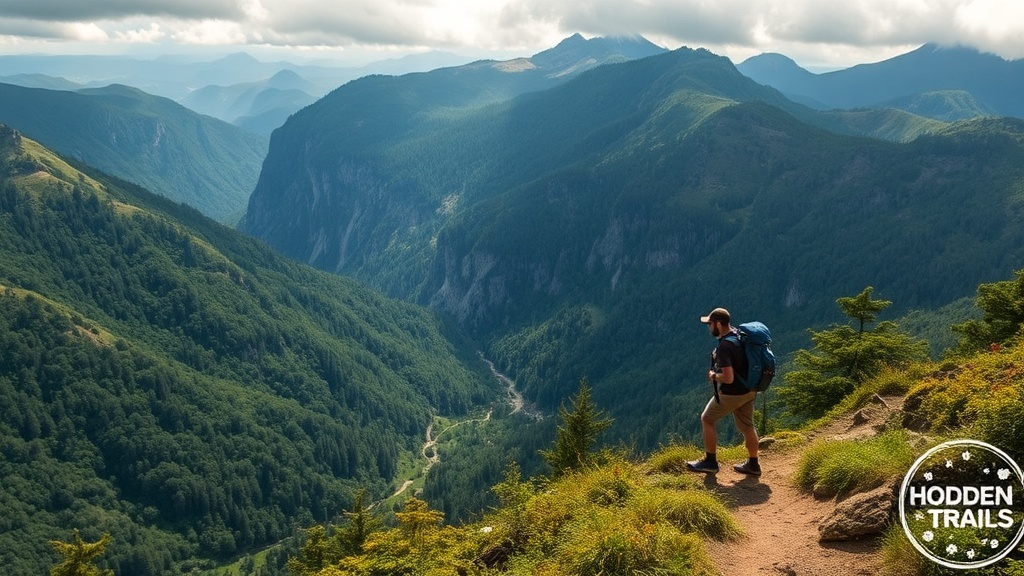
Hidden Trails & Untouched Wilderness: A Backpacker's Guide to Responsible Adventure

This guide cuts through the eco-marketing noise to deliver actionable tactics for backpacking through remote wilderness without leaving damage in your wake. You'll find specific gear recommendations tested on actual trails, destination alternatives to overcrowded hotspots, and realistic budget frameworks that don't require quitting your job. Whether you're planning a first backcountry trip or refining an established packing routine, these strategies come from someone who's audited supply chains and knows which "sustainable" claims hold water.
What Counts as "Responsible" Backpacking in 2024?
Responsible backpacking means leaving zero trace while actively supporting the ecosystems and communities you move through. It's not about buying the most expensive gear with green logos—it's about behavior, preparation, and choosing operators who actually invest in conservation.
The outdoor industry loves slapping "eco-friendly" on products and calling it a day. Here's the thing: a $400 tent made from "recycled" materials doesn't offset flying private to a trailhead. Real responsibility starts before you zip the pack.
The seven Leave No Trace principles still matter, but they've become baseline hygiene. True responsibility now extends to:
- Selecting trails that can handle foot traffic without erosion cascades
- Choosing locally-owned guiding services over international tour conglomerates
- Packing out not just your trash, but microtrash others left behind
- Investing in gear that lasts 15 years, not 15 trips
Worth noting: "untouched wilderness" is largely a myth. Most remote areas have Indigenous histories, current caretakers, or active research programs. Responsible travelers acknowledge this reality rather than fetishizing isolation.
Which Destinations Offer Real Wilderness Without the Crowds?
The U.S. National Park Service manages 63 designated national parks, but the lesser-known units—national monuments, recreation areas, and conservation areas—often provide comparable terrain with a fraction of the visitors. That said, you'll need to look beyond the Instagram hotspots.
Skip Banff. Try the Yukon. While Banff National Park sees over four million annual visitors concentrated on a handful of trails, the Yukon Territory's Tombstone Territorial Park offers subarctic tundra, granite peaks, and caribou migrations with roughly 5,000 backcountry visitors per year. The Dempster Highway access means no helicopter transfers—just you, a rented 4x4, and 75 kilometers of raw trail.
Skip Torres del Paine. Try Aysén. Chile's famous W Trek gets booked solid nine months ahead. Head north to the Aysén region instead—specifically the Patagonia National Park project by Conservación Patagónica. The Jeinimeni Circuit delivers glaciers, turquoise rivers, and guanaco herds without the queue at Campamento Italiano.
Skip Everest Base Camp. Try Makalu. Nepal's EBC route has become a traffic jam with yak trains and wifi routers at 5,000 meters. The Makalu Base Camp trek—reachable via a short flight to Tumlingtar—sees roughly 10% of the foot traffic. The catch? You'll need to carry more supplies and accept that teahouses thin out after Tashigaon.
| Destination | Annual Visitors (Backcountry) | Best Season | Permit Cost (USD) | Skill Level |
|---|---|---|---|---|
| Tombstone Territorial Park, Yukon | ~5,000 | June-September | Free | Intermediate |
| Patagonia National Park, Chile | ~12,000 | December-March | $15/day | Intermediate |
| Makalu Base Camp, Nepal | ~3,000 | March-May, Sept-Nov | $30/week | Advanced |
| Sarek National Park, Sweden | ~2,000 | June-September | Free | Advanced |
| Kamchatka Peninsula, Russia | ~1,500 | July-September | $50-100 | Expert |
Sweden's Sarek National Park deserves special mention—it's the crown jewel of Lapland with no marked trails, no bridges, and no rescue guarantees. You'll ford glacial rivers, handle by compass (GPS fails in the valleys), and likely encounter zero other humans for a week. The Swedish Environmental Protection Agency requires zero permits for entry—just competence.
What Gear Actually Holds Up on Remote Trails?
Durability beats sustainability marketing every time. A sleeping bag that lasts 20 years prevents more landfill than three "eco" bags that delaminate in seven. Here's what's survived real abuse:
Shelter: The Hilleberg Nallo 2 GT. Yes, it's $850. It's also a four-season tunnel tent weighing 2.4 kg that'll handle Patagonian williwaws and Yukon dust storms alike. The Kerlon 1200 fabric doesn't sag when wet, and the company actually repairs damage rather than pushing replacements.
Sleep system: Western Mountaineering bags. The Versalite model (rated to -12°C) uses 850+ fill down and weighs 935 grams. These bags are sewn in San Jose, California—not outsourced—and the company offers refurbishment services that extend lifespans into decades.
Pack: Osprey Atmos AG 65 for men's fits, Aura AG 65 for women's. The Anti-Gravity suspension distributes 25+ kg loads without destroying shoulders. The catch? Osprey's "All Mighty Guarantee" means they'll repair any damage, any era, for free. That policy matters more than recycled thread counts.
Water purification: The MSR Guardian Purifier. Most backpackers carry filters that remove bacteria and protozoa. The Guardian adds virus protection—critical in regions with agricultural runoff or questionable sanitation. At $350, it's not cheap. Neither is a week of giardia.
Footwear: La Sportiva Nepal Cube GTX for technical terrain, Salomon X Ultra 4 for fastpacking. Both use resoleable constructions—the Nepal Cube specifically has a replaceable heel welt. Most "trail runners" become landfill after 800 kilometers. These don't.
How Much Does Responsible Wilderness Backpacking Really Cost?
You're looking at $2,500-4,000 for a two-week remote trek excluding international flights. That number breaks down differently than most assume.
Gear amortization matters. Spending $1,200 on a sleep system that lasts 15 years costs $80/year. Buying three $400 "budget" bags that fail costs more—and creates waste. The upfront investment hurts once; cheap gear hurts repeatedly.
Here's a realistic budget for the Makalu Base Camp trek (14 days):
- Flights to Kathmandu: $800-1,500 (variable by origin)
- Domestic flight to Tumlingtar: $180
- TIMS card and permits: $120
- Food and lodging (teahouses): $25/day × 14 = $350
- Porter wages (ethical rate): $25/day × 12 = $300
- Guide (optional but recommended): $35/day × 14 = $490
- Equipment rental (what you don't own): $150
- Buffer for weather delays: $300
Total: $2,690-3,390 per person. That assumes ethical wages—paying porters the $15/day standard instead of the $8 some agencies push. It assumes no helicopter evacuations, no bottled water purchases, and cooking your own meals once past Tashigaon.
Compare that to a guided Everest Base Camp experience at $4,500-6,000 with less actual wilderness and more infrastructure. The "cheaper" famous routes often cost more for less authentic experience.
What About Food and Waste Management?
Pre-trip meal prep prevents 80% of trail waste. Dehydrate your own ingredients—it's cheaper than Mountain House, produces less packaging, and lets you control sodium (critical at altitude). A Excalibur 3926TB ($350) pays for itself in 10 trips.
Pack it in, pack it out. All of it. That includes:
- Food scraps: Even biodegradable items like apple cores disrupt local wildlife feeding patterns. Bears become habituated. Rodents swarm campsites.
- Toilet paper: Bury it 20 cm deep, 70 meters from water—or better, pack it out in a sealed bag. Wet wipes (even "biodegradable" ones) rarely break down in alpine environments.
- Grey water: Strain food particles from dishwater and pack them out. Scatter strained water 70+ meters from streams.
Human waste requires specific protocols. In high-use areas, use provided toilets. In true wilderness, the cathole method (20 cm deep, 15 cm wide, 70 meters from water) works for most environments. That said, some fragile ecosystems—the Utah desert, alpine zones above treeline—require packing out all solid waste using WAG Bags. Unpleasant? Yes. Necessary? Absolutely.
How Do You Actually Get There Without Destroying the Climate?
Aviation accounts for 2-3% of global emissions, but for international travelers it's often 50-70% of personal carbon footprint. There's no clean way to fly to Nepal. There are, however, ways to mitigate the impact.
Carbon offsets are a minefield. Most programs fail basic additionality tests—would the reforestation have happened anyway? The Gold Standard registry offers the most rigorous verification, but even then, offsets are a stopgap, not a solution.
Better approaches:
- Extend trip duration: One flight for six weeks beats two flights for two weeks each. Combine regions—fly to Kathmandu, trek in Nepal, bus to Tibet, exit through China.
- Surface transport alternatives: The Trans-Siberian Railway from Moscow to Vladivostok (7 days) connects to ferries reaching Japan. The train emits roughly 1/20th the CO2 of flying the same route.
- Choose closer wilderness: North Americans don't need Patagonia. The Wind River Range in Wyoming offers comparable alpine terrain with zero international flight.
Here's the thing: perfection isn't the goal. Reduction is. A backpacker who flies once every three years and practices rigorous Leave No Trace does less harm than someone who stays home but drives 30 kilometers daily in a pickup truck.
"Responsible travel isn't about purity. It's about honesty—admitting your impact, minimizing it where possible, and ensuring the places you love survive your visit."
The gear will fail. The weather will turn. Your knees will complain. But the wilderness—if approached with preparation and respect—remains. That's worth more than any summit photo.