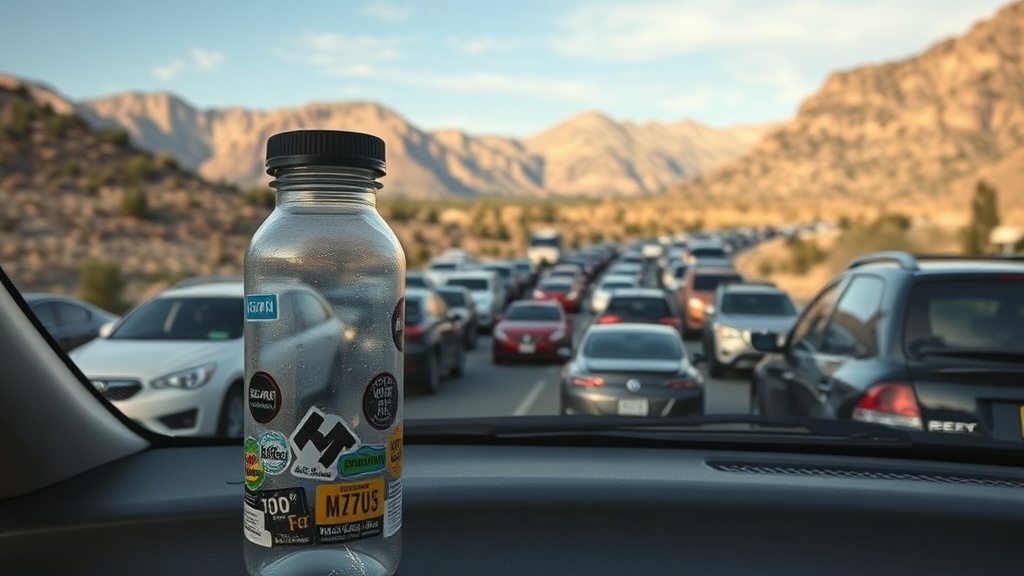
Greenwash Audit: Why Driving Your EV Through a National Park Isn't the Flex You Think It Is

Look, let's be real: I love a good road trip as much as the next dirty-boot traveler. There is nothing quite like loading up the Subaru, topping off "The Tank" (my battered, sticker-covered 32oz Nalgene), and heading out toward the jagged peaks of whatever public land is currently calling my name. But as spring rolls around and we all start plotting our warm-weather escapes, I'm seeing a disturbing trend in the sustainable travel space.
People are treating driving an electric vehicle through a National Park like it's some kind of ultimate environmental win. Spoiler alert: the math doesn't add up.
As a former logistics coordinator, I spend an unhealthy amount of time running the numbers on supply chains and infrastructure. And right now, the infrastructure in our most popular outdoor spaces is buckling under the weight of individual vehicles. It doesn't matter if your car doesn't have a tailpipe; it still takes up space, requires paved roads that disrupt wildlife corridors, and contributes to the massive gridlock that turns places like Zion or Yellowstone into glorified parking lots.
Here is the pragmatic truth about the "eco-friendly" road trip:
The Problem With Individual Transit
We need to stop pretending that swapping a gas engine for a battery solves the spatial geometry problem of two million people trying to cram into the same valley every July. A traffic jam of EVs is still a traffic jam. It still causes noise pollution (yes, tire noise is a massive stressor for local fauna), and it still requires constant road maintenance that bleeds park budgets dry.
(And please, don't get me started on the "nature-centric" luxury resorts popping up just outside the gates that encourage this exact kind of hyper-individualized travel. Vibe check: it's just greenwashing with better marketing.)
The Solution: Mandatory Shuttles
I have a hot take that usually gets me uninvited from outdoor industry parties: National Parks should be entirely vehicle-free. Or, at the very least, mandatory shuttle-only zones.
When you use a park shuttle, you are actively participating in mass transit that reduces the overall physical footprint of tourism. The logistics are undeniable. One shuttle replaces twenty to thirty cars. That means less asphalt, fewer parking spots, and a massive reduction in localized ecological stress. Places like Zion have already proven that mandatory shuttles work, even if people grumble about the schedules at first.
What You Can Do This Spring
If you're planning an adventure this season, leave the car at the visitor center.
- Research the Shuttle Systems: Before you book anything, check if your destination has a robust mass transit option. If it does, use it exclusively.
- Support Local Transit: Take Amtrak to your gateway city if you can (Amtrak sleeper cars remain one of the most underrated, actually-sustainable travel methods out there).
- Audit Your Own Impact: Look at the miles you're driving inside the park. Are you just cruising for views, or are you actually getting out and exploring?
We have to embrace progress over perfection. No trip is completely without impact, but we can make choices grounded in actual data rather than feel-good aesthetics. Next time you're out there, skip the scenic drive. Take the bus, fill up your Nalgene, and hit the trail. The wildlife will thank you for it.