Greenwash Audit: Renting an EV for Your Spring Road Trip

Look, let's be real—the minute you start planning a spring road trip, the rental car algorithms are going to shove an EV upgrade in your face. "Save the planet while you drive!" they say, usually paired with a photo of a clean white sedan gliding through an empty pine forest.
As a former supply chain auditor who now spends her life calculating the true cost of travel logistics, I have a healthy suspicion of any multi-billion dollar corporation suddenly becoming an environmental champion. The truth? Renting an EV for a long-haul road trip isn't always the eco-slam dunk the marketing copy wants you to believe.
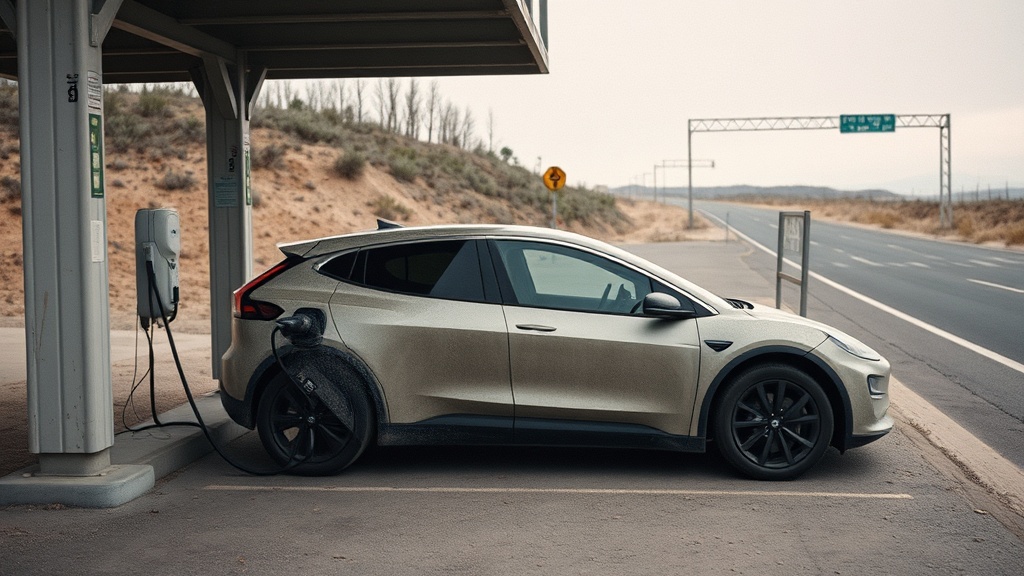
Sometimes, the math checks out. Sometimes, it’s just a fast track to being stranded at a broken Level 2 charger behind an abandoned strip mall in Nevada.
Here is the BS-free Greenwash Audit on whether you should rent an EV for your spring road trip, or if you should stick to your trusty, gas-powered beater (or better yet, an Amtrak train).
The Carbon Math: Is It Actually Better?
Let's start with the spreadsheet data. If you are choosing between renting a brand-new internal combustion engine (ICE) SUV and renting an EV for a 1,000-mile road trip, the EV is going to win the tailpipe emissions battle every time. But that’s not the whole story.
If you already own a fuel-efficient compact car, driving it is almost always better than renting anything new. The embedded carbon cost of manufacturing that rental EV has already been spent, yes, but your personal carbon footprint for the trip is often lower if you use the asset you already have rather than fueling the rental demand cycle.
If you absolutely have to rent, the EV makes sense—but only if the grid you are charging on isn't entirely coal-powered. (Pro tip: check the local energy mix of your destination. Charging an EV in the Pacific Northwest? Great. Charging it in a region entirely dependent on fossil fuels? The math doesn't add up as cleanly as you think.)
The Infrastructure Reality Check
This is where the marketing fluff meets the grit of actual travel. Rental agencies will hand you the keys to an EV with 80% charge and tell you "there are chargers everywhere."
(Spoiler: there are not chargers everywhere, and half of the ones that do exist are broken, throttled to a slow trickle, or require downloading three different glitchy apps just to initiate a session.)
Before you book, you need to run your exact route through a tool like PlugShare or A Better Routeplanner (ABRP). You aren't just looking for chargers; you are looking for DC Fast Chargers (Level 3) that have recent, positive user check-ins. A Level 2 charger at a random hotel is fine for overnight stays, but it’s entirely useless if you need to add 150 miles of range during your lunch break.
Hidden Costs: Range Anxiety and Agency Fees
Let’s talk about the logistical friction. Range anxiety is real, especially when you factor in highway speeds, cold spring mornings, and running the AC—all of which decimate an EV's estimated range.
Then there are the rental agency fees. While you might save money on gas, many rental companies require you to return the EV at a specific charge level (usually 70% or 80%) or face an exorbitant "recharging fee" that eclipses whatever you saved at the pump. Trying to find a working fast charger within 10 miles of an airport rental drop-off two hours before your flight is a uniquely modern form of torture.
Vibe Check: When Renting an EV Actually Makes Sense
So, when does the math check out?
- The Regional Loop: If your spring road trip is under 300 miles total and your destination has guaranteed overnight charging, an EV rental is fantastic.
- The Urban Hub: If you are flying into a city and doing day trips where you can rely on robust local charging infrastructure.
- The 'Try Before You Buy' Audit: If you are using the trip to legitimately test whether an EV fits your lifestyle before purchasing one.
If you are planning a massive, multi-state cross-country sprint through rural areas with spotty infrastructure? Do yourself a favor: skip the EV rental. Take your own car, carpool to split the emissions, or better yet, look into an Amtrak sleeper car.
Travel involves trade-offs. We don't need performative eco-gestures that ruin our trips; we need transparent logistics. Drive smart, do the math, and keep your footprint in check. No guilt trips included.