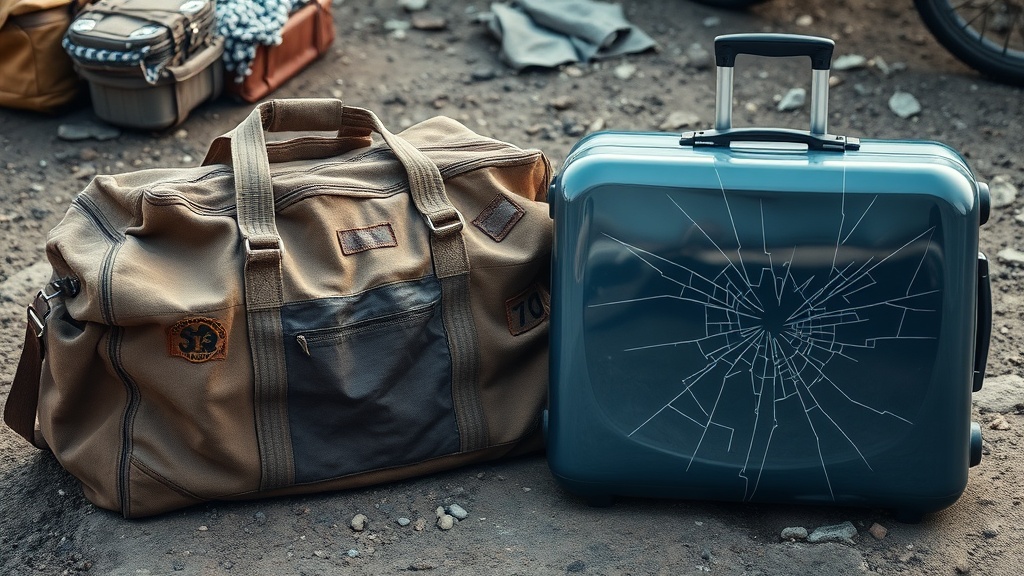
Greenwash Audit: 'Ocean Plastic' Luggage vs. The Lifetime Warranty

Look, let's be real: April is the absolute worst time of year for travel gear marketing. It's "Earth Month," which means my inbox is flooded with press releases from luggage brands bragging about their new "recycled ocean plastic" collections.
They want you to buy a sleek, pastel suitcase because it theoretically removed three plastic bottles from a beach somewhere. But as a former supply chain auditor, I'm here to tell you the math doesn't add up.
Welcome to another Greenwash Audit, where we strip away the marketing fluff and look at the actual logistics of sustainable travel gear. Today's target: the "eco-friendly" luggage industry versus the good, old-fashioned lifetime warranty.
The Logistics of "Ocean Plastic"
When a brand tells you their new hard-shell suitcase is made from "recycled marine plastics," what they usually mean is that a fraction of the material is recycled. To give polycarbonate structural integrity—meaning it won't shatter the first time an underpaid baggage handler tosses it onto the tarmac—it often has to be mixed with virgin plastic binders.
You aren't buying a suitcase made of pure upcycled fishing nets. You're buying a plastic suitcase with a small percentage of recycled content (and a massive premium markup).
The Durability Deficit (A.K.A. The Drop Test)
Here is the dirty secret of the travel gear industry: the most sustainable bag in the world is the one you already own. The second most sustainable bag is one you only have to buy once.
Many of these "eco-plastics" are inherently weaker than virgin materials or heavy-duty ballistic nylon. If your glossy, pastel "Earth-friendly" suitcase cracks near the wheel well after three years of moderate use, you are going to throw it away. You've just sent ten pounds of mixed plastic straight to the landfill.
(But hey, at least it was shipped to you in compostable packaging, right?)
The Carbon Math
Let's do some back-of-the-napkin logistics.
Scenario A (The "Eco" Buyer): You buy a $250 "sustainable" recycled-plastic suitcase. It breaks in three years. You buy another one. Over 15 years, you've manufactured, shipped, and landfilled five different suitcases.
Scenario B (The "Buy It For Life" Buyer): You spend $300 on an over-engineered, heavy-duty duffel from a brand like Patagonia or Osprey. It's made of traditional materials. Over 15 years, it gets a tear. You send it in, the brand patches it for free under their ironclad warranty, and you keep using it. One bag manufactured. Zero bags landfilled.
The math heavily favors Scenario B.
The Ultimate BS-Meter: The Warranty Policy
If you want to know if a brand actually cares about the environment, ignore their "sustainability" page. Read their warranty policy.
Performative eco-brands will offer a "limited 1-year warranty against manufacturing defects" (which translates to: we know this thing is going to break, and we aren't paying for it).
Truly sustainable brands offer ironclad, lifetime guarantees. They build repair infrastructure. Patagonia’s Worn Wear program and Osprey’s All Mighty Guarantee aren't just good customer service—they are legitimate waste-reduction strategies.
Vibe Check
Travel involves trade-offs. I'm not here to issue guilt trips. But let's stop pretending that buying fragile, trendy plastic luggage is an act of environmentalism.
If you need a new bag this summer, skip the "ocean plastic" marketing campaigns. Buy something tough, buy it from a company that will fix it when it breaks, and then go get your boots dirty.
Stay pragmatic out there.