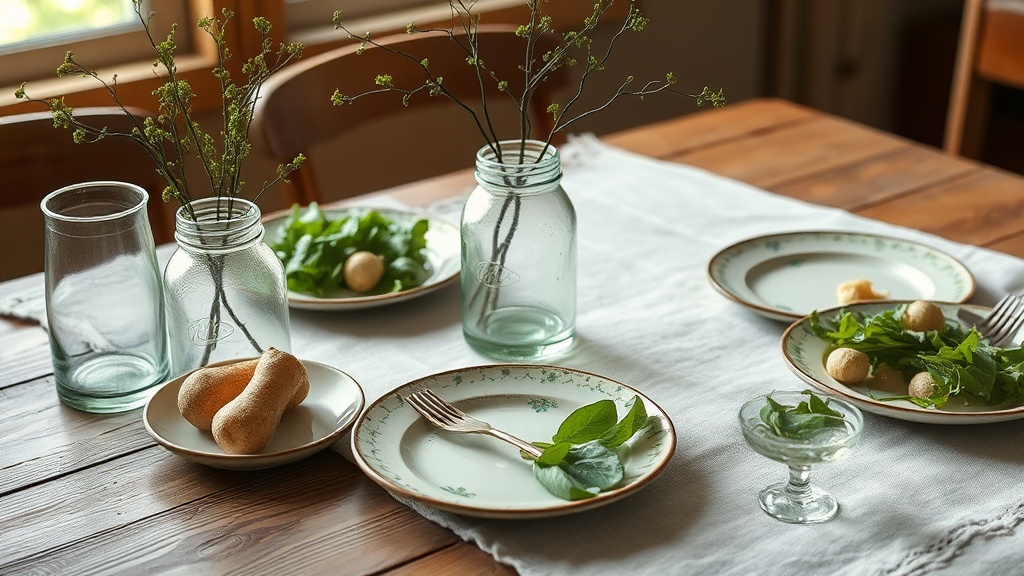
Easter 2026 Table Setting: Sustainable & Stylish Ideas for a Memorable Spring Celebration

Look, let's be real: the moment the calendar hits March, the internet gets flooded with "eco-chic" spring entertaining guides that are often nothing more than marketing fluff for $150 organic linen napkins.
Easter 2026 was just yesterday. Instead of treating your next spring table setting as an excuse to consume more items under the guise of an eco-friendly holiday, approach it with practicality. The goal should be maximum utility, lower carbon output, and a budget that doesn't require a second mortgage. Here is a BS-free look at putting together sustainable table decor and a plant-based menu that actually works.
The Logistics of Upcycled Table Decor
Buying new, mass-produced "sustainable" decorations introduces a new production footprint. Replacing perfectly good existing items with new "green" alternatives is counterproductive to reducing waste.
The smartest bet is the thrift store. Applying secondhand sourcing to table decor keeps money in the local economy and comes with a near-zero new carbon footprint. Mismatched vintage glassware, old mason jars for candles, and upcycled fabrics for a table runner cost a fraction of the price. The result looks intentionally rustic without the retail markup.
Sourcing Flowers: A Supply Chain Audit
Stop buying imported tulips wrapped in layers of plastic. Air-freighting out-of-season blooms for spring entertaining increases transport emissions.
Instead, source locally. Foraging branches from the yard or hitting up a local farmer's market reduces transport distance. Finding a grower within a 50-mile radius is a transparent, low-impact way to build a seasonal centerpiece.
The Plant-Based Menu Math
To make a real dent in the footprint for spring celebrations, look at the menu. The carbon intensity of a traditional ham or lamb roast is high compared to plant-based alternatives. Swapping to a plant-based menu is a pragmatic harm-reduction choice.
Focus on root vegetables that store well, early spring greens, and locally milled grains. A locally sourced plant-based menu can cut a meal's carbon footprint by roughly 70%. The math checks out here. Plus, it is significantly cheaper, leaving more of the budget for other holiday priorities.
Progress Over Perfection
An eco-friendly gathering is about progress over perfection. Avoid guilt trips designed to sell more "green" products. Use what is already available, audit food sources logically, and keep marketing fluff off the table.