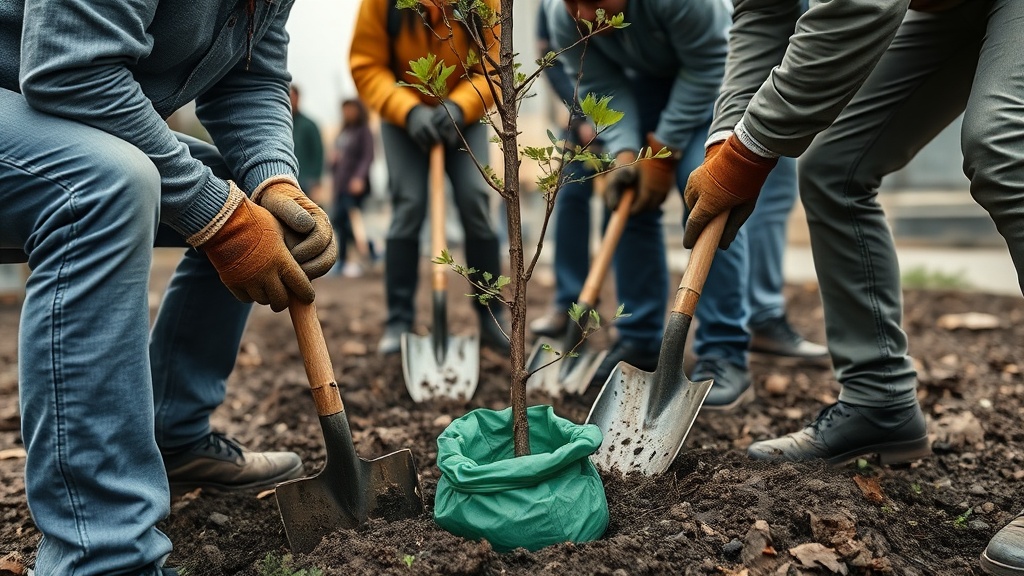
Earth Day 2026: The Pragmatic Guide to Community Tree Planting

Look, let's be real... every Earth Day, there's a flood of photos showing someone smiling next to a tiny sapling they just shoved into a dry patch of dirt. Fast forward three months, and that sapling is a crispy stick because no one bothered to water it. The math doesn't add up.
Municipalities are actually throwing serious funding at urban canopy expansion right now, which is great for climate resilience and lowering neighborhood temperatures. But execution matters. If we want real environmental stewardship, we need to treat community tree planting less like a photo op and more like a field operation.
Here is the BS-free, step-by-step guide to organizing a neighborhood tree planting initiative that actually survives past May.
1. The Feasibility Audit (Do The Boring Research)
Before anyone touches a shovel, you need data. You cannot just pick a random patch of grass and declare it a future forest.
- Call Before You Dig: This isn't just a suggestion; it's a legal requirement. Hit a utility line, and your community engagement project turns into a neighborhood disaster.
- Assess the Soil and Sun: Is the area compacted clay? Does it get roasted by afternoon sun radiating off asphalt?
- Check City Programs: Many cities have urban forestry departments that will not only give you the permits but might even provide the trees and mulch for free if you agree to maintain them.
2. Sourcing: Native Over Aesthetic
(Incoming snarky aside: Please, for the love of all things green, stop planting ornamental Bradford Pears. They smell terrible and split in half during a light breeze.)
Work with a local nursery or your city's forestry department to select native, drought-resistant species. You want trees that have evolved to survive your specific climate's worst days without requiring a daily deluge of water. The goal is long-term carbon sequestration, not temporary landscaping.
3. The Execution (Vibe Check)
When Earth Day rolls around and your volunteers show up, treat it like a well-run logistics operation.
- Ditch the Flimsy Gear: Tell people to bring real shovels and work gloves. If they show up with gardening trowels, hand them a clipboard and make them the registration coordinator.
- The Depth Matters: Most volunteers plant trees too deep. The root flare (where the trunk widens at the base) needs to be visible above the soil line. If it looks like a telephone pole stuck in the ground, it's going to rot.
- Skip the Performative Shaming: If someone can only stay for an hour, thank them for their time. We need progress over perfection.
4. The Maintenance Plan (Where the Math Checks Out)
This is the part everyone ignores, but it's the only part that guarantees survival. A tree planting event isn't a one-day thing; it is a two-year commitment.
Young trees need about 15-20 gallons of water a week during the dry season for their first two years.
- Set up a shared spreadsheet for your neighborhood.
- Assign specific weeks to specific households.
- Invest in a few slow-release watering bags (those green things you see wrapped around trunks). They are cheap, efficient, and they prevent runoff.
Environmental stewardship isn't just about putting things in the ground. It's about keeping them alive long enough to actually make a difference. Grab your Nalgene, rally your neighbors, and let's get some dirt under our fingernails this Earth Day.