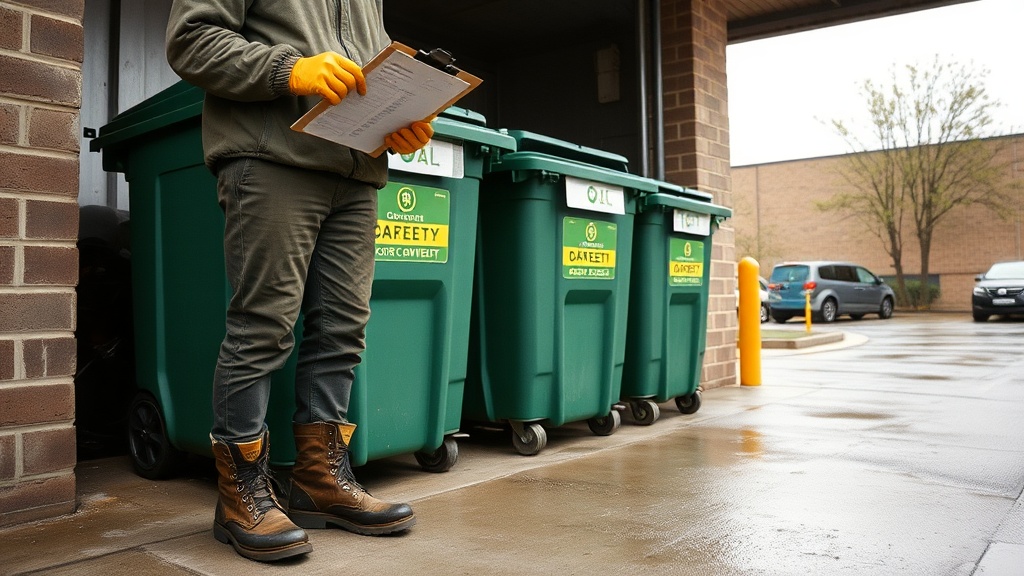
Earth Day 2026: The BS-Free Logistics of Launching a Campus Composting Program

Look, let's be real... with Earth Day approaching, your university's administration is probably gearing up to blast out press releases about their "2030 Carbon Neutral" commitments. As a former NGO logistics coordinator who has audited enough supply chains to make my eyes bleed, my BS-meter is already pinging. Commitments are great marketing fluff. Logistics are what actually keep a campus from drowning in food waste.
Right now, student-led composting is gaining serious traction as a viable counter-measure. But throwing a few green bins next to the dining hall exits and hoping for the best isn't a program; it's performative sustainability. If you want to launch a student sustainability initiative that survives past midterms, you have to treat it like a field operation.
Grab a coffee (mine is currently chilling in "The Tank"), and let's run the math on how to actually launch and sustain a campus composting program without losing your mind.
Step 1: The Pre-Launch Waste Audit
The Vibe Check: Assuming people will magically know what is compostable because you put up a cute sign with leaves on it.
The Pragmatic Pivot: Before you even buy a bin, you need data. Spend an entire week physically auditing the dining hall waste stream. What percentage of the current trash is food waste? Are the to-go containers actually compostable, or are they coated in PFAS plastics? The math has to check out before you build the infrastructure. Build a spreadsheet. Track the volume.
Step 2: Engaging Facilities Management (Your Ops Partners)
The Vibe Check: Treating the facilities staff like obstacles blocking your eco-vision.
The Pragmatic Pivot: The facilities team and janitorial staff are the most important people on your campus. They are the ones who will actually have to haul these bins, deal with the smell, and manage the heavy lifting. Treat them as your operational partners from day one. Ask them about their current routes, weight limits for bags, and pest control concerns. If your logistics plan makes their jobs harder, the program is dead on arrival.
Step 3: Securing Funding (Because Dirt Isn't Free)
The Vibe Check: Relying on a one-time GoFundMe or selling bake-sale cookies to fund industrial waste management.
The Pragmatic Pivot: Real logistics require real budgets. You need funding for commercial-grade bins, biodegradable liners that don't disintegrate on impact, and potentially a contract with a local commercial composting facility if your campus lacks an on-site digester. Pitch this to the university administration as a cost-saving measure: redirecting organic waste often reduces the tonnage fees they pay for standard landfill hauling. The math works, but you have to show them the spreadsheet.
Step 4: The Communication Strategy
The Vibe Check: Performative shaming of students who accidentally throw a plastic fork in the compost.
The Pragmatic Pivot: Radical transparency and zero guilt trips. College students are sleep-deprived and living on cheap dining hall pizza; they don't have the mental bandwidth to decipher complex sorting rules. Keep the signage brutally simple. Use 3D visual aids (tape actual compostable items to the sign) instead of dense paragraphs. If contamination rates spike, it's not a moral failure—it's a failure of your sorting logistics.
Step 5: Measuring the Impact
The Vibe Check: Declaring victory because you launched the program on Earth Day.
The Pragmatic Pivot: Progress over perfection. After month one, audit the output again. Are you actually diverting 500 pounds of organic matter from the landfill, or are you just shipping contaminated trash to a different facility? Share this data publicly.
Starting a campus composting program isn't glamorous. It involves bad smells, heavy lifting, and arguing with administration about hauling contracts. But it's exactly the kind of pragmatic, dirty-boot work that creates lasting change.
The earth doesn't need another PR statement; it needs better waste logistics. Get to work.