Earth Day 2026: A Greenwash Audit of Dorm Room Sustainability

Look, let's be real: the internet is currently flooded with "Earth Day" guides trying to sell you $40 aesthetic bamboo trash cans and organic cotton laundry bags. As someone who spent six years auditing supply chains for an environmental NGO, let me save you some time and money.
If you're currently living in a college dorm, you're essentially operating out of a long-term hostel. Your space is tight, your budget is probably tighter, and you don't have control over the building's infrastructure. The goal here isn't to make your room look eco-chic for social media. The goal is practical harm-reduction and smart logistics.
Let's run a quick Greenwash Audit on dorm living and look at some simple, sustainable swaps where the math actually checks out.
The Energy Vampire Audit
Dorms have notoriously opaque energy situations. Because you aren't paying a transparent, itemized utility bill every month, it is incredibly easy to leave everything plugged in 24/7. But the math doesn't add up for the local grid.
The most pragmatic swap you can make today is putting your workstation, TV, and chargers on a single heavy-duty power strip. When you leave for a 08:00 lecture or head to the library, flip the switch. Killing that phantom power drain is a zero-cost logistical fix that scales up massively if an entire residence hall does it.
Hydration Logistics (Skip the Aesthetic Upgrade)
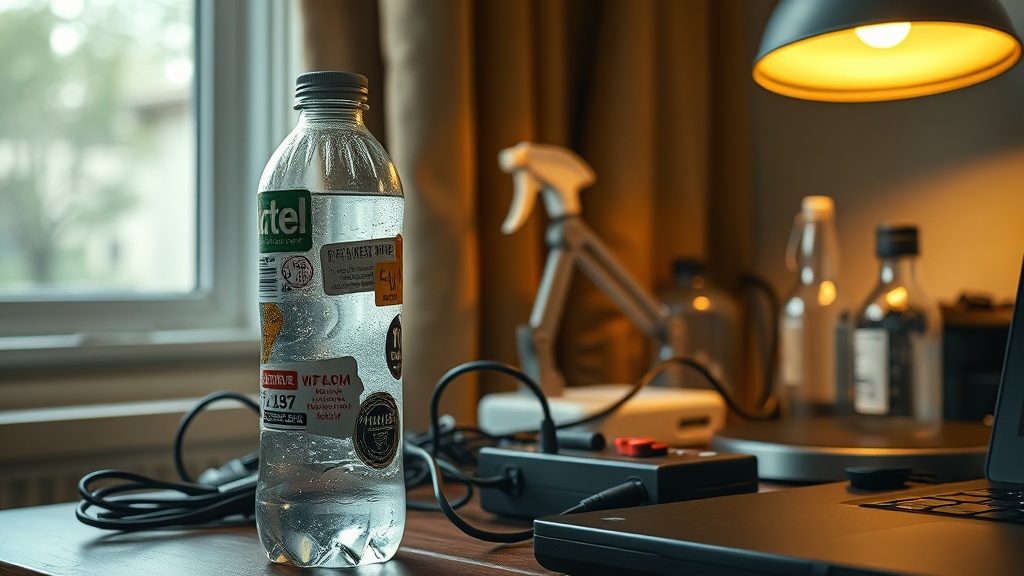
Every spring, marketers try to convince you that you need a brand new, pastel-colored water bottle to celebrate Earth Day. Vibe check: the most sustainable piece of gear is the one you already own.
I carry a battered, sticker-covered 32oz Nalgene (I call it "The Tank") that has survived backcountry trails in Oregon and sketchy hostel sinks across the globe. It works exactly the same in a university lecture hall. If you don't have one, hit up a campus thrift store or buy a basic, durable stainless steel canteen. Skip the 24-packs of individual plastic water bottles entirely—they are an absolute failure of supply chain efficiency and a waste of your money.
The "Eco-Friendly" Cleaning Supplies Trap
You don't need a custom-scented, "ocean-safe," artisanal spray to wipe down your desk or clean your microwave. Buying into that is often just trading one plastic packaging problem for another.
Instead, get a cheap glass spray bottle, bulk white vinegar, and tap water. It costs pennies, the math checks out, and it cleans perfectly. No performative eco-marketing required.
Sourcing Your Gear
Treating your dorm like a fast-furniture showroom is a rookie mistake. For decor, extra seating, or storage, always check the local buy-nothing group or campus surplus stores first. Finding a second-hand desk lamp that was built like a tank in the 1990s is always going to be a better environmental choice than overnighting a cheap, plastic LED ring light that will break by midterms.
Sustainability in college isn't about performative shaming or buying your way into a "green" lifestyle. It's about looking at your daily operations, finding the inefficiencies, and applying a little pragmatic friction. Fix what you have, unplug what you don't need, and keep your basecamp lean.