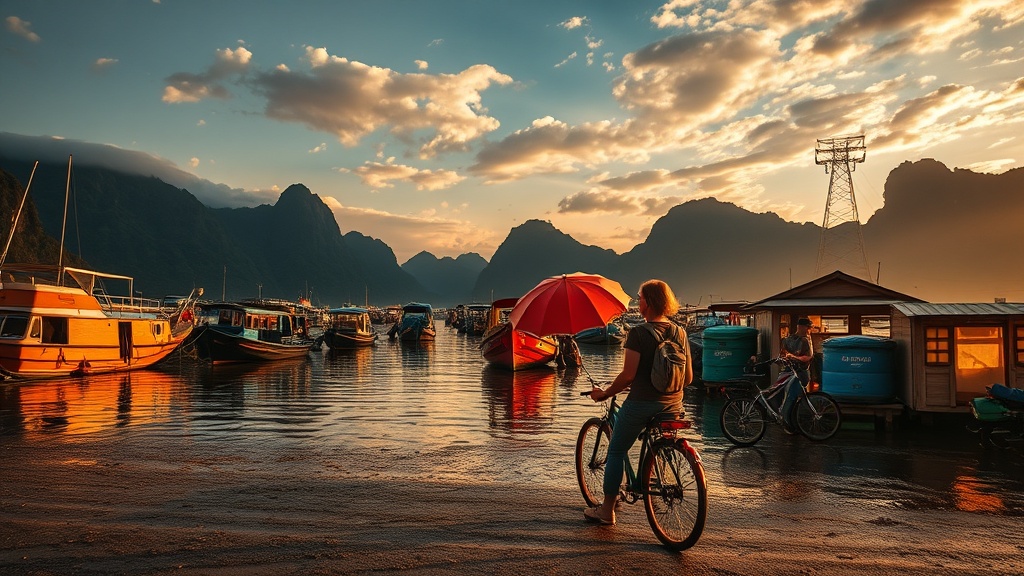
Budgeting for Low-Impact Adventure Travel in Southeast Asia

What it costs to travel Southeast Asia sustainably
This post breaks down the actual costs of traveling through Southeast Asia while minimizing your carbon footprint and supporting local economies. You'll learn how to budget for slow travel, when to skip the expensive eco-resort for local guesthouses, and how to track your environmental impact without breaking the bank. We are looking at the raw numbers—transport, food, and accommodation—through a lens of efficiency and real-world sustainability.
Most travel blogs treat "eco-friendly" as a luxury add-on. They suggest you pay a premium for a boutique hotel with a single solar panel on the roof. That's not sustainability; that's marketing. Real, low-impact travel is often cheaper because it focuses on staying put, eating locally, and using existing infrastructure. If you want to see the world without the heavy footprint of a high-flying tourist, you need to look at the ground-level logistics.
When I worked in logistics, I learned that the most efficient route isn't always the fastest, and the most expensive option isn't always the best. The same applies to your travel budget. A high-speed flight from Bangkok to Hanoi might save you time, but it's a massive hit to your carbon footprint and your wallet. Taking a sleeper train or a long-distance bus might take longer, but it keeps your money in the local economy and keeps your transit emissions low. It's a trade-off, but one that pays off in both depth of experience and actual dollars saved.
Can you travel sustainably on a budget?
Yes, you can. The secret is avoiding the "tourist bubble." When you stay in massive international hotel chains, your money often leaves the country almost immediately. Instead, look for family-run homestays or small guesthouses. These businesses are deeply embedded in the local community. They buy produce from the market down the street, not from an international supplier. This keeps the economic loop closed and supports the people who actually live there.
Let's look at a rough comparison of daily costs for a mid-range budget traveler in a region like Northern Thailand or Vietnam. This isn't an exact science, but it gives you a baseline for planning.
| Expense Category | Standard Tourist Approach | Low-Impact/Local Approach |
|---|---|---|
| Accommodation | International Hotel ($50+) | Local Homestay ($15-$25) |
| Transport | Private Car/Taxis ($30+) | Local Bus/Trains ($5-$10) |
| Food | Westernized Cafes ($20+) | Street Food & Markets ($8-$12) |
| Daily Total | ~$100+ | ~$30-$45 |
As you can see, the "low-impact" route is significantly cheaper. The catch? It requires more patience. You can't just tap an app and have a car arrive in three minutes. You have to learn the bus schedules, talk to locals, and accept that things might move at a different pace. This isn't a problem for me; it's an opportunity to actually see how a place works.
Where to find affordable eco-friendly transport?
Transport is where most travelers fail their sustainability audit. The easiest way to move is often the most damaging. If you're moving between cities, look for rail networks. In countries like Vietnam or Thailand, the train is a reliable, affordable, and much lower-emission way to travel compared to domestic flights. Check out the official railway information for the specific country you're visiting to understand the routes and ticket prices before you arrive.
Once you're in a city, ditch the ride-sharing apps that rely on cars. Walking is the gold standard, obviously. But if you need to go further, use bicycles or public transit. Most major Southeast Asian cities have robust bus or metro systems. It's a bit of a learning curve, but it's the most direct way to avoid adding to the traffic congestion and pollution levels in these growing urban centers.
The truth about "Eco-Resorts"
Be skeptical when you see the word "Eco" in a hotel name. A lot of these places are just using green-colored branding to charge you 30% more. I always audit a property by looking at their actual policies. Do they have a water refill station? Do they use single-use plastics in their rooms? Do they hire local staff or just fly in management? If they don't mention these things specifically, they're probably just greenwashing. A small, family-run guesthouse that uses local ingredients and has no air conditioning is often much more sustainable—and much more affordable—than a "luxury eco-resort."
I always recommend checking sites like Lonely Planet for vetted, ground-level descriptions of areas, but don't take their word for it. Look at the most recent reviews on independent sites to see if people mention things like plastic waste or local community impact. It's the small details that tell the real story. If you're looking for a way to minimize your footprint, focus on the things you can control: what you eat, how you move, and where you sleep. Everything else is just noise.
How to find authentic local food without the waste?
Eating street food is one of the best ways to keep your costs low and your impact low. However, the biggest issue here is the single-use plastic problem. Many street vendors use plastic forks, spoons, and containers. To manage this, carry your own lightweight, reusable utensil set and a small silicone food container. It might feel a bit extra to pull out your own kit, but it's a small way to ensure your presence doesn't leave a mountain of trash behind.
When you eat at a local market, you're participating in a direct economic exchange. You're buying from the person who grew the vegetables or sourced the spices. This is far more sustainable than eating at a global fast-food chain that has a massive, centralized supply chain. Plus, the food actually tastes better. It's a win-win, provided you're willing to do a little bit of the work to find the best spots.