7 Ways to Eat Sustainably While Traveling Through Southeast Asia

Carry Your Own Bamboo Utensil Set
Say No to Single-Use Plastic Straws
Choose Seasonal and Local Ingredients
Look for Zero-Waste Street Food Vendors
Bring a Reusable Silicone Food Bag
Support Small-Scale Family Businesses
Eat Less Meat and More Plant-Based Dishes
A tourist in Bangkok sits at a plastic table, staring at a menu that features "organic" salads flown in from Europe, while a mountain of single-use plastic packaging sits in the bin beside them. This is the paradox of modern travel: the more we try to "do good" by buying expensive, labeled eco-products, the more we often increase our carbon footprint and waste output. In Southeast Asia, true sustainability isn't found in a premium organic label; it is found in the local supply chain. This guide provides seven practical, budget-friendly strategies to eat sustainably while navigating the food landscapes of Thailand, Vietnam, Indonesia, and beyond.
1. Prioritize street food over imported cafe culture
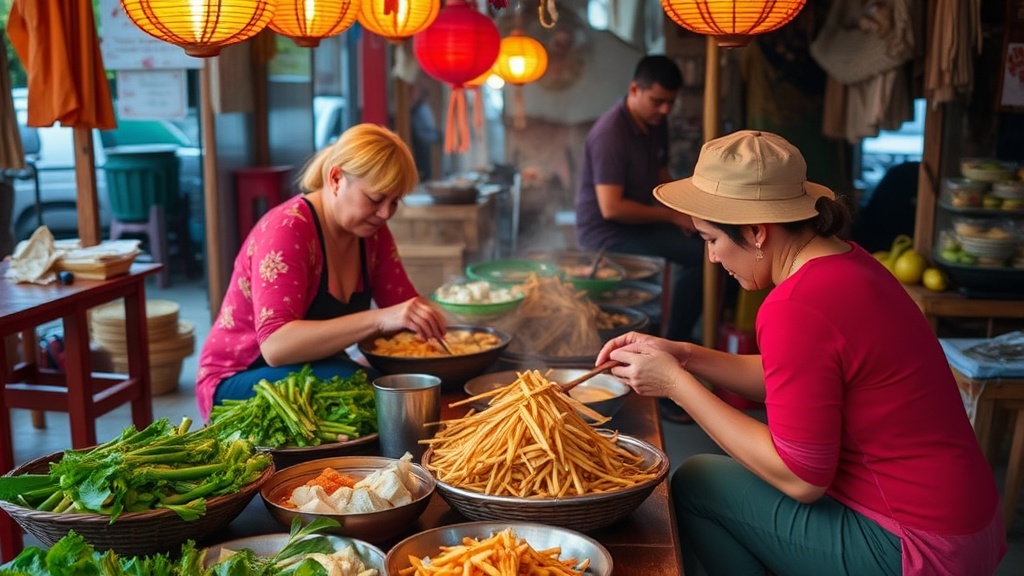
The most sustainable meal you can eat in Southeast Asia is often the one sold from a street cart. Street food vendors in cities like Hanoi or George Town (Penang) rely on hyper-local supply chains. They buy produce from regional wet markets and protein from local suppliers, meaning the "food miles" associated with your meal are incredibly low. When you sit in a high-end cafe that serves avocado toast or kale salads, you are often consuming food that has been flown in from thousands of miles away, requiring immense energy and packaging to maintain freshness.
To do this effectively, look for high turnover. A busy stall selling Pad Thai in Bangkok or Banh Mi in Ho Chi Minh City is a sign that the ingredients are fresh and moving quickly through the system. This reduces the risk of food waste at the vendor level. High turnover also means the vendor isn't sitting on old stock that will eventually end up in a landfill. Stick to the staples that are native to the region; they are naturally designed to thrive in the local climate without heavy chemical intervention or long-distance transport.
2. Shop the wet markets, not the supermarkets
If you are staying in an Airbnb or a long-term rental, skip the air-conditioned supermarkets. Supermarkets are hubs for excessive plastic packaging—think pre-cut fruit in polystyrene trays or individual plastic wraps for single bananas. Instead, head to the local wet markets. These are the heartbeat of Southeast Asian commerce and are significantly more efficient at minimizing waste.
In a wet market, you will see produce sold in bulk, often without any packaging at all. You can buy a single bunch of lemongrass, a handful of chilies, or a single dragon fruit without the need for a plastic bag. To navigate this successfully, bring your own lightweight cloth bags and a few small reusable containers. This allows you to buy exactly what you need for a single meal, which prevents the food waste that occurs when you buy large, plastic-wrapped quantities from a grocery store only to have the leftovers rot in your fridge.
3. Manage your own waste and hydration
The biggest environmental footprint of a traveler in Southeast Asia isn't the food itself, but the packaging it comes in. Even when eating local food, you are often handed a plastic bag or a single-use plastic spoon. To mitigate this, you must take responsibility for your own kit. Carrying a set of bamboo or stainless steel utensils and a reusable container is not just a "green" habit; it is a practical tool for navigating food stalls more efficiently.
When you order a meal, you can often politely decline the plastic cutlery. If you are buying a drink, having your own vessel ready makes a massive difference. For example, carrying a reusable coffee cup or a sturdy water bottle ensures you aren't contributing to the millions of plastic bottles discarded daily in tourist hubs. Furthermore, instead of buying bottled water every time you are thirsty, learn how to find and use local water refill stations. Many hostels, cafes, and even certain government buildings in Thailand and Indonesia offer filtered water stations, which drastically reduces your reliance on single-use PET plastics.
3. Eat seasonal and regional specialties
Eating seasonally is a concept often marketed to Westerners as a luxury, but in Southeast Asia, it is the standard for anyone on a budget. If you try to find out-of-season berries or specific temperate fruits in Bali, you will likely find them, but they will be expensive, heavily chemically treated, and shipped from across the globe. This is the opposite of sustainable travel.
Instead, lean into the rhythm of the region. If it is mango season in Thailand, eat mangoes. If it is durian season in Malaysia, embrace the scent and the fruit. Seasonal eating ensures you are consuming produce at its nutritional peak while supporting the local agricultural cycle. It also keeps your costs down. A menu that changes with the seasons is a sign of a healthy, localized food system. When you see a dish that is a "specialty" of a specific province or island, order it. These dishes are usually made with ingredients that are abundant in that specific micro-climate, ensuring a low carbon footprint.
4. Reduce meat consumption through plant-based local staples
While Southeast Asia is famous for its seafood and pork dishes, it is also a paradise for plant-based eaters if you know where to look. The region has a long history of Buddhist-influenced vegetarianism, particularly in countries like Thailand and Vietnam. You don't need to find a "Vegan Cafe" to eat a sustainable, plant-based meal. Most local markets and street vendors offer high-protein, plant-based options that are far more sustainable than beef or even poultry.
Look for dishes centered around tofu, tempeh, or legumes. In Indonesia, Tempeh is a nutritional powerhouse that is locally produced and incredibly low-impact compared to imported meat substitutes. In Vietnam, look for Phở Chay (vegetarian noodle soup). By choosing these options, you are reducing the demand for industrial livestock farming, which is a major driver of deforestation and water usage in Southeast Asia. It is a pragmatic way to lower your environmental impact without needing to hunt for specialized "eco-friendly" restaurants.
5. Avoid the "Eco-Luxury" trap
In many popular destinations, "eco-friendly" has become a marketing buzzword used to justify higher prices. You will see restaurants claiming to be "sustainable" because they use paper straws, while they simultaneously fly in premium ingredients from Europe or North America. This is greenwashing. A paper straw does nothing to offset the carbon footprint of a steak flown in from Australia.
When auditing a restaurant's sustainability, look past the aesthetic. Does the menu focus on local ingredients? Is the staff using minimal packaging? Are they sourcing from local farmers? A truly sustainable establishment doesn't need to shout about its "green" credentials with expensive signage; its sustainability is evident in its supply chain. If a place is charging a premium for "organic" labels but the menu is heavily reliant on imported goods, it is better to move on to a local stall that actually works within the local ecosystem.
6. Minimize food waste by ordering smart
Food waste is a massive issue in the hospitality industry, and travelers contribute to this through over-ordering. In many Southeast Asian cultures, it is common to order a large variety of dishes for the table to share. While this is a great way to experience different flavors, it often leads to significant leftovers that are discarded.
To be a more responsible diner, practice "ordering for the end." If you are dining with a group, ensure the total volume of food matches the actual hunger level of the group, rather than just ordering everything that looks good. If you do have leftovers, do not be afraid to ask for a container to take them home. In many places, this is perfectly acceptable and much better than letting the food go to waste. If you are staying in a place with a kitchen, buy smaller quantities of fresh produce from the market to ensure you use everything you purchase.
7. Support small-scale, traditional producers
The most direct way to ensure your money supports a sustainable food system is to spend it at the source. Large international food chains and even large-scale domestic restaurant franchises often centralize their purchasing, which strips wealth away from local communities and increases transport logistics.
Instead, seek out family-owned businesses and small-scale producers. When you eat at a family-run stall in a village or a small cafe in a coastal town, your money goes directly into the local economy. This supports the continuation of traditional farming and fishing methods, which are generally more sustainable and less destructive than industrial-scale operations. By keeping your spending local, you help maintain the cultural and biological diversity that makes Southeast Asia a unique destination in the first place. This is the most effective way to ensure that your presence as a traveler provides a net benefit to the region.